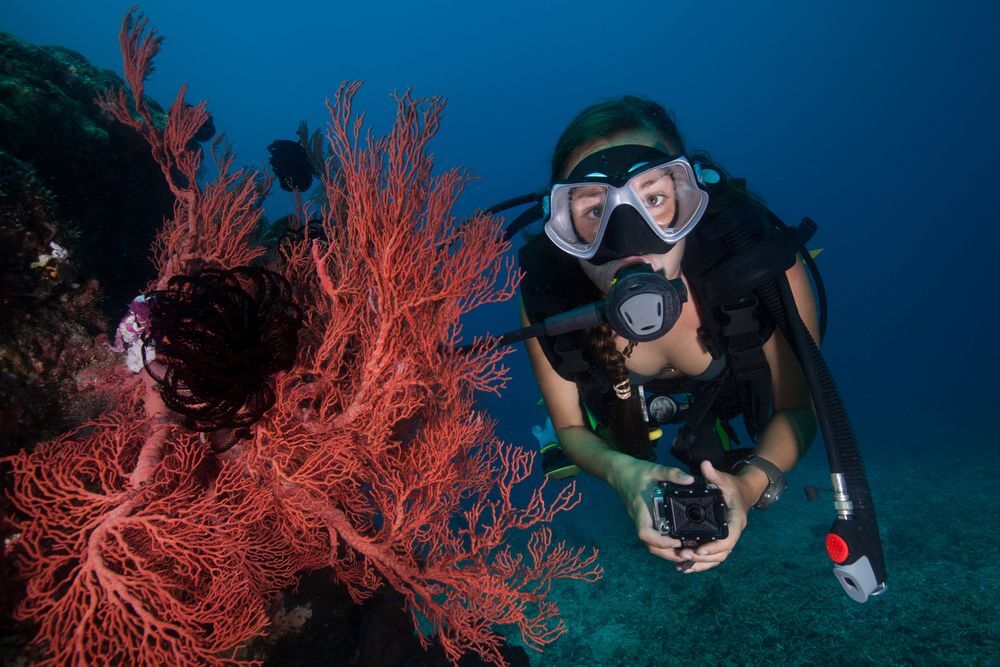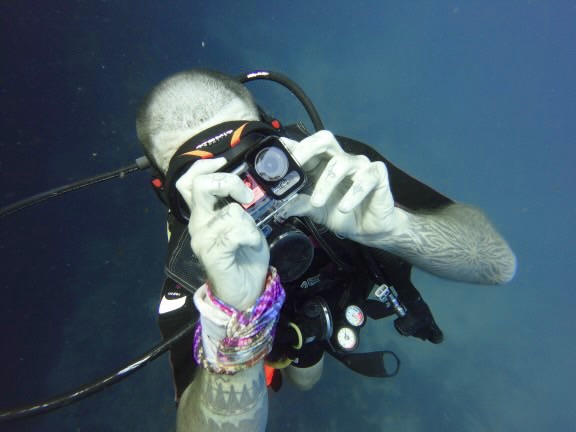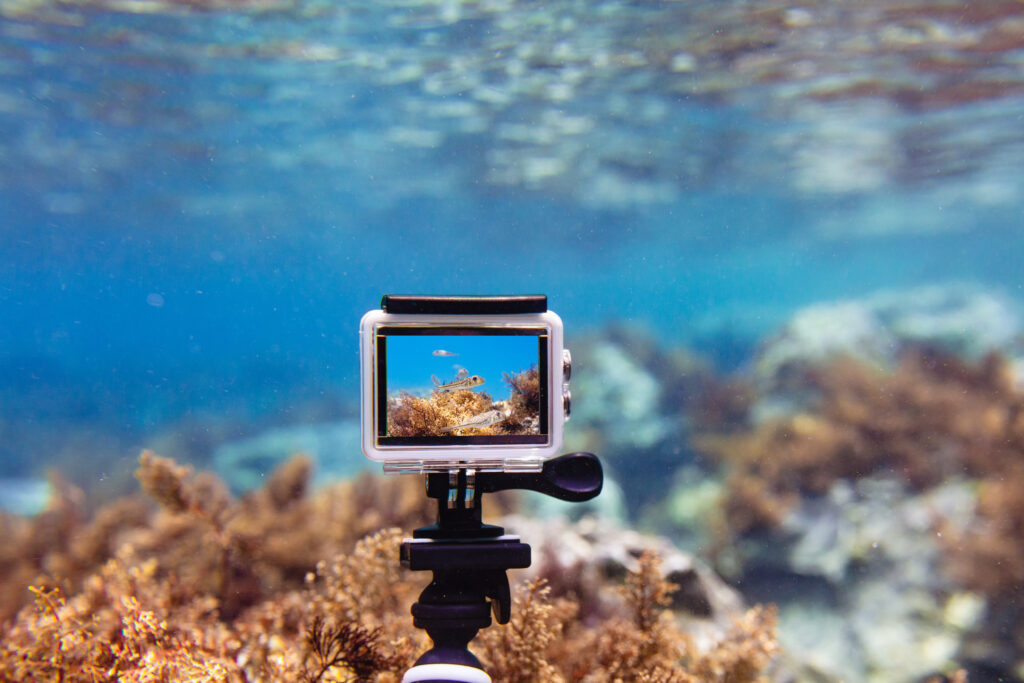
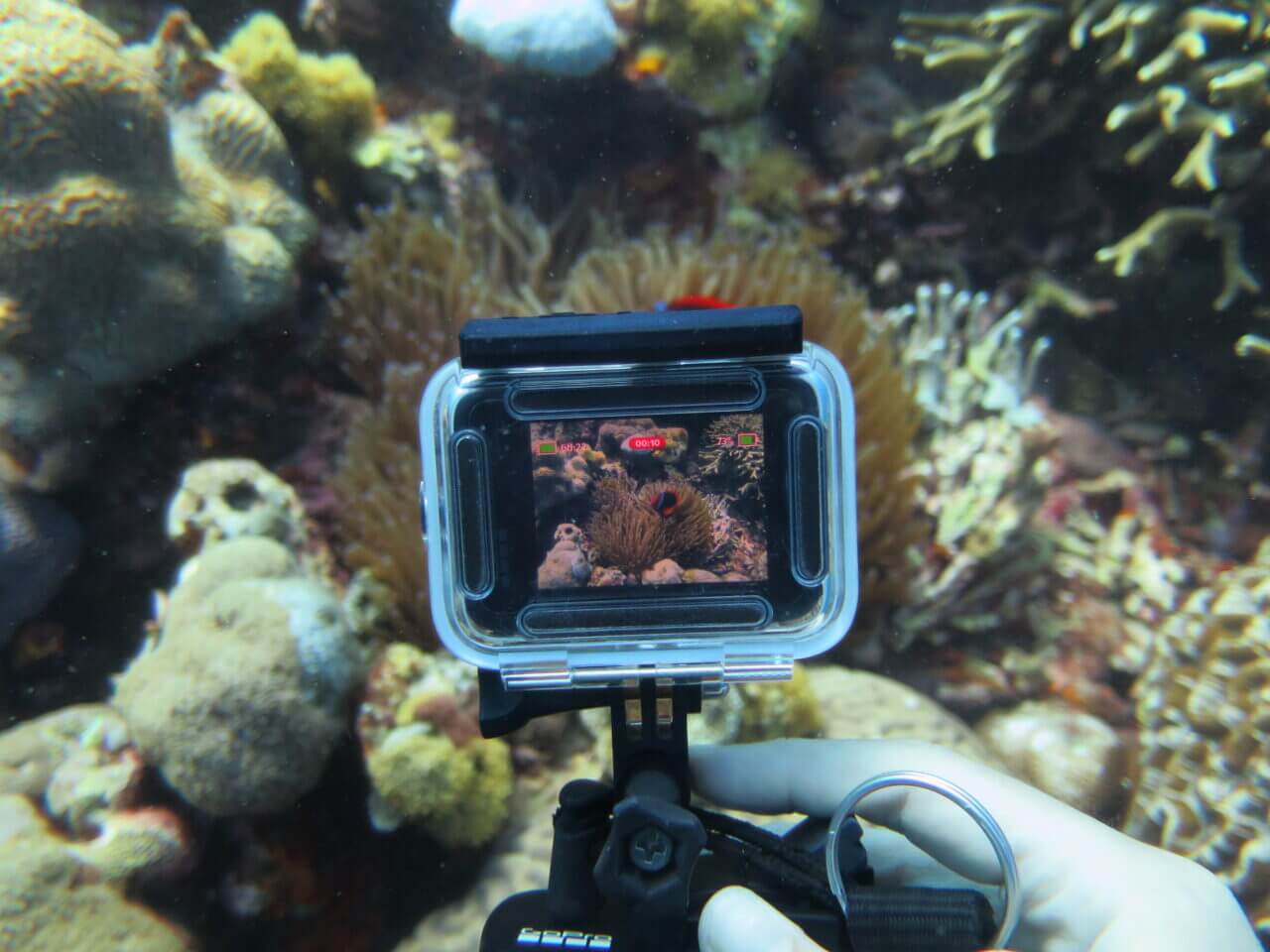
Back when I first launched Diving Squad nearly ten years ago, I wanted to start capturing some of the incredible things I was seeing underwater. Unfortunately, I had absolutely no idea what the fuck I was doing.
I needed a waterproof camera that was easy for a complete noob to use yet cheap enough that it didn’t really matter if it got crushed, eaten or blown up.
Crisp underwater videos, sharp photos with natural colours and easy file transfers to my phone and computer — surely that couldn’t be too difficult to find, I reasoned.
I was incorrect. Finding the best cheap underwater camera is way harder than it looks!
Search online and you’ll find approximately seven billion cheap underwater cameras to choose from. But which of these are actually any good once you get them the fuck under the water?
Over the years, I’ve tried a whole bunch of different models of dirt-cheap waterproof cameras — some moved me to tears of joy, whereas others were useless pieces of shit.
That’s exactly why I created this guide! To help you realise what’s really worth your money and what’s a waste of your time. I’ve only listed cameras I personally rate as both awesome and affordable!
You’ll see my recommendations have been organised into three budget price brackets — under $100, $250 and $300.
Use the Quick Picks below if you’re short on time, or dive deeper down for my Detailed Reviews. There’s also an Buyer’s Guide & Info Section!

Ahoy! I’m Alex — an English PADI Scuba Diving Instructor and the creator of Diving Squad. I started this blog back in 2018, commencing a five-year odyssey diving, travelling and working across Southeast Asia, South and Central America, Ireland and beyond. In 2023, I landed in Panglao, Philippines — and liked it so much I never really left! I’ve been based here ever since, diving, teaching and continuing to build Diving Squad. When I’m not underwater, I’m usually editing dive footage, plotting the next adventure or cruising around on my bike — but never for long before the reefs pull me back!
QUICK PICKS: 10 Best Cheap Underwater Cameras of 2026 🥇🌊📸
1 – 5: Best Underwater Cameras Under $100 🥇💵📷🐠🤿:
1) Cheapest 💵📷😄 – Apexcam M80 Air
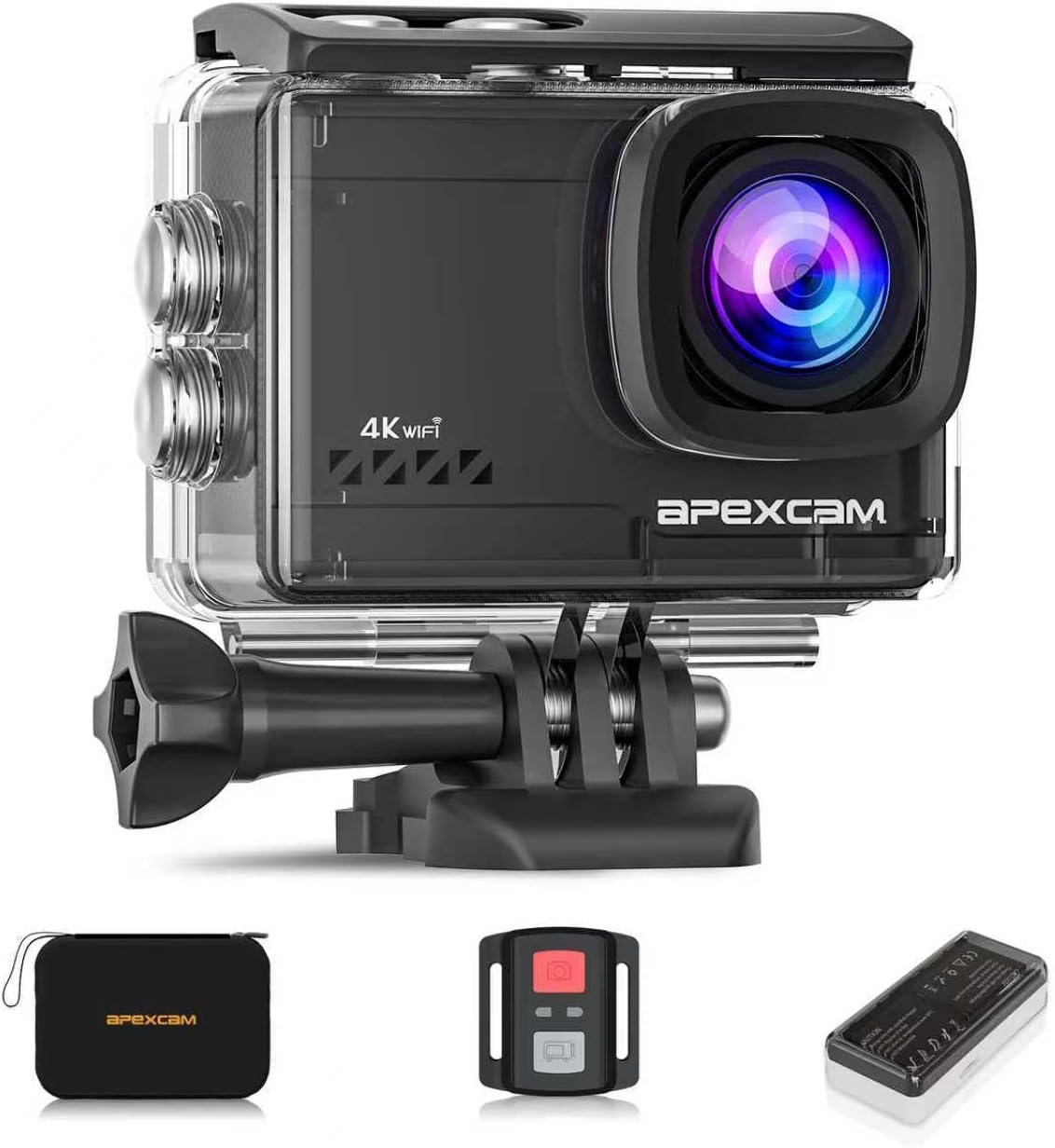
Apexcam M80 Air: Dirt-cheap 4K underwater camera with 40m housing, stabilization and a price under $50!
👉 Full Review ↓ | 🛒 AMAZON PRICE →
2) Selfies (Front Display) 🤳😊📷 – Icefox i8
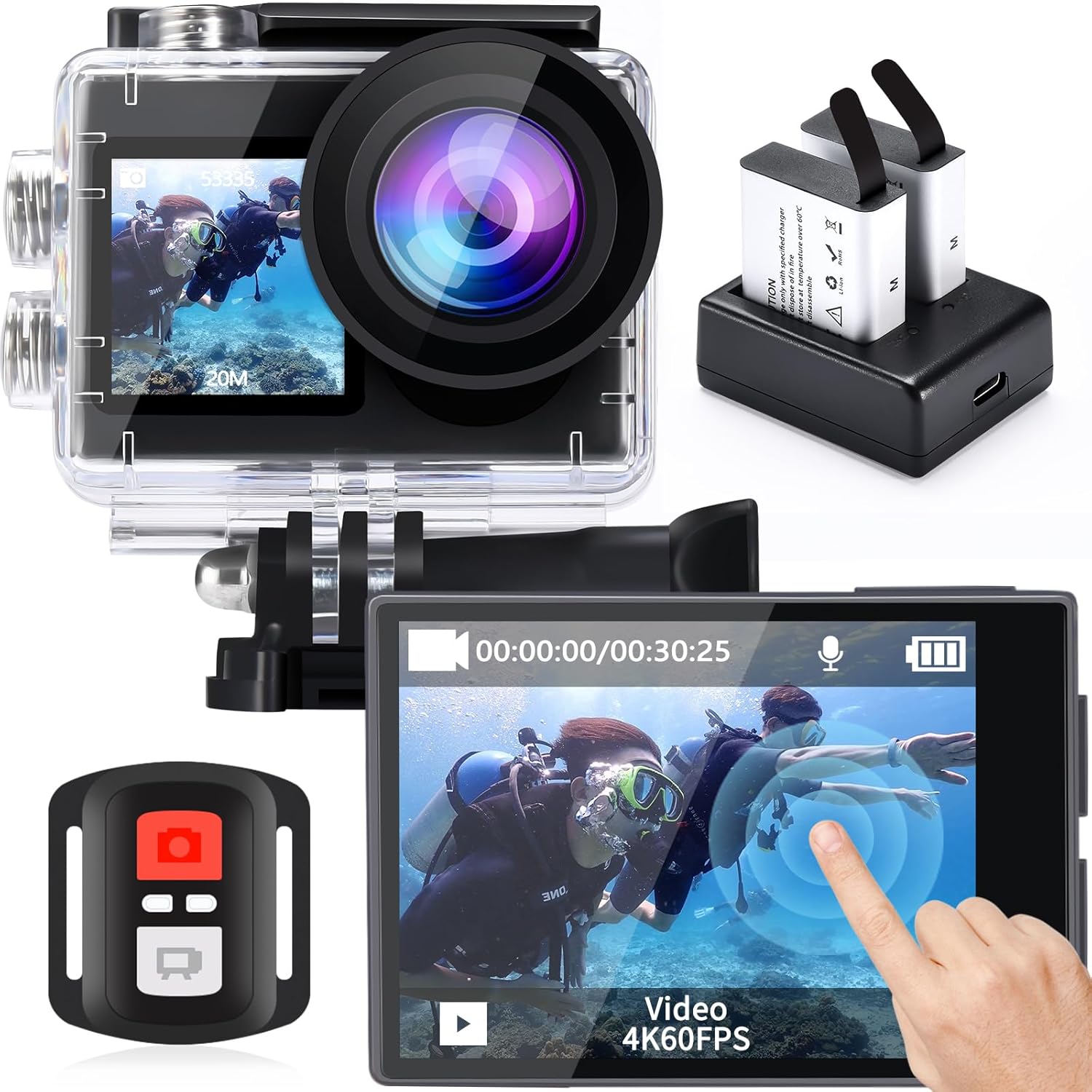
Icefox i8: Budget 4K camera with a front-facing screen – perfect for underwater selfies and vlogging!
👉 Full Review ↓ | 🛒 AMAZON PRICE →
3) Hands-Free Clip-On Camera 🙌🧲📷 ⭐ – SJCAM C110+
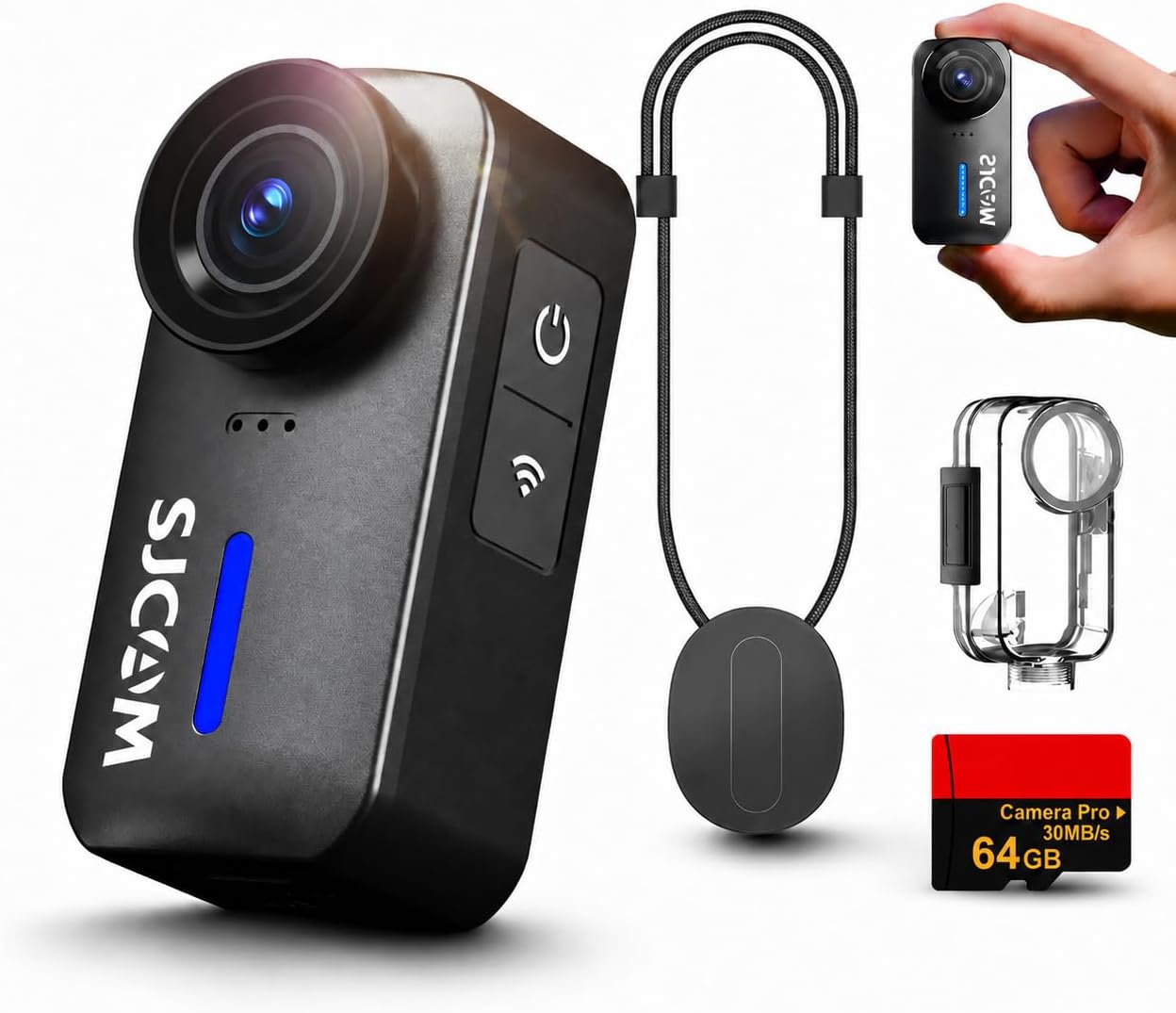
SJCAM C110+: Tiny magnetic clip-on 4K camera for effortless hands-free underwater filming!
👉 Full Review ↓ | 🛒 AMAZON PRICE →
4) Best All-Rounder 📸🏆✅ – AKASO EK7000
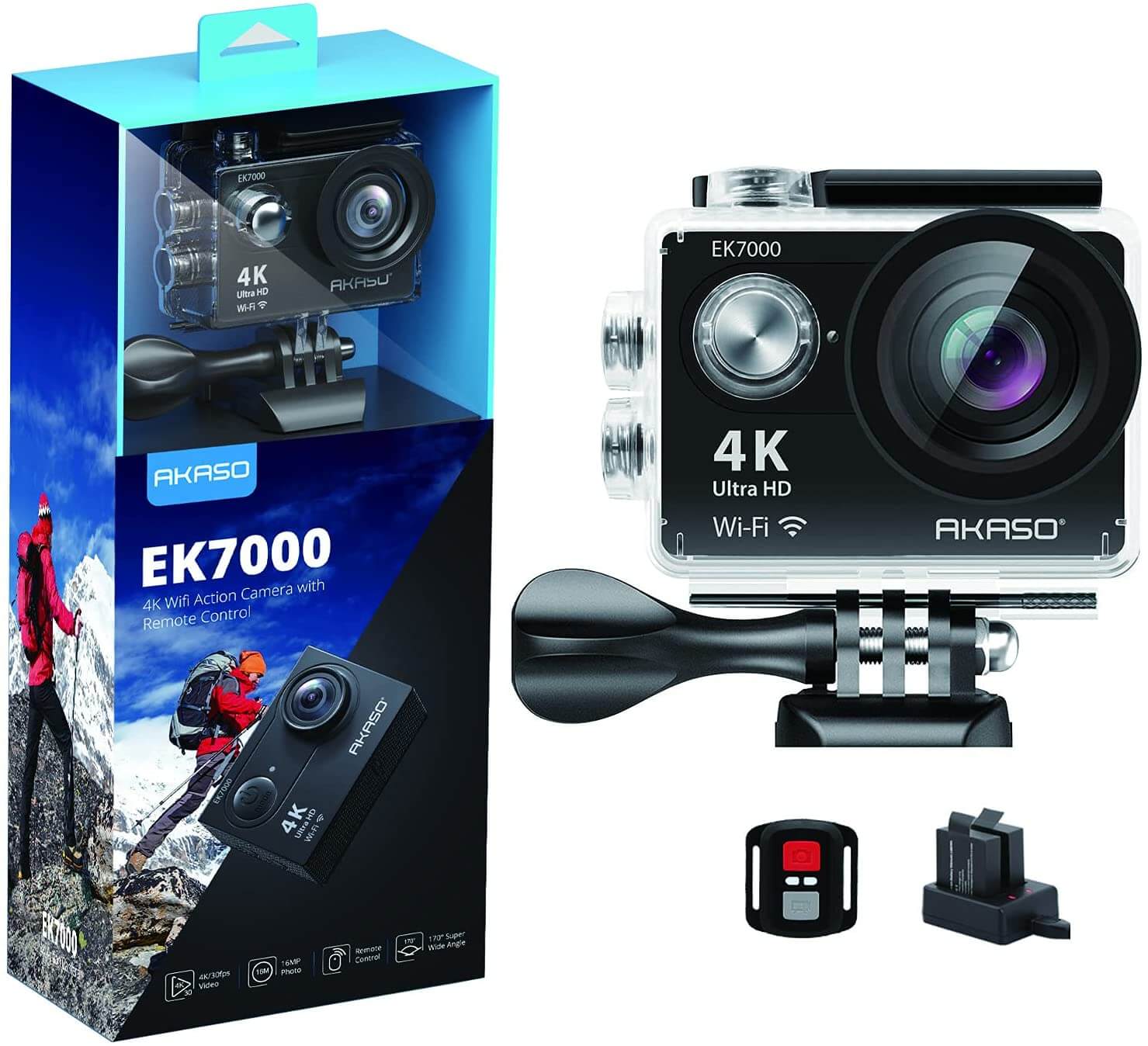
AKASO EK7000: My first underwater camera! A reliable, easy-to-use 4K all-rounder at a bargain price.
👉 Full Review ↓ | 🛒 AMAZON PRICE →
5) Top Pick ✨🏆📷: AKASO EK7000 PRO
AKASO EK7000 Pro: Premium budget 4K camera with touchscreen, smoother stabilisation and easier controls.
👉 Full Review ↓ | 🛒 AMAZON PRICE →
6 – 8: Best Underwater Cameras Under $250💰💎📷⬆️:
6) Built for Divers 🤿📷🌊 – SJCAM SJ30
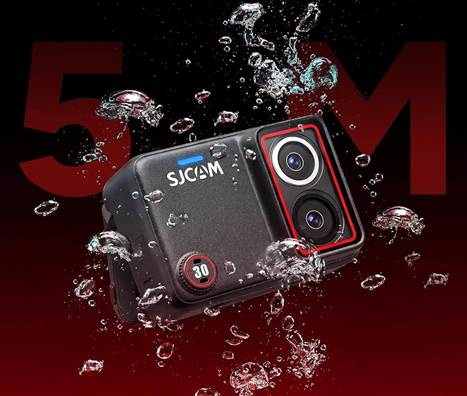
SJCAM SJ30: Diver-focused 8K camera with dual sensors for brighter, sharper footage in low light.
👉 Full Review ↓ | 🛒 AMAZON PRICE →
7) DJI Experience 🚁📷✨ – DJI Osmo Action 4
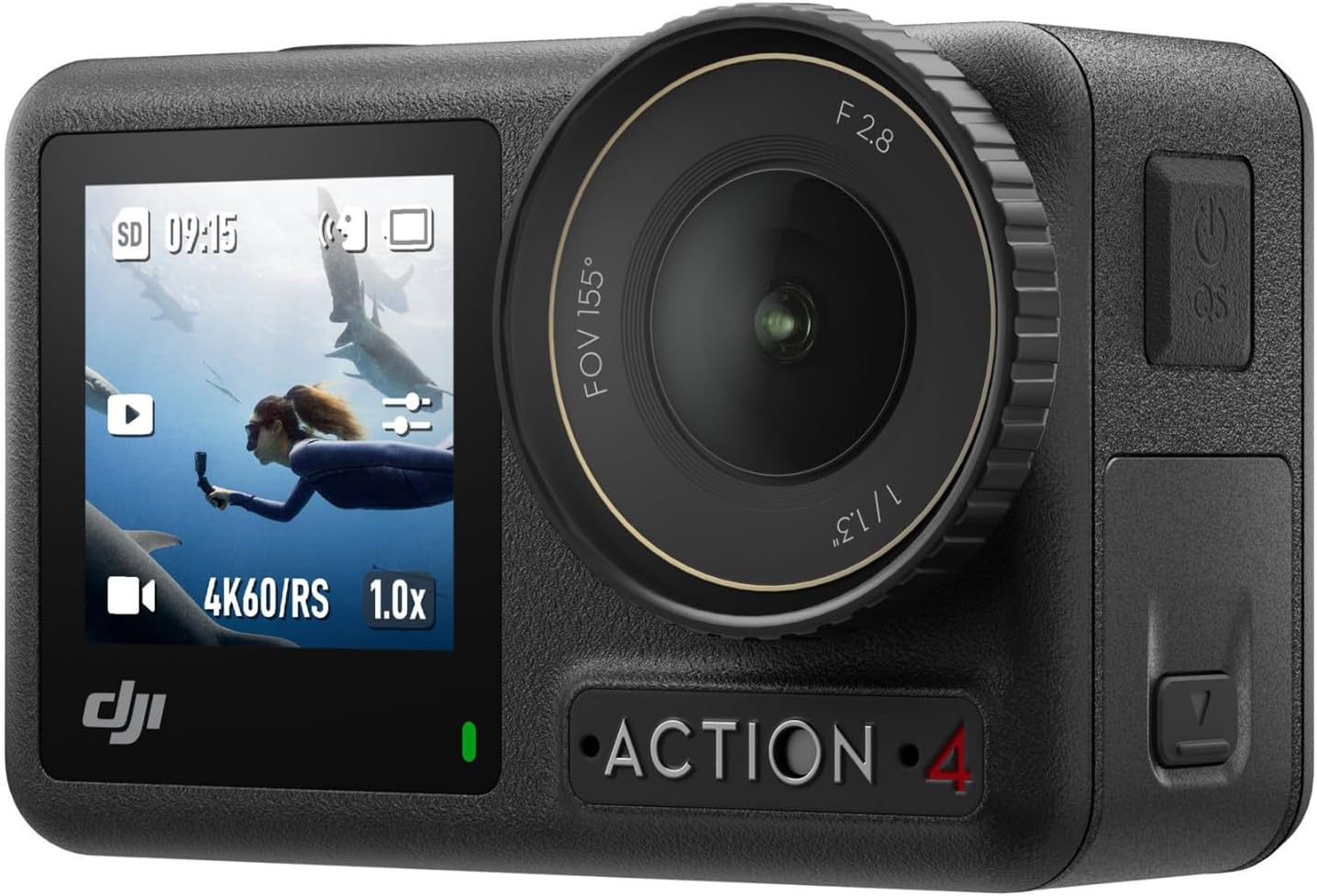
DJI Osmo Action 4: Stunning underwater colours, smooth 4K and awesome value!
👉 Full Review ↓ | 🛒 AMAZON PRICE →
8) Smartphone Alternative 📱🌊📸 – DiveVolk SeaTouch 4 Max
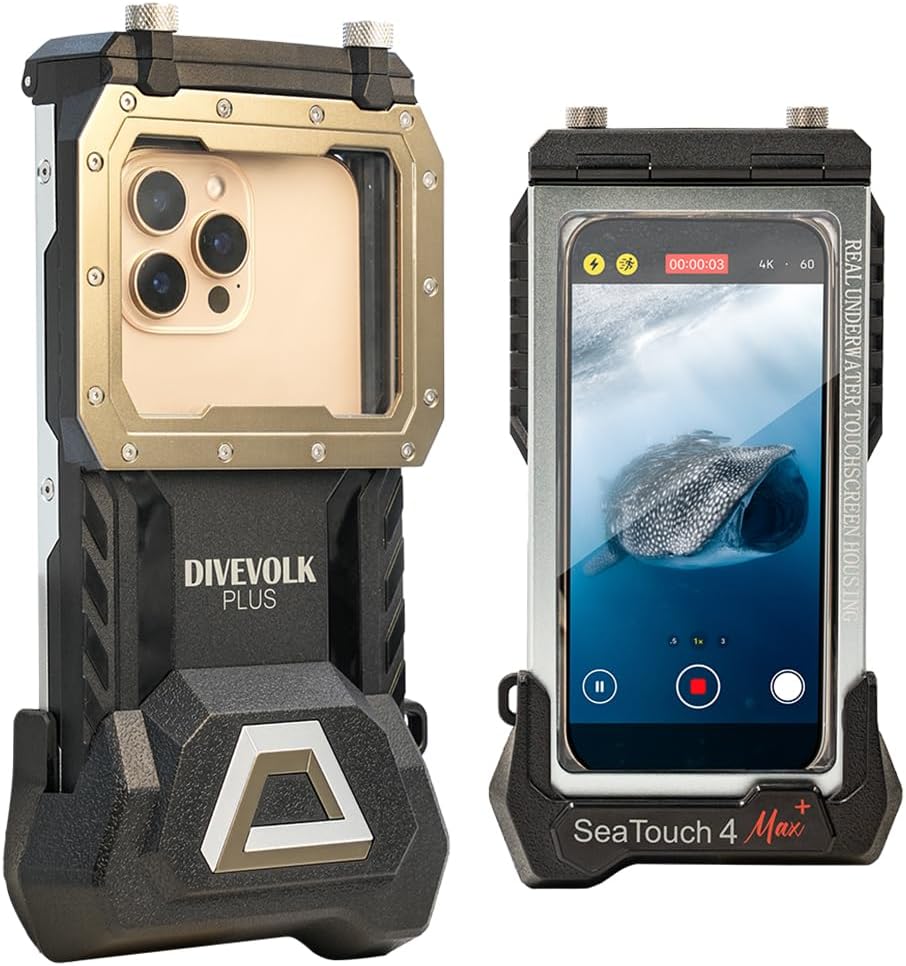
DiveVolk SeaTouch 4 Max: Turn your smartphone into a 60m dive camera with full touchscreen control!
👉 Full Review ↓ | 🛒 AMAZON PRICE →
9 – 10: Best Underwater Cameras Under $300 🏆💎📷✨:
9) Ultimate Underwater Action Camera 🚀📷🌊 – AKASO Brave 8
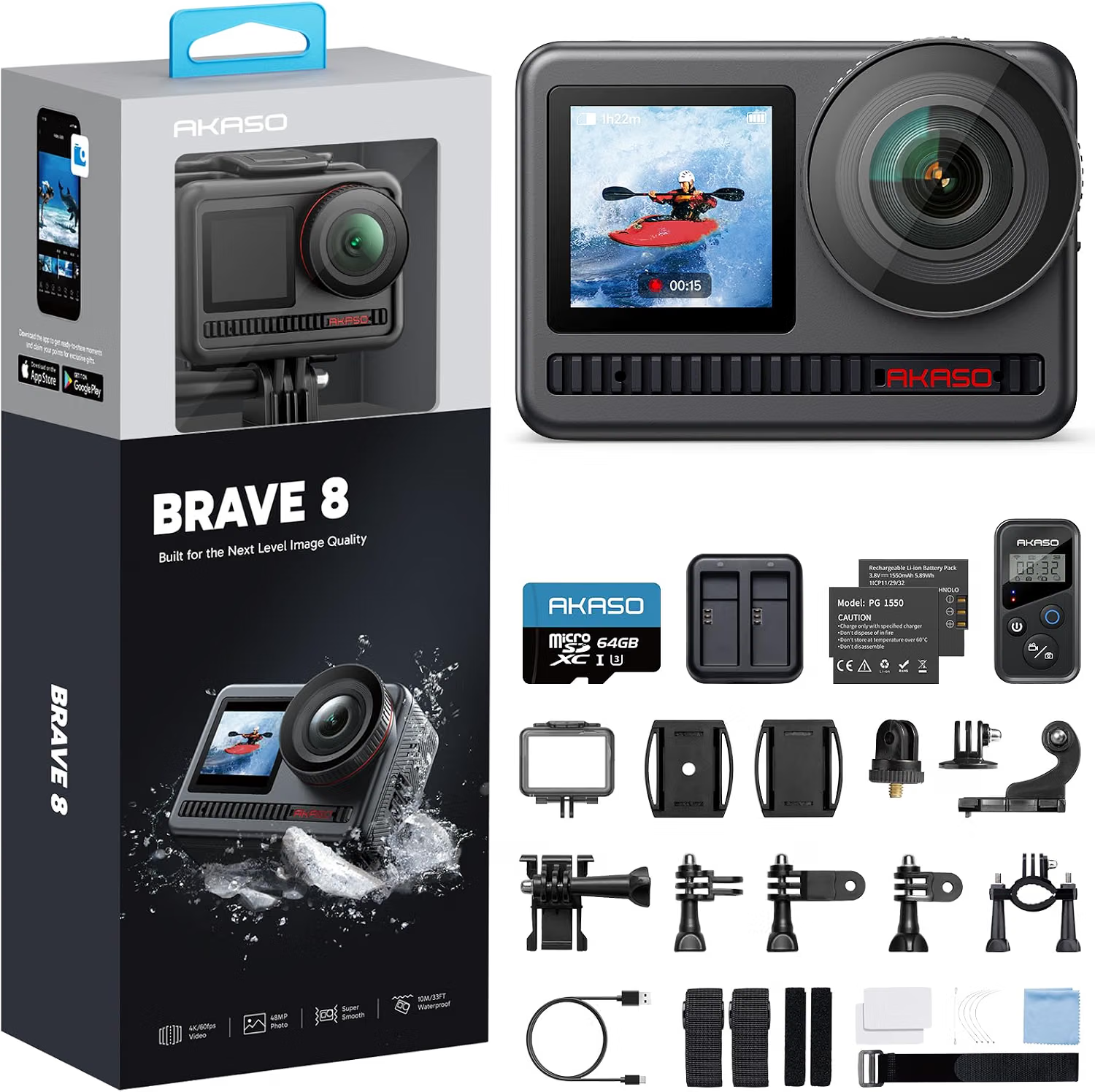
AKASO Brave 8: Premium 4K camera with excellent colours, smooth footage and an included 40m dive housing!
👉 Full Review ↓ | 🛒 AMAZON PRICE →
10) Best Affordable GoPro 🏆📷🌊 – GoPro Hero 12 Black
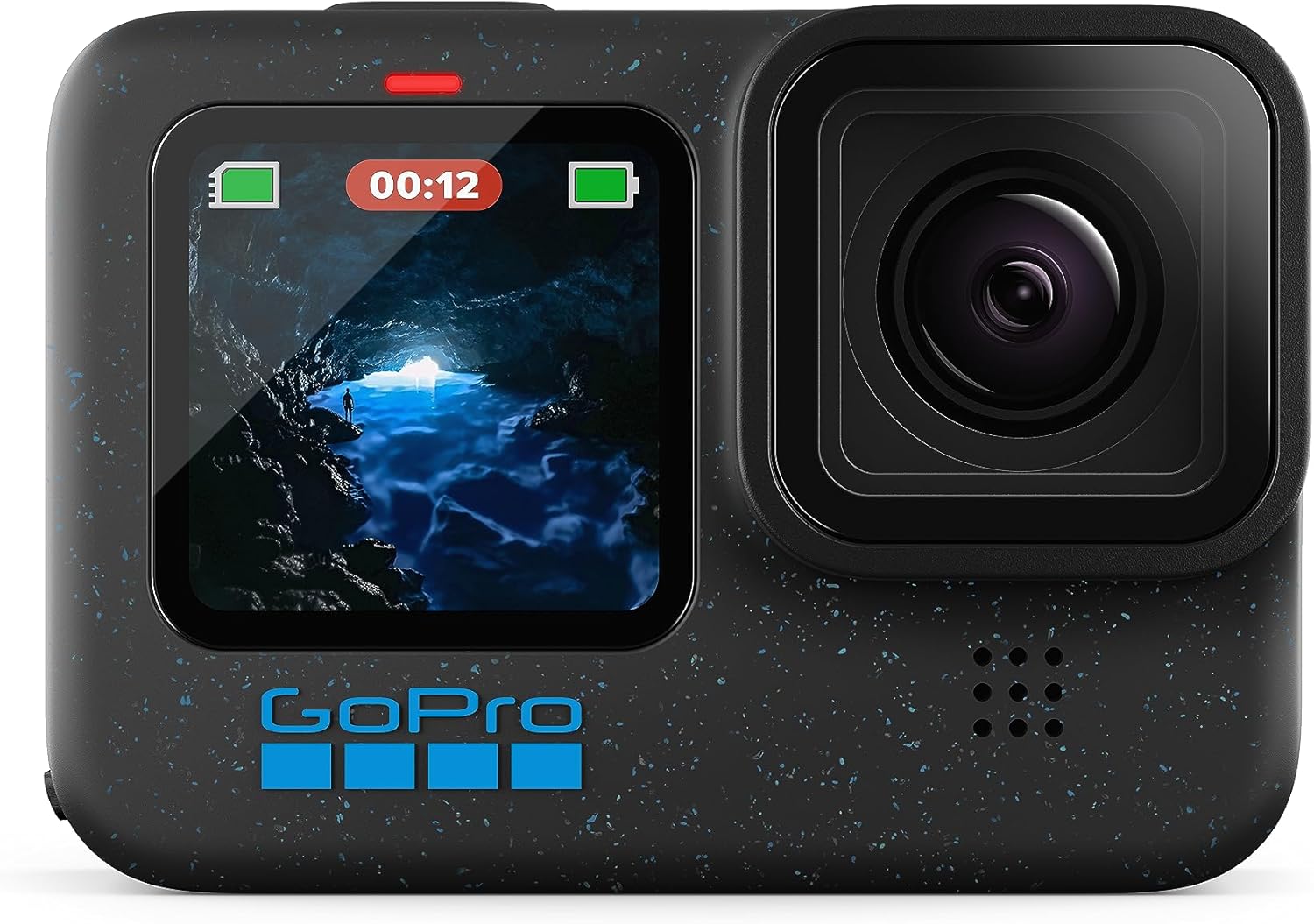
GoPro Hero 12 Black: Stunning 5.3K footage, superb stabilisation and legendary GoPro reliability!
👉 Full Review ↓ | 🛒 AMAZON PRICE →
📸 🤓 📚 📊 Feeling Confused Right Now?!
Dive down to my Underwater Camera Info, Terminology & Buying Guide ↓ for gratuitously nerdy explanations of video resolution, frame rates, image sensors, underwater colour correction, stabilisation, waterproof ratings and all the other techy stuff that makes underwater cameras tick! 🤓📸
REVIEWS: 5 Best Underwater Cameras Under $100 🥇💵📷🐠
These five cameras prove that you don’t need to spend a fortune to capture fantastic underwater photos and videos.
They’re ideal for newly certified scuba divers, snorkellers and holidaymakers, offering excellent value for money while remaining simple to use. If your budget is under $100, these are the cameras I’d recommend before spending a penny more.
1) Cheapest Underwater Camera 💵🏅📷: Apexcam M80 Air
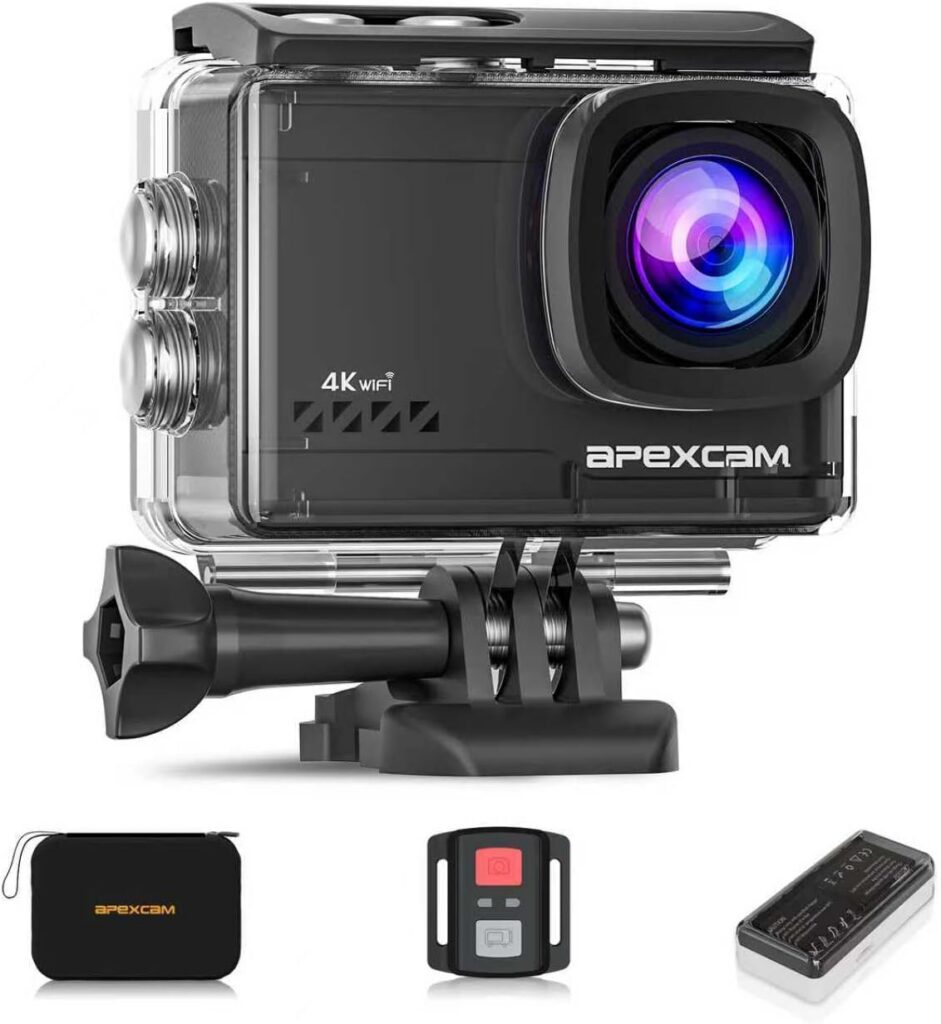
⭐ Quick Verdict
The Apexcam M80 Air is the cheapest underwater camera on this list, sitting below the $50 mark. That’s remarkable when you consider that, not long ago, capturing high-quality underwater footage meant spending hundreds—or even thousands—of dollars on specialist equipment.
Today, for less than $50, you get a camera capable of recording 4K video at up to 60fps, complete with a 40m (131ft) waterproof housing, electronic image stabilization, built-in Wi-Fi and a 170° wide-angle lens.
While it won’t rival the image quality, low-light performance or colour correction of more expensive action cameras, it’s an amazingly affordable way to start capturing your underwater adventures.
👍 Best For
- 💰 Budget buyers
- 🤿 First-time scuba divers
- 🏖️ Snorkellers and holidaymakers
- 🎥 Casual underwater filming
📌 Key Features
- 🎬 4K video at up to 60fps
- 🌊 40m (131ft) waterproof housing
- 🛡️ Electronic Image Stabilization (EIS)
- 👀 170° wide-angle lens
⭐ Bottom Line
For less than $50, the Apexcam M80 Air delivers outstanding value and is an excellent entry point into underwater photography and videography. If keeping costs to an absolute minimum is your priority, this is the camera I’d recommend.
2) Best for Selfies 🤳😊📷: Icefox i8
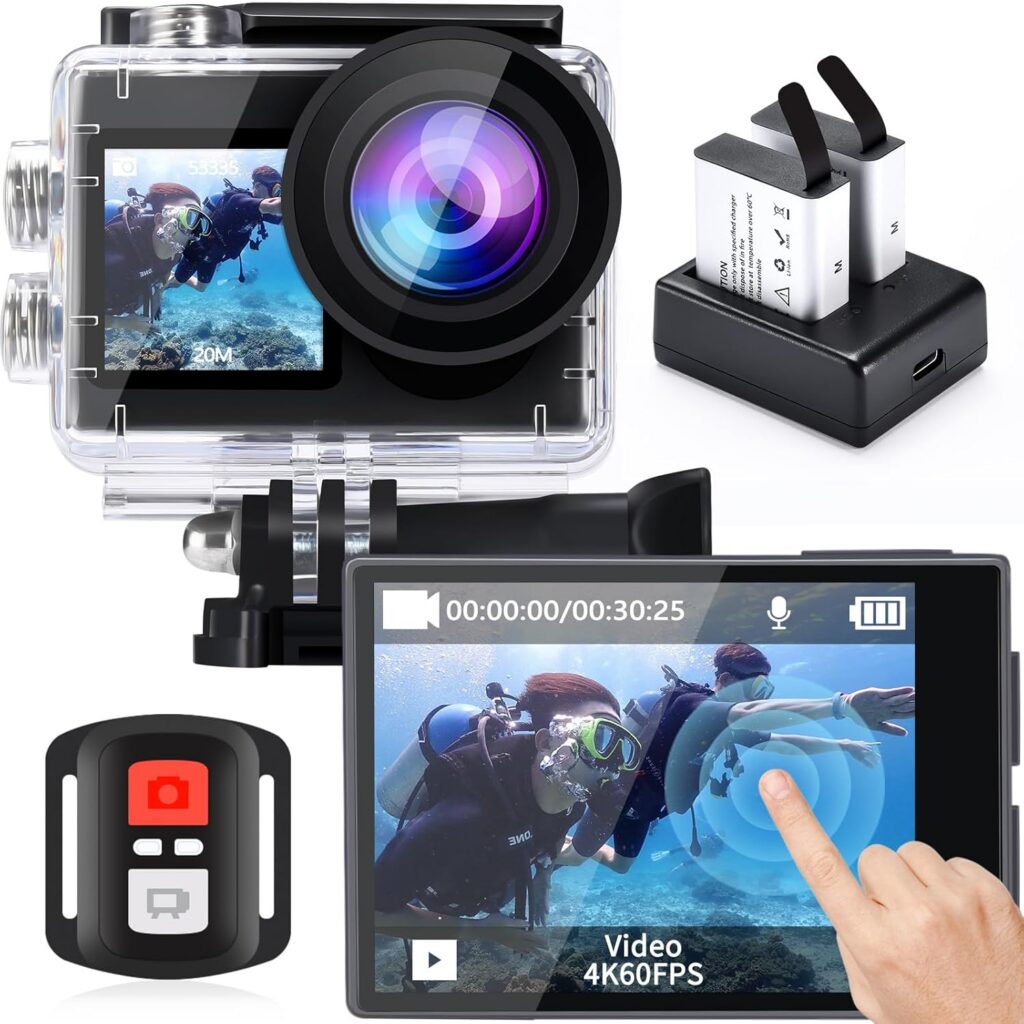
⭐ Quick Verdict
The Icefox i8 is the second cheapest camera on this page – and the only underwater camera in this under-$100 section to feature a front-facing colour screen, making it by far the best choice for selfies, vlogging and filming yourself underwater.
Unlike the other four cameras in this price bracket, you can actually see yourself while recording, making it much easier to frame the perfect shot whether you’re snorkelling with friends, exploring a reef or documenting your scuba adventures.
It backs up that standout feature with 4K video at up to 60fps, a 40m (131ft) waterproof housing, built-in Wi-Fi and electronic image stabilisation. If you love getting yourself in the frame as much as the scenery around you, the Icefox i8 is an excellent choice.
👍 Best For
- 🤳 Selfies and vlogging
- 🤿 First-time scuba divers
- 🏖️ Snorkellers and holidaymakers
- 📱 Anyone wanting an easy-to-use action camera
📌 Key Features
- 🤳 Front-facing colour display
- 🎬 4K video at up to 60fps (60fps with EIS off)
- 🌊 Waterproof to 40m (131ft) with the included housing
- 🛡️ Electronic Image Stabilization (EIS)
⭐ Bottom Line
If you’re buying your very first underwater camera, the Icefox i8 is a fantastic place to start. It strikes an excellent balance between price, ease of use and image quality, making it a camera you can confidently take on everything from your first snorkelling trip to your first scuba certification dives.
3) Hands-Free Clip-On Camera 🙌🧲📷 – SJCAM C110+
⭐ Quick Verdict
The SJCAM C110+ is the only magnetic clip-on camera in this under-£100 lineup, making it the perfect choice for hands-free filming above and below the water.
Thanks to its clever magnetic mounting system, you can securely attach it to your BCD straps, rash guard or other dive gear, allowing you to capture immersive point-of-view footage without the bulk of a traditional action camera.
Despite weighing just 82g, it records crisp 4K video at 30fps, captures 20MP photos, features 6-axis electronic image stabilisation for smoother footage and is waterproof to 30m (100ft) with its included housing. If you’re looking for the most convenient camera to simply clip on and start recording, the C110+ is hard to beat.
👍 Best For
- 🤿 Divers who want hands-free filming
- 🏄 Snorkellers and watersports
- ✈️ Travellers packing compact and light
- 🎒 Everyday adventures above and below the water
📌 Key Features
- 🧲 Magnetic clip-on design for hands-free recording
- 📦 Ultra-compact 64g body
- 🎬 4K video at 30fps
- 🌊 Waterproof to 30m (98ft) with housing
- 🛡️ 6-axis Electronic Image Stabilisation
⭐ Bottom Line
The SJCAM C110+ combines the convenience of a wearable clip-on camera with features normally found on much larger action cameras. If you want a lightweight camera that you can attach to your dive gear and almost forget you’re wearing, it’s an excellent choice for capturing immersive, hands-free underwater adventures.
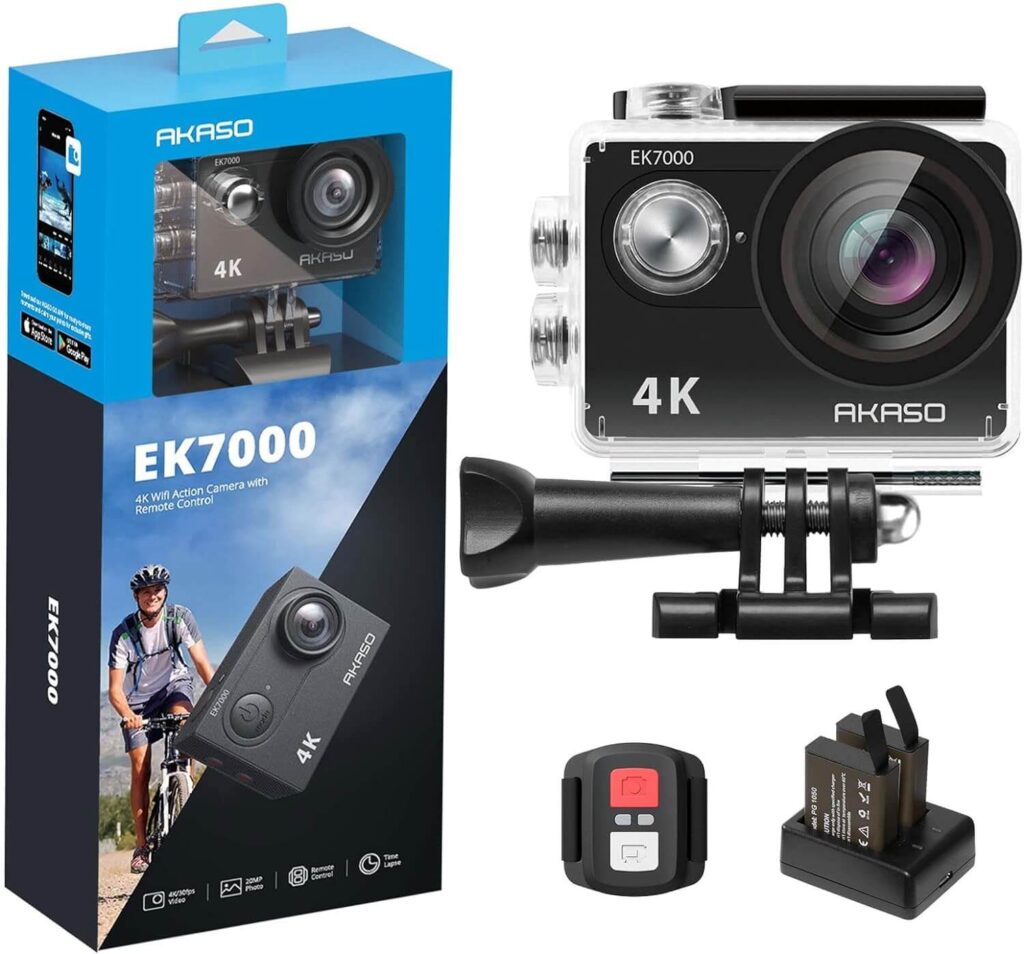
4) Best All-Rounder 📸🏆✅: AKASO EK7000
⭐ Quick Verdict
The AKASO EK7000 is the best all-round cheap underwater camera on this list, offering the ideal balance of affordability, performance, ease-of-use and reliability.
It was actually the very first underwater camera I ever used back in 2020, and it gave me my first taste of underwater videography without spending a fortune.
Since then, it’s gone on to become one of Amazon’s best-selling budget action cameras, earning thousands of positive reviews from users around the world.
Despite costing well under $100, it still records crisp 4K video at 30fps, comes with a 40m (131ft) waterproof housing, and includes handy features like built-in Wi-Fi, time-lapse and loop recording. If you’re looking for the sweet spot between price, simplicity and performance, this is the camera I’d recommend to most people.
👍 Best For
- 🤿 Beginner divers and snorkelers
- 💰 Anyone looking for the best all-round value
- 🌴 Travellers and holidaymakers
- 🐠 People trying to shoot underwater videos for the first time
📌 Key Features
- 🎬 4K video at 30fps
- 🌊 Waterproof to 40m (131ft) with included housing
- 📸 12MP still photos
- 📱 Simple user interface
⭐ Bottom Line
The AKASO EK7000 has earned its reputation as one of the world’s most popular budget underwater cameras—and after using one myself, I can understand why. It delivers an excellent combination of affordability, reliability and video quality, making it my top all-round recommendation for anyone shopping for an underwater camera under $100.
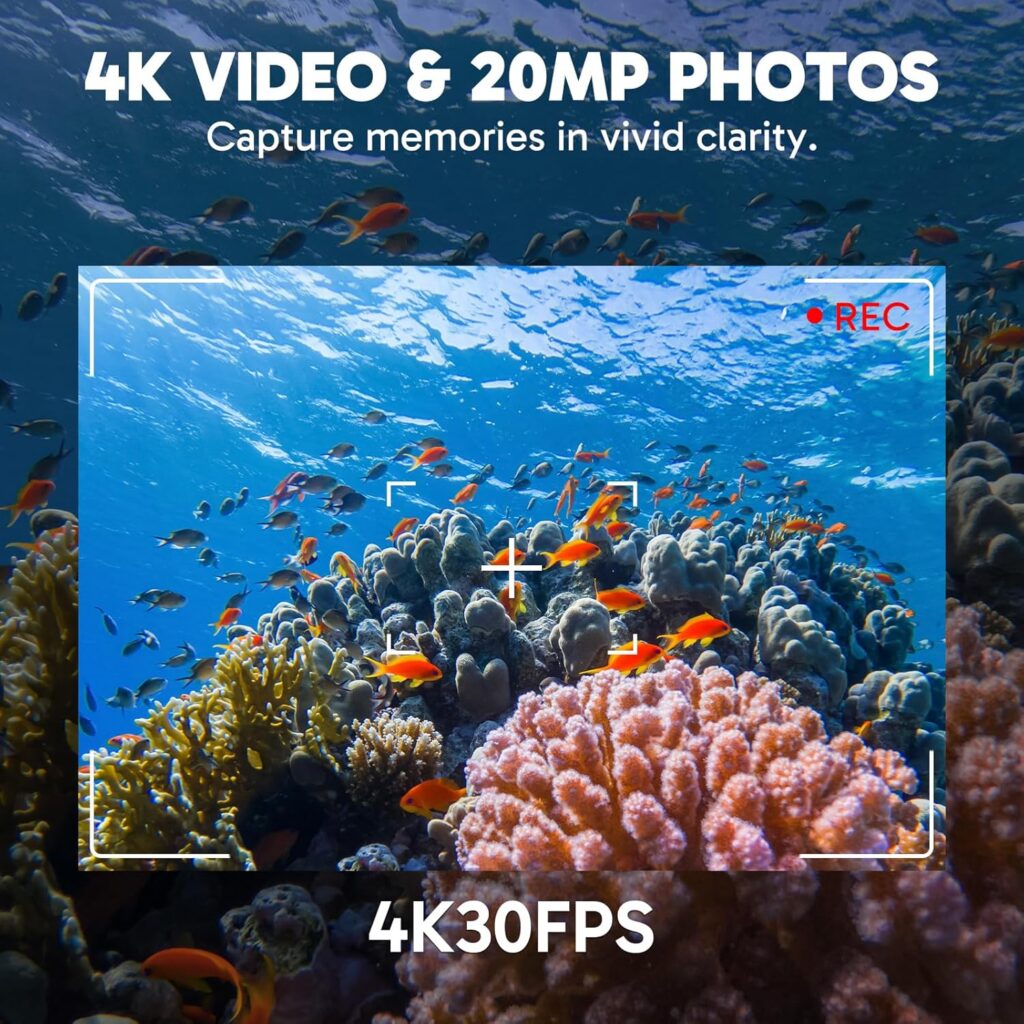
5) Top Pick ✨🏆📷: AKASO EK7000 Pro
⭐ Quick Verdict
The AKASO EK7000 Pro is the most premium underwater camera in this under-$100 lineup, taking everything that made the original EK7000 such a success and refining the overall experience.
Rather than reinventing the camera, AKASO has focused on usability with a smoother interface, a responsive touchscreen for easier setup and playback, improved electronic image stabilisation and a more polished overall feel.
It still records crisp 4K video at 30fps, is waterproof to 40m (131ft) with its included housing, and includes built-in Wi-Fi for quickly sharing your footage. If you’re happy to spend a little more for a camera that feels more refined to use, the EK7000 Pro is an excellent choice.
👍 Best For
- 🤿 Divers wanting the most refined camera under $100
- 🎥 Frequent underwater filming
- 🌊 Regular snorkellers and scuba divers
- 💰 Buyers willing to spend a little extra for a better overall experience
📌 Key Features
- ✨ More refined user experience
- 🛡️ Electronic Image Stabilisation (EIS)
- 🎬 4K video at 30fps
- 🌊 Waterproof to 40m (131ft) with housing
⭐ Bottom Line
The AKASO EK7000 Pro isn’t about dramatically better image quality—it’s about being a more polished camera to own. If you value smoother operation, useful quality-of-life improvements and a more premium feel while still keeping your budget under $100, it’s a worthwhile upgrade over the standard EK7000.
Best Underwater Cameras Under $250 💰💎📷⬆️
If your budget can stretch a little further, these cameras offer a noticeable step up in image quality, features and overall performance.
Expect larger image sensors, better low-light performance and improved stabilisation, making them excellent choices for scuba divers and underwater content creators looking to capture even better photos and videos.
6) Built for Divers 🤿📷🌊 – SJCAM SJ30
⭐ Quick Verdict
Unlike almost every other action camera on the market, the SJCAM SJ30 has scuba diving as its main priority.
One of the biggest challenges underwater is the rapid loss of natural light, which leaves many action cameras producing dark, noisy footage as you descend.
The SJ30 tackles this with an innovative dual-lens system, pairing a standard 1/2-inch daylight sensor with a larger 1/1.8-inch Starlight sensor that captures significantly more light, helping produce brighter, cleaner and more colour-accurate footage in deeper or darker conditions.
It also boasts impressive 8K video recording, allowing you to capture exceptional detail while giving greater flexibility to crop, stabilise or reframe footage during editing.
The camera is waterproof to 5m (16ft) straight out of the box, while SJCAM’s dedicated dive housing extends this to 30m (98ft) for recreational scuba diving.
Combined with advanced 6-axis electronic image stabilisation, which smooths out movement caused by waves and underwater currents, the SJ30 offers one of the most diver-focused feature sets you’ll find without stepping into flagship prices.
👍 Best For
- 🤿 Scuba divers looking to capture exceptional underwater videos
- 🌙 Diving in lower-light conditions
- 🐠 Capturing reefs and marine life with better colour correction and clarity
- 🎥 Divers wanting an action camera designed primarily for underwater use
📌 Key Features
- 🌙 Innovative dual-lens system with a dedicated 1/1.8-inch Starlight sensor
- 🎬 Ultra-high-resolution 8K video recording
- 🛡️ Advanced 6-axis electronic image stabilisation
- 🌊 Waterproof to 5m (16ft), or 30m (98ft) with the dedicated dive housing
- 🔋 Long-lasting battery designed for extended dive days
⭐ Bottom Line
The SJCAM SJ30 is one of the few action cameras designed with scuba divers as its primary audience rather than general adventure sports.
Its innovative dual-lens system, impressive 8K recording, dedicated dive housing and advanced stabilisation make it a standout choice for anyone looking to capture brighter, smoother and more colourful underwater footage without paying flagship prices.
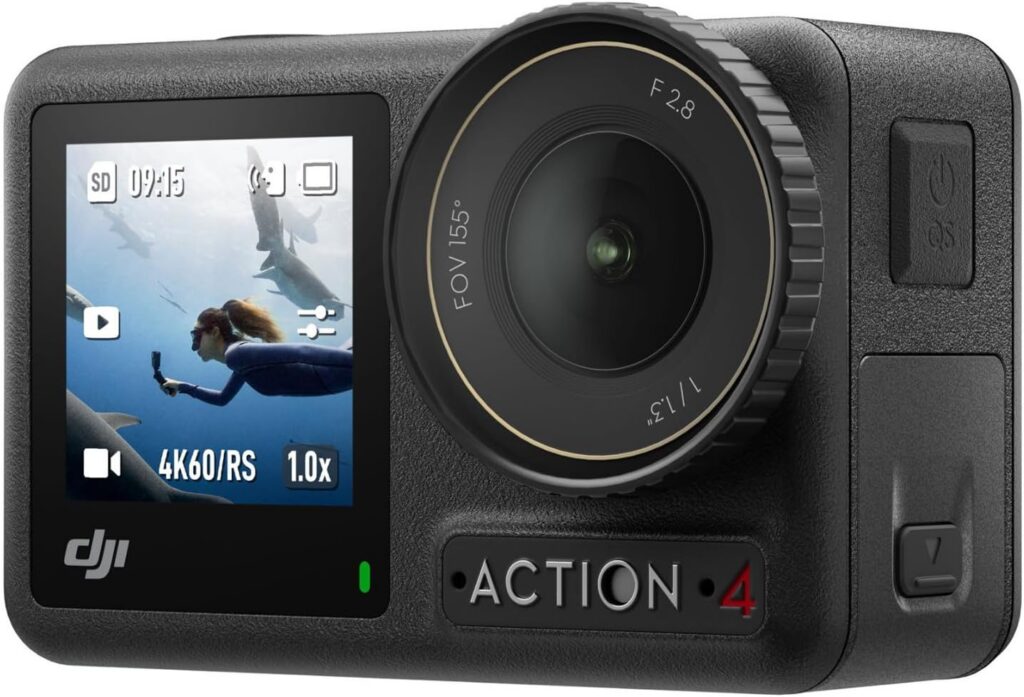
7) DJI Experience 🚁📷✨ – DJI Osmo Action 4
👉 Don’t forget to pick up the DJI Osmo Action 60m Dive Housing to safely use the camera at recreational diving depths.
⭐ Quick Verdict
While DJI has since released newer action cameras, the Osmo Action 4 remains an outstanding choice and is significantly better value for money.
DJI has built a world-class reputation through its industry-leading drones, and that same imaging expertise carries over into its action cameras.
Thanks to its large 1/1.3-inch sensor and excellent image processing, the Osmo Action 4 captures noticeably brighter, cleaner footage with richer colours than most competing action cameras, making it one of the best options for scuba diving at this price.
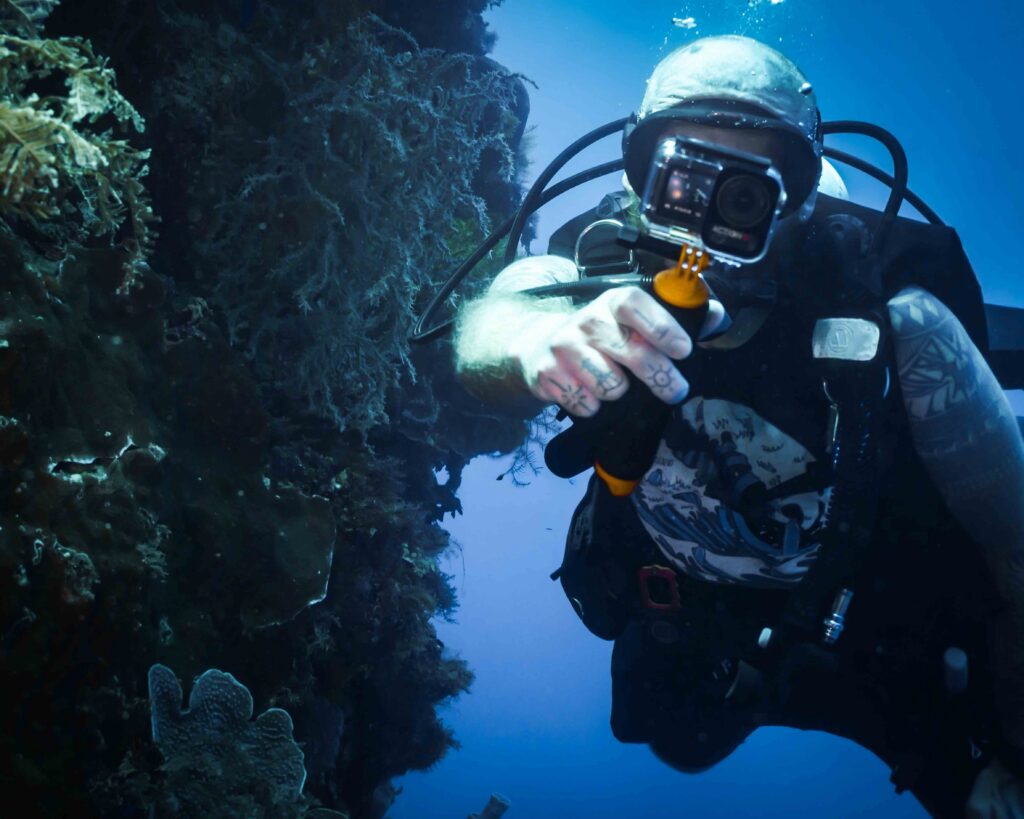
👉 I’ve used DJI Osmo Action cameras extensively while scuba diving, and they consistently deliver some of the best underwater footage I’ve captured from an action camera thanks to the awesome colour correction and automatic white balance.
The camera records stunning 4K video at up to 120fps, features DJI’s superb RockSteady 3.0+ and HorizonSteady stabilisation for incredibly smooth footage, and is waterproof to 18m (59ft) straight out of the box.
I also really like the extra display at the front, which makes taking selfies an absaloute breeze!
Pair it with DJI’s optional 60m dive housing, and it becomes an exceptional companion for recreational scuba diving.
👍 Best For
- 🌅 Low-light and deeper dives
- 🎥 Superb-quality underwater video
- 🚁 Anyone wanting a premium GoPro alternative
- 🤿 Beginner and experienced scuba divers
📌 Key Features
- 📷 Large 1/1.3-inch image sensor
- 🎬 Crisp 4K video at up to 120fps
- 🛡️ RockSteady 3.0+ and HorizonSteady stabilisation
- 🌊 Waterproof to 18m (59ft) or 60m (197ft) with DJI’s optional dive housing
- 🔋 Excellent battery life with fast charging
⭐ Bottom Line
The DJI Osmo Action 4 proves you don’t always need the latest model to get exceptional results. With superb low-light performance, class-leading stabilisation and excellent underwater image quality, it remains one of the easiest action cameras to recommend for scuba divers who want flagship performance without paying flagship prices.
👉 Don’t forget to pick up the DJI Osmo Action 60m Dive Housing to safely use the camera at recreational diving depths.
8) Smartphone Alternative 📱🌊📸 – DiveVolk SeaTouch 4 Max
⭐ Quick Verdict
If you already own a modern smartphone, you may not need to buy an underwater camera at all. Flagship smartphones now feature incredibly sophisticated camera systems, often producing better photos and videos than dedicated underwater cameras at a similar price.
The DiveVolk SeaTouch 4 Max lets you take full advantage of that technology underwater by transforming your phone into a fully functioning dive camera.
Unlike most underwater phone housings, the SeaTouch uses a unique membrane that allows you to use your phone’s entire touchscreen underwater. This means you can access your favourite camera apps, adjust settings, switch between lenses, tap to focus, zoom, and even use professional camera apps while diving.
Once you’re back on land, you’ll also benefit from the huge range of smartphone editing apps available, making it incredibly easy to colour-correct, edit and share your underwater photos and videos without ever transferring files to another device.
Compatible with most modern iPhones and Android phones, the SeaTouch is waterproof to 60m (197ft), making it suitable for recreational scuba diving. If you already own a smartphone with an excellent camera, it’s one of the smartest and most cost-effective ways to start capturing high-quality underwater content.
👍 Best For
- 📱 Turning your smartphone into an underwater camera
- 📸 High-quality underwater photos and videos
- 🎨 Easy editing and sharing with smartphone apps
- 🤿 Experienced scuba divers
📌 Key Features
- 📷 Compatible with most modern iPhones and Android phones
- 🎥 Use your favourite camera, video and editing apps
- 🌊 Waterproof to 60m (197ft)
- 📱 Full touchscreen control underwater
- 🔍 Access zoom, focus and multiple camera lenses underwater
- 🤿 Purpose-built for scuba diving
⭐ Bottom Line
The DiveVolk SeaTouch 4 Max isn’t just an underwater housing—it’s a way to unlock the full potential of the powerful camera already in your pocket. For many divers with a modern smartphone, it can deliver better photos, better videos and a far more flexible editing experience than many dedicated underwater cameras in the same price range, making it one of the smartest alternatives in this guide.
Best Underwater Cameras Under $300 🏆💎📷✨
These are the very best action cameras in this guide, offering the biggest step up in image quality and overall performance.
Better sensors, stronger low-light performance, improved stabilisation and greater flexibility with white balance and underwater colour correction all help you capture—and edit—your best underwater footage yet.
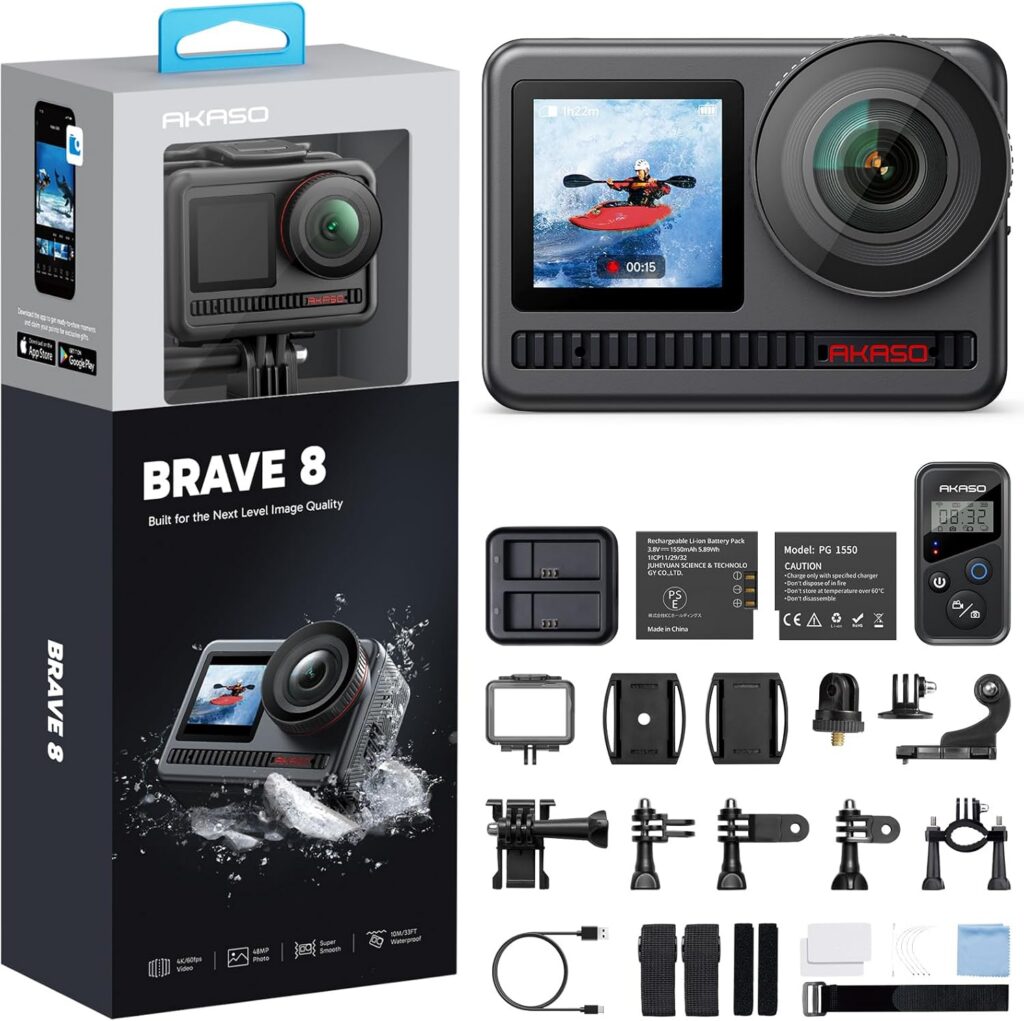
9) Ultimate Underwater Action Camera 🚀📷🌊 – AKASO Brave 8
⭐ Quick Verdict
If you still think of AKASO as a budget action camera brand, the Brave 8 is likely to change your mind. As the company’s flagship model, it delivers a genuinely premium experience with a large 1/1.5-inch CMOS sensor, stunning 4K video at up to 60fps, excellent dynamic range and noticeably improved colour reproduction.
Compared to the cheaper AKASO cameras featured earlier in this guide, the Brave 8 captures sharper, cleaner footage with better low-light performance, making it an excellent upgrade for divers who want to take their underwater content to the next level.
The Brave 8 also features advanced SuperSmooth image stabilisation, helping produce silky-smooth footage even in surge or stronger underwater currents.
Better still, unlike many premium action cameras, the package includes a dedicated waterproof dive housing, allowing you to take it straight down to 40m (131ft) for recreational scuba diving without needing to buy extra accessories.
If you’re looking for premium performance but want to spend less than the latest flagship action cameras, the Brave 8 is one of the best-value options available.
👍 Best For
- 🎥 Premium-quality underwater video
- 🤿 Beginner and intermediate scuba divers
- 🌅 Better colour, detail and low-light performance
- 💰 Divers wanting flagship performance for less
📌 Key Features
- 📷 Large 1/1.5-inch CMOS sensor
- 🎬 Stunning 4K video at up to 60fps
- 🛡️ Advanced SuperSmooth image stabilisation
- 🌊 Waterproof to 10m (33ft) or 40m (131ft) with the included dive housing
- 📱 Dual colour touchscreens
- 🔋 Long battery life with fast charging
⭐ Bottom Line
The AKASO Brave 8 is the brand’s most capable action camera to date, proving that AKASO can compete well beyond the budget market. With impressive image quality, excellent stabilisation and an included 40m dive housing, it offers outstanding value for divers wanting flagship-level features without paying flagship prices.
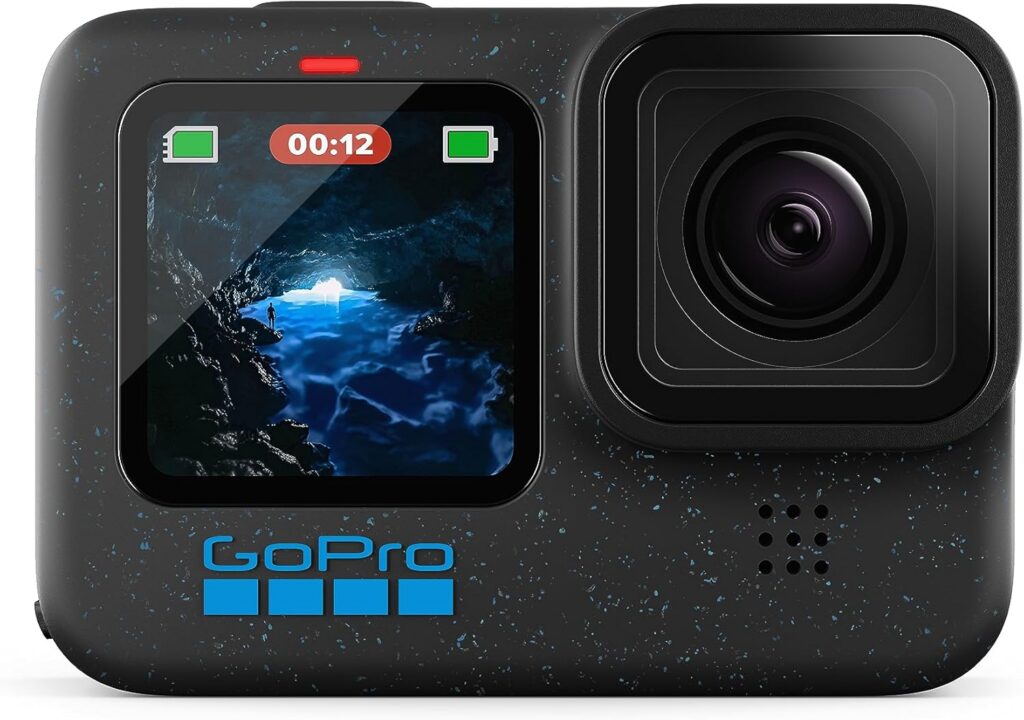
10) Best Affordable GoPro 🏆📷🌊 – GoPro Hero 12 Black
👉 Planning to scuba dive? Pair it with the GoPro Protective Housing to safely dive to depths of 60m (197ft).
⭐ Quick Verdict
GoPro is the brand that made action cameras famous, and while newer models have since been released, the Hero 12 Black remains one of the best value GoPros you can buy.
Trusted by everyone from scuba divers and surfers to filmmakers and content creators, GoPro has built a reputation for exceptional image quality, reliability and ruggedness.
The Hero 12 Black records stunning 5.3K video, captures detailed 27MP photos, and features GoPro’s renowned HyperSmooth 6.0 stabilisation, producing incredibly smooth footage both above and below the surface.
It’s waterproof to 10m (33ft) straight out of the box, while GoPro’s optional Protective Housing extends this to 60m (197ft) for scuba diving. If you’ve always wanted a GoPro but don’t want to pay flagship prices, the Hero 12 Black hits a fantastic sweet spot between performance and value.
👉 I’ve used a bunch of GoPro cameras over the years while scuba diving, and one thing that’s always stood out is just how dependable they are. Whether it’s image quality, white balance correction or simply turning on and working dive after dive, GoPros have earned their reputation as reliable companions underwater.
👍 Best For
- 🎥 Premium-quality action video
- 🤿 Beginner and experienced scuba divers
- 🌊 Fast-moving action and adventure sports
- 🏆 Anyone wanting the GoPro experience
📌 Key Features
- 🎬 Stunning 5.3K video recording
- 📸 High-resolution 27MP photos
- 🛡️ Industry-leading HyperSmooth 6.0 stabilisation
- 🌊 Waterproof to 10m (33ft) or 60m (197ft) with the official dive housing
- 📱 Front and rear colour displays
⭐ Bottom Line
The GoPro Hero 12 Black proves you don’t always need the latest model to get outstanding results. With exceptional image quality, class-leading stabilisation and the reassurance of the world’s most recognised action camera brand, it’s an excellent choice for divers looking to step up to a premium action camera without paying top-of-the-range prices.
👉 Planning to scuba dive? Pair it with the GoPro Protective Housing to safely dive to depths of 60m (197ft).
🏆 Looking for More Premium Underwater Cameras?
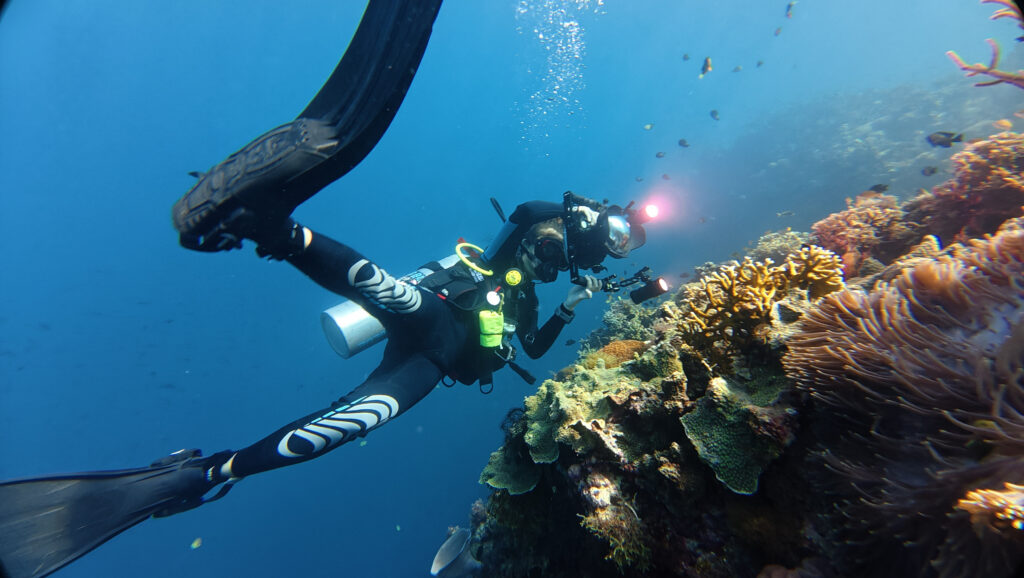
If you’re happy to spend a little more, you’ll unlock dedicated underwater cameras with larger sensors, interchangeable lenses, superior image quality and professional underwater housings.
I’ve also put together a separate guide covering the very best underwater cameras for scuba divers, from premium action cameras right through to professional underwater photography setups.
📚🤿📷 Cheap Underwater Camera Buyer’s Guide
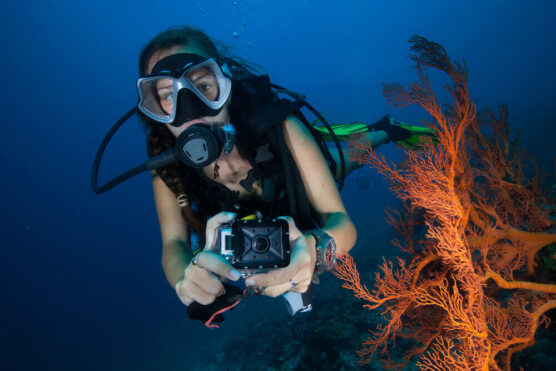
By now you’ve hopefully got a good feel for the different cheap underwater cameras available, along with their strengths and unique selling points. But what actually makes one camera better than another, and which features are genuinely worth paying attention to?
Cheap underwater cameras have improved enormously over the past few years, and even budget-friendly models are capable of capturing fantastic underwater memories. The biggest differences between them often come down to video quality, sensor size, low-light performance, image stabilisation, white balance and underwater colour correction—features that have a far greater impact on your footage than many of the headline specs you’ll see advertised.
In the following sections, I’ll explain what these features actually do, which ones matter most underwater, and where you can confidently save money without compromising on image quality.
⚡ Dive to What You Need
🎥📷 Video vs Photos ⭐
The first thing to understand is that every camera in this guide is designed primarily for shooting video. While they all take photos too—even the dedicated underwater cameras—their biggest strength is capturing smooth, high-quality underwater footage.
This actually surprised me when I first started using action cameras years ago. I expected to use mine mainly for photos, but quickly realised the videos were far more impressive. Watching a turtle glide past, a manta ray soar overhead or a reef drift by in crisp 4K simply captures the experience in a way that a single photo never can.
After years of diving and filming underwater—not to mention watching hundreds of guests use these cameras—I’ve noticed the same pattern time and time again. Most divers start out thinking they’ll take lots of photos, but they almost always end up loving the videos the most.
The photos are still excellent for social media, blogs and holiday memories. However, these cameras use relatively small image sensors and fixed wide-angle lenses, so they can’t match the sharpness, detail, dynamic range and creative flexibility of dedicated underwater photography systems. If your main goal is capturing truly stunning still images, you’ll eventually want to invest in a larger-sensor camera with interchangeable lenses and a dedicated underwater housing.
Before we dive into the technical details, here’s some real underwater footage I’ve filmed using the cameras featured in this guide.
Before we dive into the technical details, here’s some real underwater footage I’ve filmed using the cameras featured in this guide.
📸🔍 Image Sensor Size
If you only learn one technical term from this guide, make it image sensor size. In my opinion, it’s the single biggest factor affecting the quality of your underwater photos and videos.
The image sensor is the part of the camera that captures light. Larger sensors collect more light, resulting in brighter images, richer colours, less digital noise and better detail—especially on deeper dives where natural light quickly disappears.
That’s one of the main reasons dedicated underwater cameras cost so much more than budget action cameras. They use significantly larger sensors, allowing them to produce sharper images with greater dynamic range and much better low-light performance.
That said, don’t let sensor size put you off buying a budget underwater camera. Modern action cameras have improved enormously over the last few years, and clever image processing means even relatively small sensors can produce impressive results. It’s simply one of the biggest reasons why spending more money can noticeably improve your footage.
🌊🎨 White Balance & Underwater Colour Correction
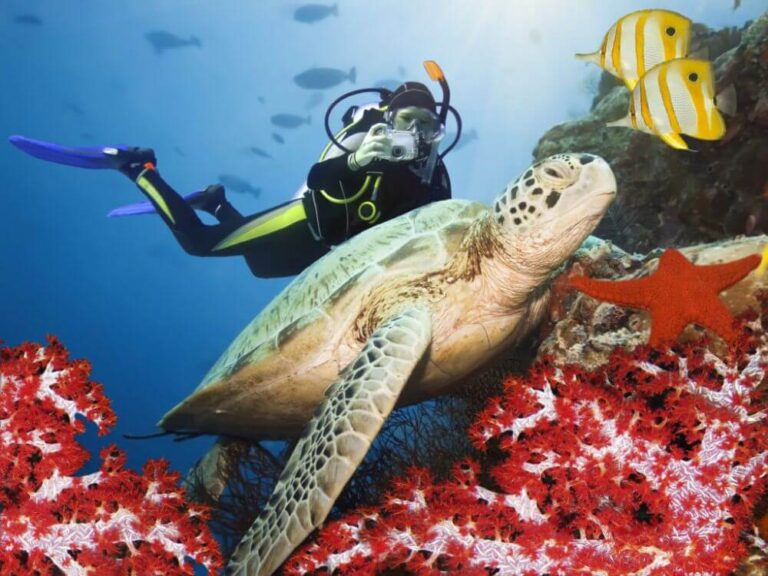
Have you ever looked at your underwater footage and wondered, “Why does everything look so blue?” The answer is simple: water absorbs colour. Red disappears first, followed by orange and yellow, leaving your footage looking increasingly blue or green as you descend.
Fortunately, many modern underwater cameras do a surprisingly good job of restoring those colours automatically. The more premium models in this guide—such as the DJI Osmo Action 4 and GoPro Hero 12 Black—generally produce more natural-looking colours straight out of the camera, thanks to their larger sensors, more advanced image processing and improved automatic white balance. That’s one of the biggest advantages of spending a little more.
Even so, no camera can completely overcome the physics of water. If you want the very best results, you can further improve your footage using manual white balance, red filters, underwater video lights or colour correction during editing.
From my own experience, learning a little about colour correction has made a bigger difference to my underwater videos than upgrading from one camera to the next. Even a budget camera can produce fantastic-looking footage once the colours have been properly restored.
🎥🤳 Image Stabilisation
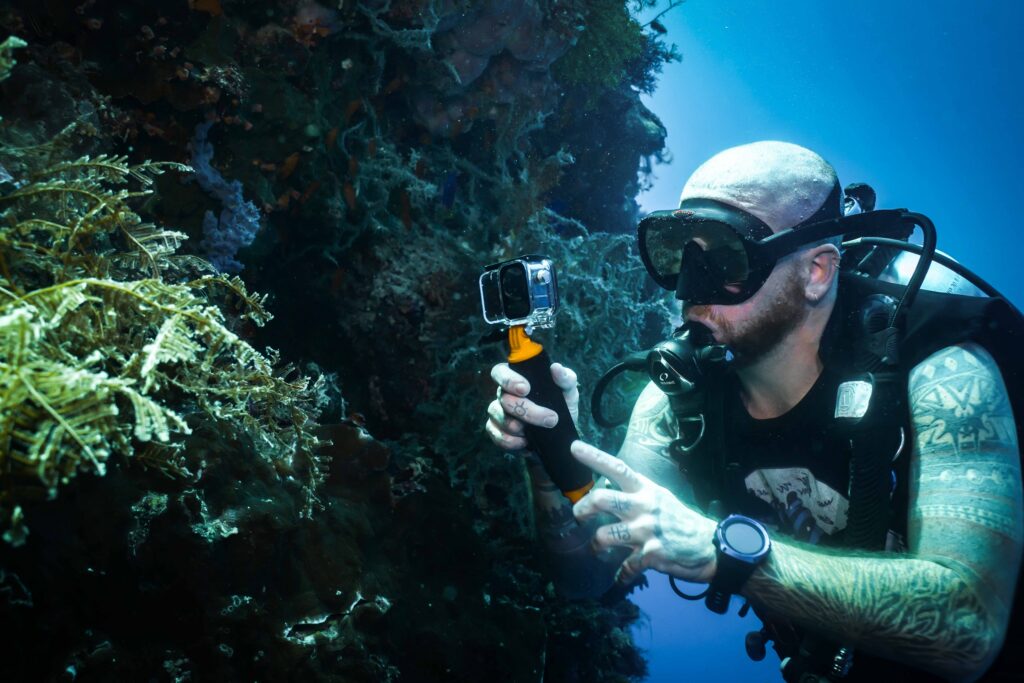
Even if you’ve mastered your buoyancy, it’s almost impossible to keep a camera perfectly steady underwater. Ocean swell, surge, currents and even your own fin kicks all create small movements that can make footage look shaky and amateurish.
That’s where image stabilisation comes in. Modern underwater cameras use sophisticated electronic stabilisation to smooth out those movements, producing footage that looks far more cinematic and enjoyable to watch. It’s one of the biggest reasons action cameras have become so popular with scuba divers over the past decade.
I’ve noticed this myself while editing underwater videos. Footage with good stabilisation simply feels more immersive and professional, allowing you to focus on the marine life rather than distracting camera shake. It’s one of those features you don’t fully appreciate until you compare it side by side with unstabilised footage.
As with many features, you generally get better stabilisation as you spend more.
🏠🤿 Underwater Housings & Depth Ratings
Many modern underwater cameras are waterproof straight out of the box, but usually only to relatively shallow depths—perfect for swimming, snorkelling and surface water sports, but not deep enough for most scuba dives.
That’s why every camera featured in this guide should be paired with an underwater housing if you plan to scuba dive. Once fitted with the correct housing, most are rated to 30 metres (98 ft) or 60 metres (197 ft), making them suitable for virtually all recreational diving.
For comparison, Open Water Divers are typically certified to 18 metres (60 ft), Advanced Open Water Divers to 30 metres (98 ft), and Deep Divers to 40 metres (131 ft).
Most of the cameras in this guide include an underwater housing in the box, while a handful require one to be purchased separately. I’ve clearly mentioned which is the case in each review, along with links to the correct housing where needed.
Finally, don’t underestimate the importance of the housing itself. As a scuba diving instructor, one of the most common causes of flooded cameras I’ve seen isn’t a faulty housing—it’s a tiny hair, grain of sand or twisted O-ring preventing a proper seal. A quick inspection before every dive can save you from a very expensive mistake.
🎬📹 Is 4K Enough?
4K refers to the resolution of a video—in simple terms, how much detail it contains. The higher the resolution, the sharper and clearer your footage can look, especially on larger screens.
The good news is that 4K is more than enough for almost every diver. It produces beautifully detailed footage that’s perfect for YouTube, social media and watching back on a TV. In fact, every camera featured in this guide records in at least 4K, so you’re already getting excellent video quality.
Some of the more premium models also offer 5.3K or even 8K recording. This gives you a little more flexibility to crop or edit your footage, but don’t let resolution be the deciding factor. Features like image sensor size, stabilisation and colour reproduction have a much bigger impact on the final result.
🎥🐠 8 Tips for Better Underwater Photos & Videos
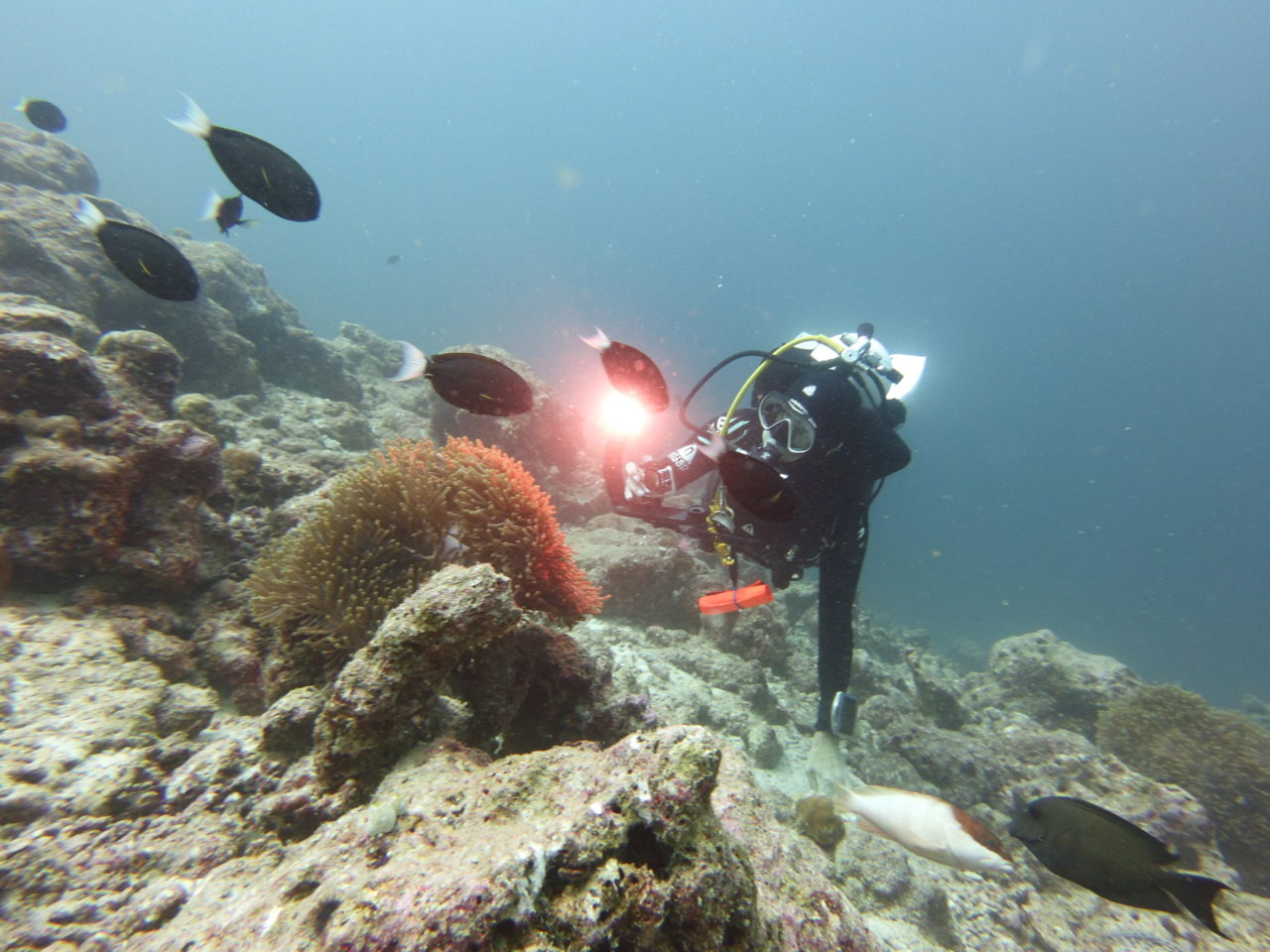
📍 1. Get Close… But Not Too Close!
Water quickly reduces sharpness, colour and contrast, so getting closer to your subject almost always improves your footage. Just don’t get too close—every camera has a minimum focusing distance, and if you get closer than that, your photos and videos will become blurry.
🐢 2. Let Marine Life Come to You
Instead of chasing turtles, sharks or schools of fish, stay calm and let them naturally swim into frame. You’ll often get more relaxed animal behaviour and far better shots.
🤿 3. Master Your Buoyancy
Good buoyancy is one of the easiest ways to improve your underwater footage. The steadier you are in the water, the steadier your camera will be—and you’ll also be less likely to damage the reef.
🎬 4. Capture Lots of Short Clips
Rather than filming one long video, record plenty of clips lasting around 10–20 seconds. They’re much easier to edit together and make for a far more engaging final video.
☀️ 5. Make the Most of Natural Light
Whenever possible, keep the sun behind you so it lights up your subject. Shooting into the sun often results in darker footage with less colour and detail.
🧽 6. Check Your Housing Before Every Dive
Always inspect the O-ring for hairs, grains of sand or twists, and make sure the housing is sealed properly. It’s a simple habit that can save your camera from an expensive flood.
🎨 7. Spend Five Minutes Editing
Even basic colour correction and white balance adjustments can dramatically improve underwater footage. You don’t need to be a professional editor—just a few simple tweaks can make your videos look much more vibrant.
One of the easiest ways to make your underwater photos look dramatically better is to spend just a few minutes editing them afterwards. I personally use Adobe Lightroom, where simple tweaks to white balance, colour, contrast and clarity can completely transform an image.
👉 Here’s a little secret: upload one of your underwater photos to ChatGPT and ask “How can I improve this photo in Lightroom?” It can analyse your image and even suggest specific Lightroom settings to adjust, making it a fantastic way to learn photo editing while improving your pictures at the same tim
🌊 8. Remember to Enjoy the Dive
One of the biggest mistakes I see is divers spending the entire dive looking through a screen. Capture the highlights, then put the camera down and enjoy the underwater world. Some of the best diving memories never make it onto an SD card.
Want to take your skills even further? Check out my guide to the best underwater photography tips for even more ways to improve your photos and videos beneath the surface.
🎉📷 Final Thoughts
I hope this guide has made choosing a cheap underwater camera a whole lot easier. With so many options available, it’s easy to get caught up comparing specs, but remember that great underwater footage comes from getting in the water and using your camera—not endlessly researching it.
Choose the camera that best suits your budget, head underwater and start creating memories. Whether it’s your first turtle, your first wreck dive or your hundredth coral reef, I hope your new camera helps you capture some incredible moments along the way.
Happy diving! 🤿
Support the Squad!
We are part of the Amazon Services LLC Associate Program. If you make a purchase on amazon after clicking a link on Diving Squad, we earn a small commission fee, at no extra cost to yourself.
We are also part of several other affiliate programs so if you click on a Diving Squad affiliate link that results in you booking a liveaboard, booking accommodation, purchasing insurance or buying a product somewhere else, once more we make a small commission, without it costing you a cent extra. Thanks!