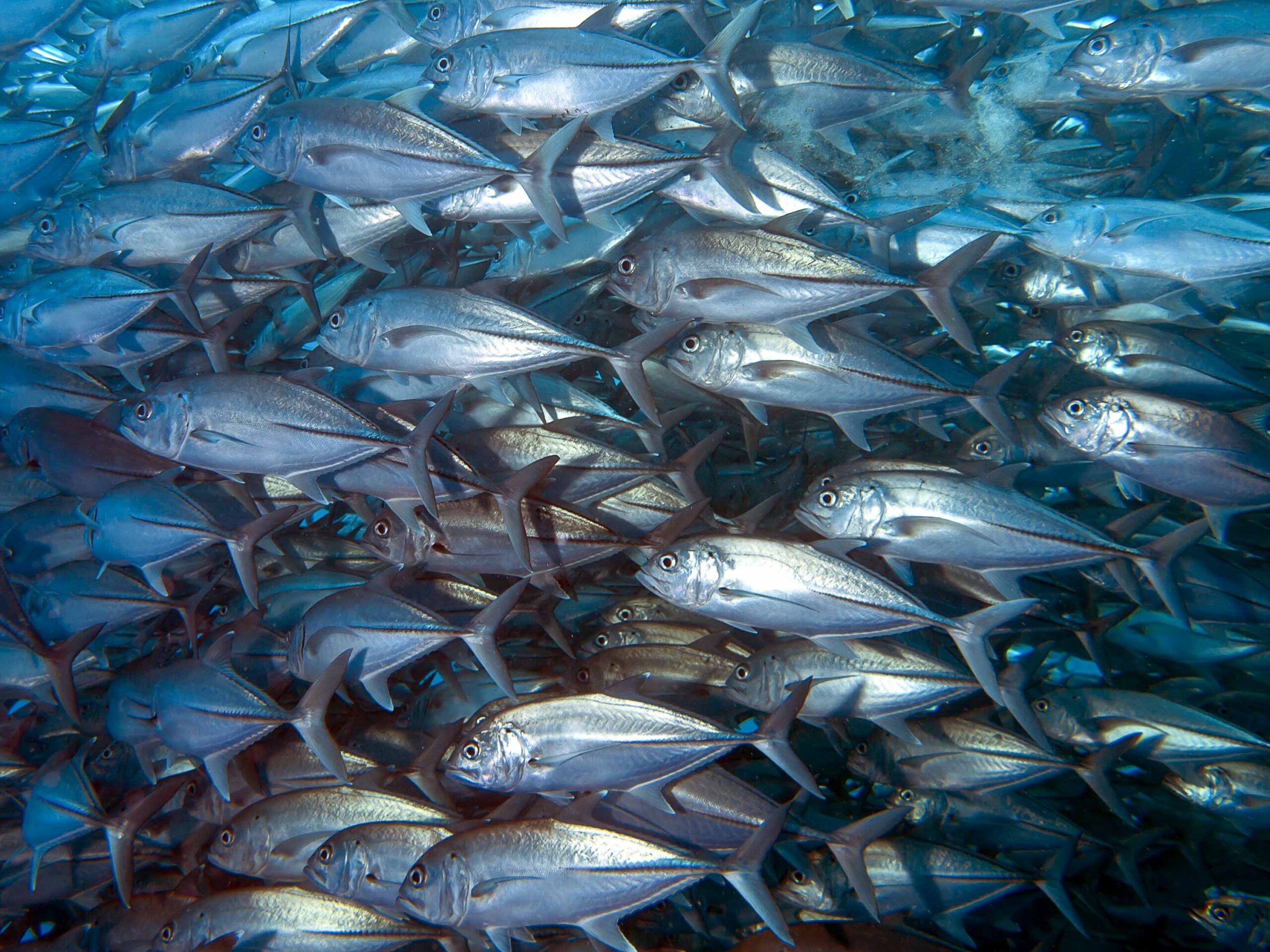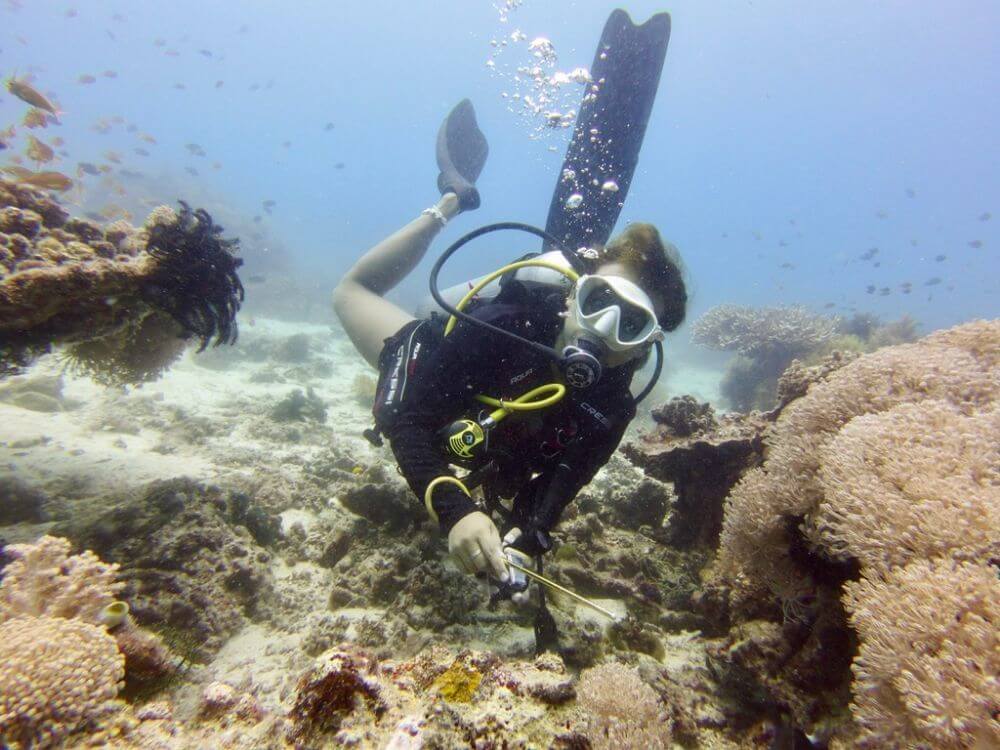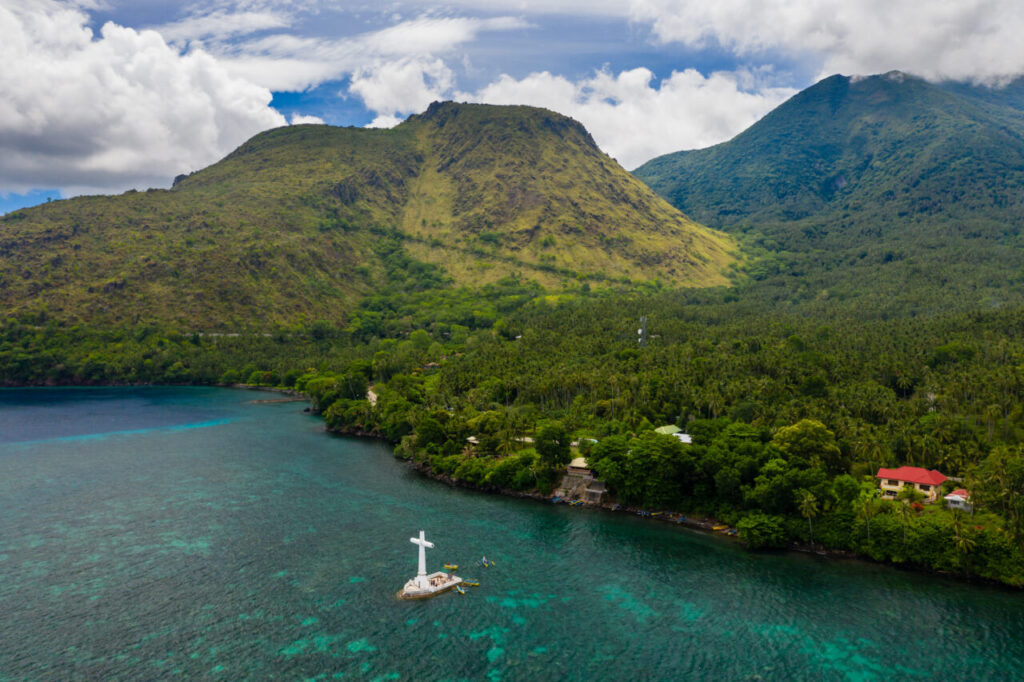
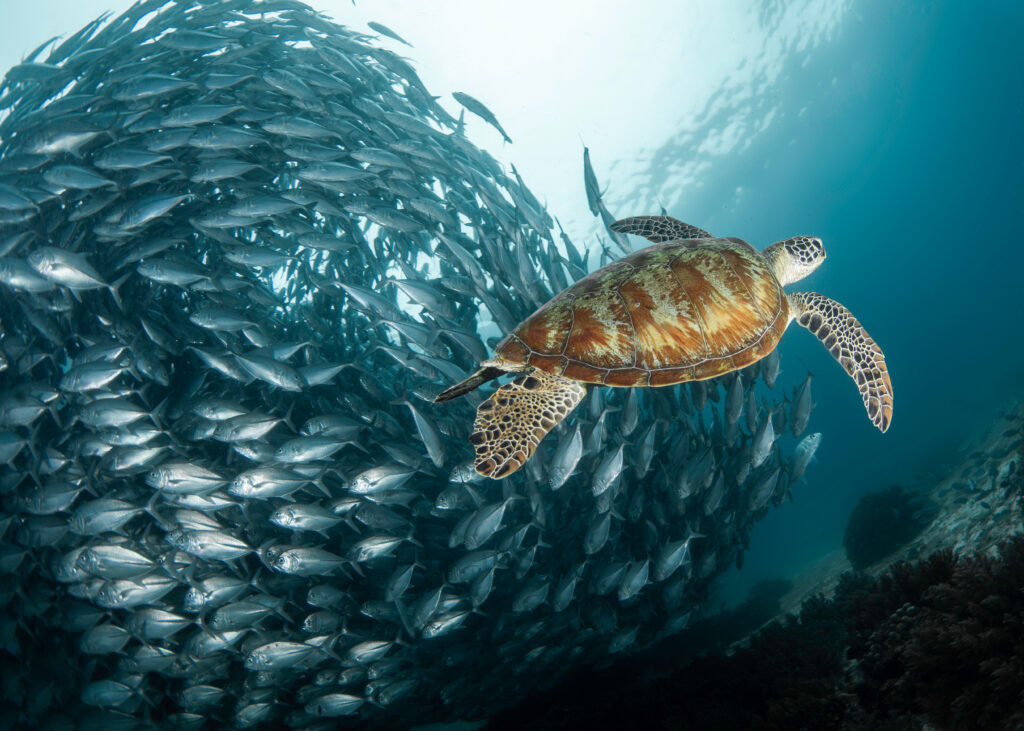
Welcome to Bohol — where rainbow coloured coral walls plunge into electric-blue depths, turtles cruise on by and massive schools of jacks, barracuda and sardines move around you like living silver storms.
You’re the explorer — I’m your friendly guide.
Since moving here in 2023, I’ve spent countless hours scuba diving Bohol, training new divers, and discovering the spots most travellers never hear about.
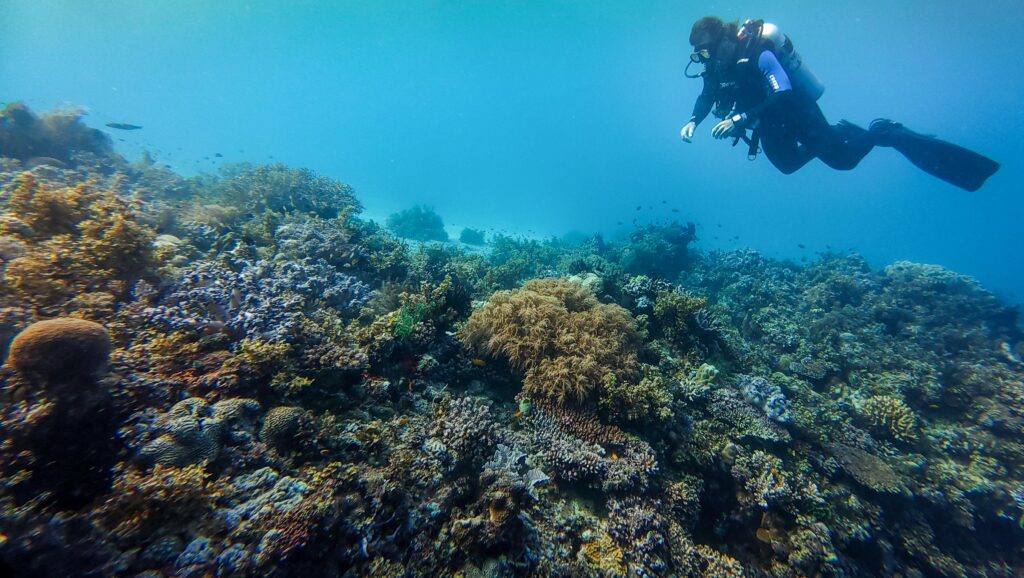
Think of this guide as your compass — pointing you toward the dive sites, tips and hidden gems that make Bohol unforgettable.
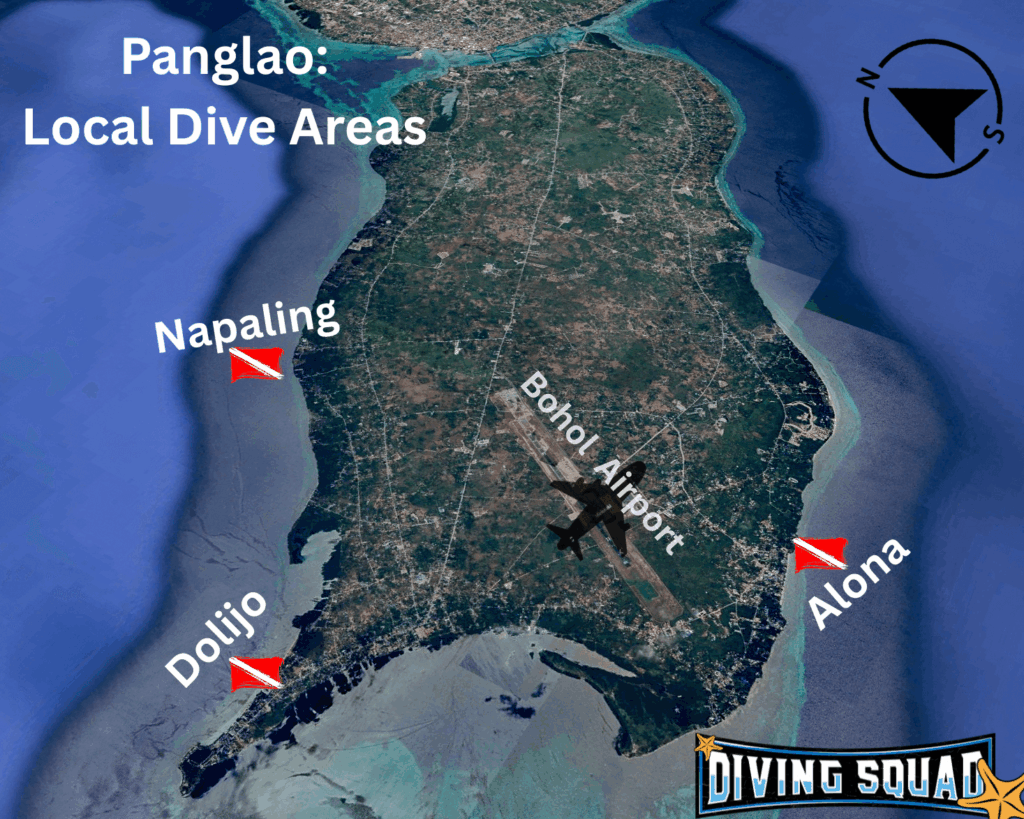
While Bohol includes several dive regions, Panglao is the regions diving hub — home to its most famous reefs and epic day trips!
Main Diving Areas around Bohol Panglao:
🐠🪸🌅 Dolijo Reef — located on Panglao’s quiet northwest coast, Dolijo reef has some of the most stunning coral reefs around Panglao. It’s extremely quiet to dive with very few other divers – and also one of my favourite places to certify Open Water Divers!
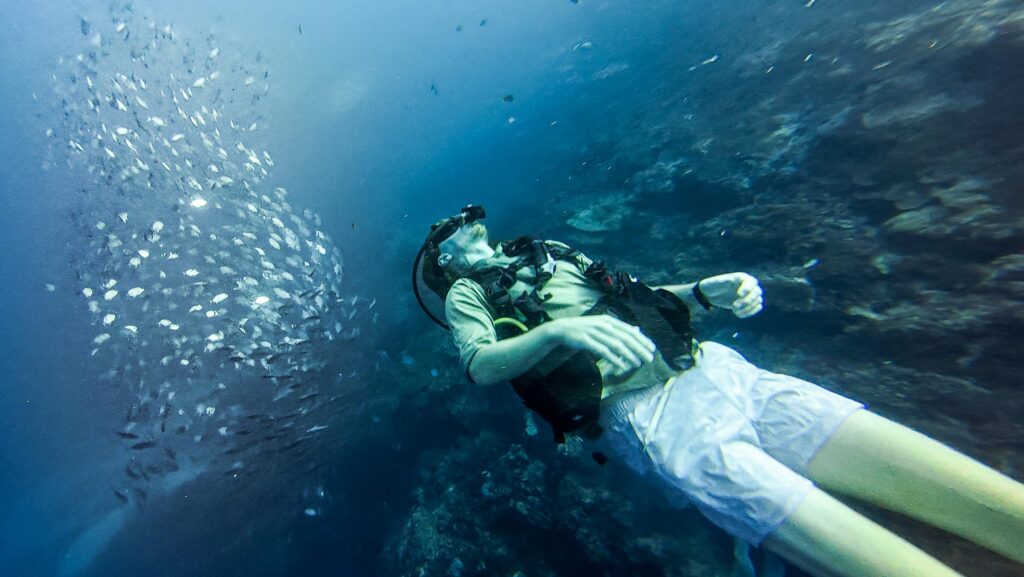
🐚🐟🌀 Napaling Reef — located a little further up from Dolijo, Napaling offers vibrant reef walls and easy conditions; a short ride from the island’s main tourist hub of Alona. Divers often see Trevally tornados at 18 meters – sometimes these predatory fish come up to hunt the massive sardine ball hanging out in the shallows!
🐡🌊🍺 Alona Beach – of Alona town – the lively tourist hub of Panglao! Alona diving is great if you enjoy crowds, social dive centres and plenty of beers after your dives!
Want help diving in Bohol?
I’m a Panglao based dive guide and instructor.
🐟🐟🐟🏝️🚤 Balicasag Island — a spectacular wall dive dropping over 100 M into the deep blue, home to swirling jacks and barracuda tornadoes, baby white-tip reef sharks, critters, and plenty of turtles. A marine-protected sanctuary and widely seen as the highlight of diving Bohol — just a day trip from Panglao. Spaces fill up fast!
🐬🐢🪸🏝️🚤 Pamilacan Island — epic soft-coral garden plateaus stretch to the reef’s rim before plunging out into open blue, where barracuda, jacks, and other Pelagics roam. You might even spot dolphins on the boat ride over! It’s a day trip from Panglao with far fewer divers than Balicasag.
🦑🐢🪸 Anda (Beyond Panglao) — located on Bohol’s remote east coast, Anda is a 3-hour drive from Panglao and is known for off-the-beaten-track diving and beautiful reefs. It can be a good option if you’re staying in Bohol for over a week and want to explore further afield after discovering Panglao’s local reefs and nearby island day trips.
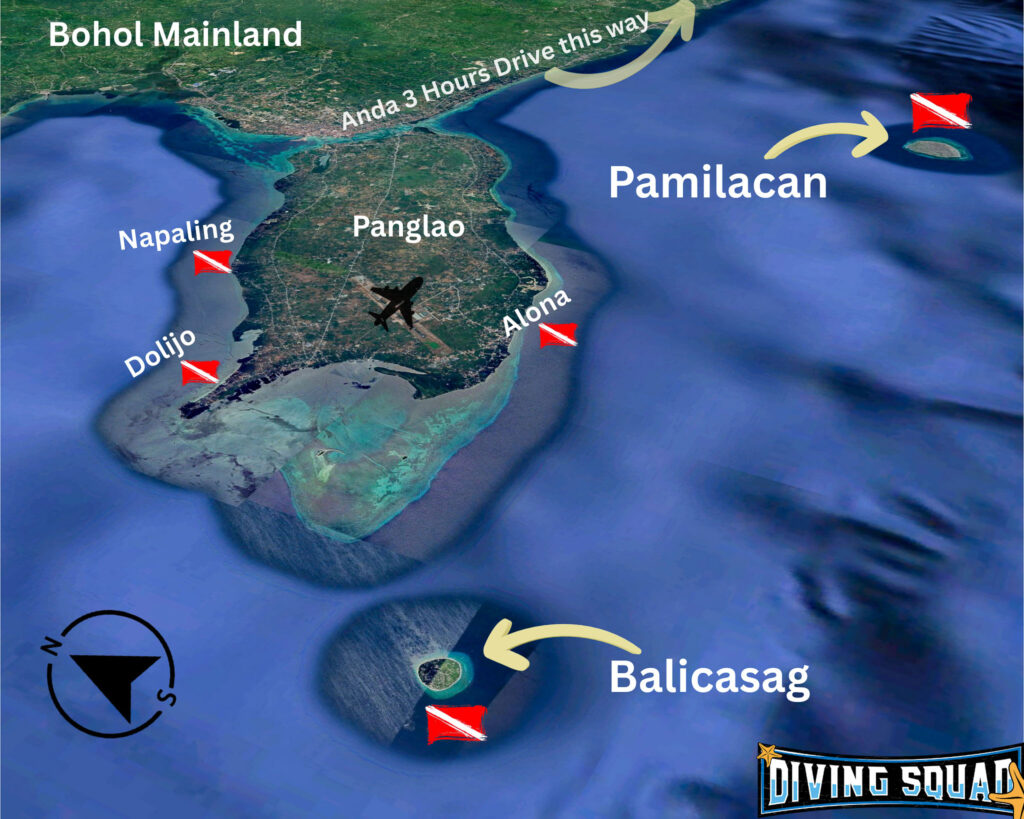
Bohol is a large island with diving spread across different regions, but most travellers base themselves on Panglao — which is technically a smaller island; linked to the mainland via bridge but still very much part of Bohol. Panglao is home to Bohol International Airport and it’s also the main part of Bohol suitable for travellers and scuba divers. There are more places to dive, stay and eat on Panglao than anywhere else in Bohol province. Alona, Napaling, and Dolijo line Panglao’s coast which also serves as the launch point for day trips to Balicasag and Pamilacan.
📹🐟🐟🐟🤘🐟🐟🐟📹 Glimpse Into Bohol’s Underwater Magic
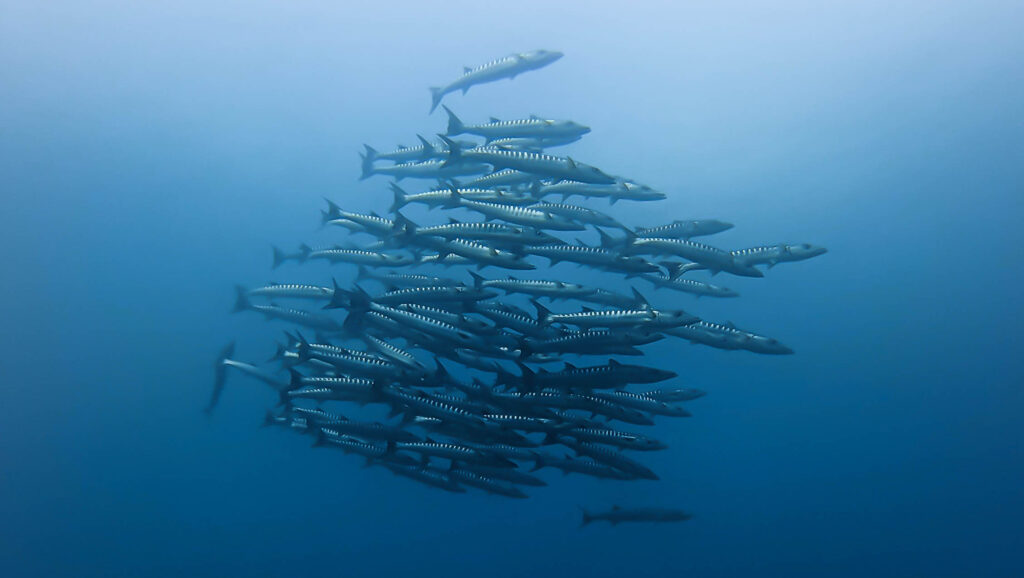
I dun’ snapped this shot of a Great Barracuda Tornado at Balicasag – where it’s a pretty common site!
⚠️ The Issue: Bohol Diving Is Incredible… But Weirdly Confusing
Bohol is a huge island and the diving changes massively depending on where you base yourself.
Different coasts, different islands, different boats, different day trips… and most online advice is a total mind-scramble. You’ll find:
- outdated info
- tourist-trap recommendations
- wildly different opinions on Alona
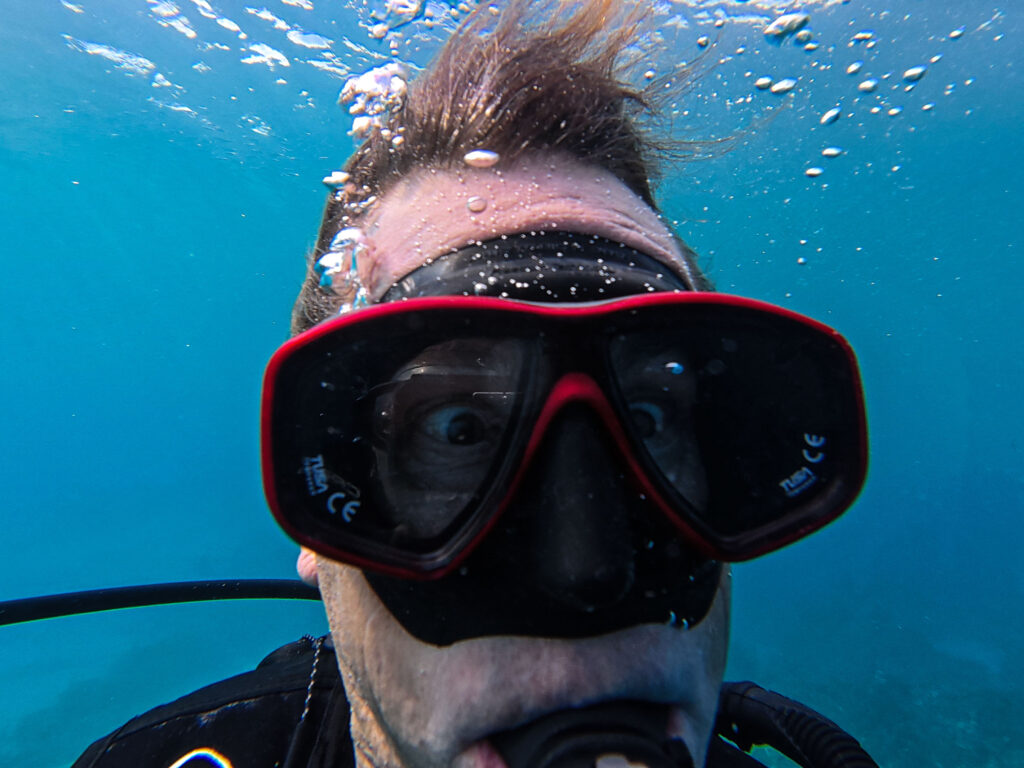
Brain Overload!
The Result?
- ❌ Staying in the wrong area
- ❌ Only diving Alona (Alona is kinda a tourist trap!)
- ❌ Missing Balicasag (you gotta book in advance!)
- ❌ Missing Pamilacan
- ❌ No idea where Napaling/Doljo/Anda are
🤝 I Can Help!
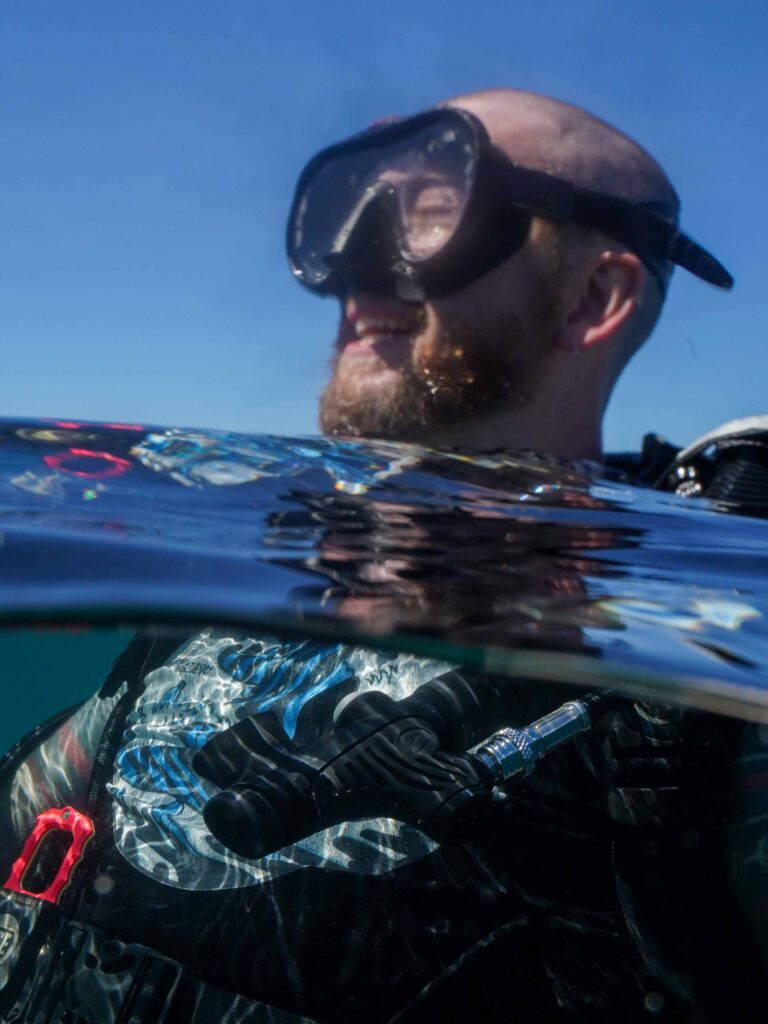
Ahoy! I’m Alex
I’ve been living and diving Bohol since 2023 — exploring the reefs, teaching courses, and figuring out how this whole island actually fits together from the inside out.
First, I’m going to break down every major Bohol diving area and talk about the unique vibe that each has.
I’ll then point you toward where to stay, reviewing the best accommodation options for divers — as well as go through other vital details like getting here, dive season and other stuff to do!
Think of this guide as someone who already knows the currents of the island — nudging you toward the shortcuts, the hidden gems, and the parts most travellers never even hear about…
If you’d like to dive any of these sites together, I’m a Panglao-based dive guide and instructor.
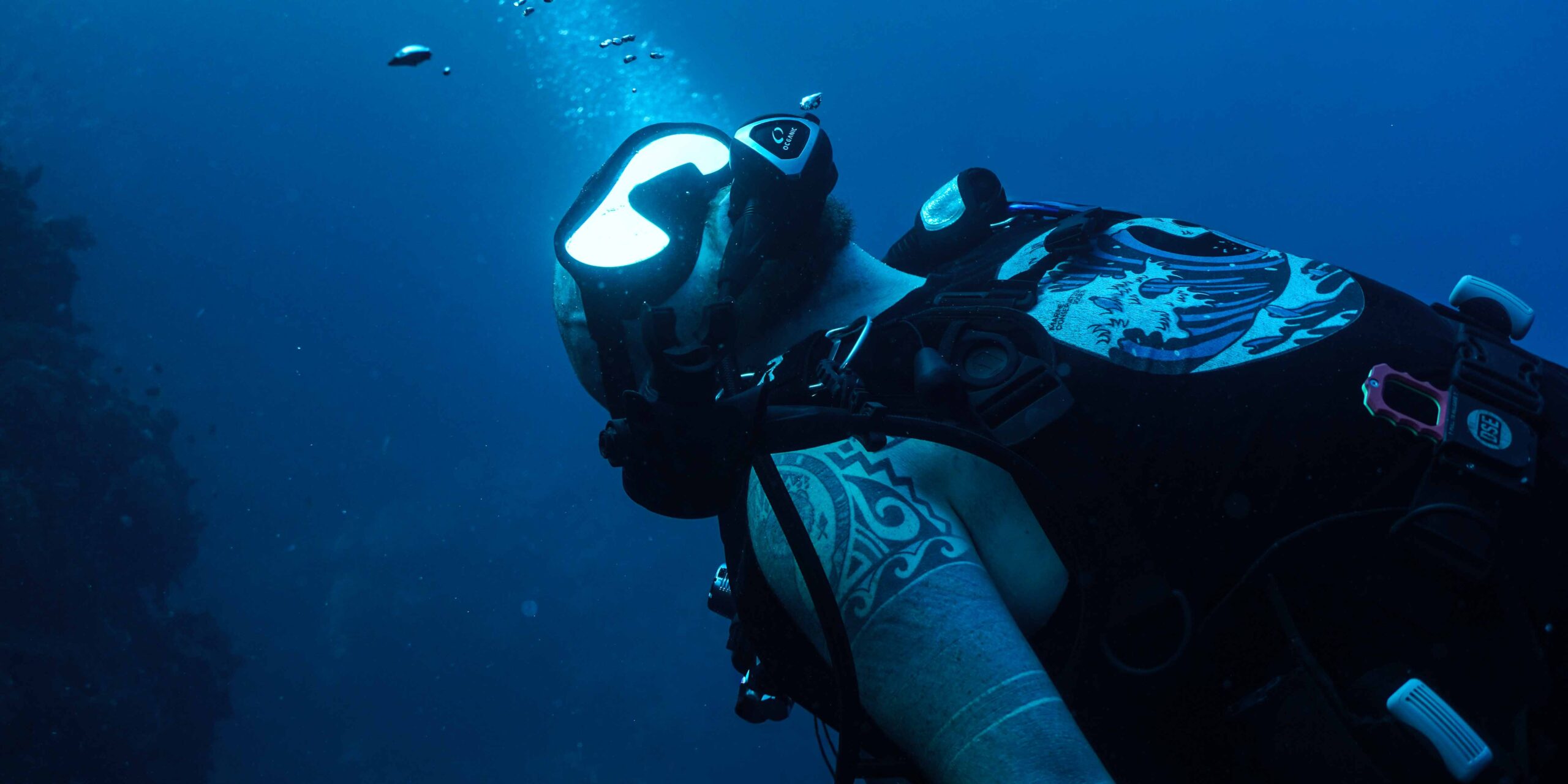
Hi, I’m Alex. I’m a PADI Scuba Diving Instructor based in Panglao, Bohol, where I guide dives and teach courses around the island. If you’re planning to dive in Bohol and would like help choosing dive sites, learning to scuba dive, or putting together a more personalised dive experience, feel free to message me on WhatsApp. 
- Main Diving Areas around Bohol Panglao:
- Dolijo Reef
- Napaling Reef
- Alona House Reef
- Balicasag (Day Trip)
- Pamilacan (Day Trip)
- Alternative: Anda Diving
- 🎒 Bohol Liveaboard Packing List
- Bohol–Panglao International Airport
- Tagbilaran City Port
- 1) Chocolate Hills
- 2) Tarsier Reserve
- 3) Raja Sikatuna Protected Landscape
- 4) Waterfalls
- 5) Danao Adventure Park
- 6) Alicia Panoramic Park
- 7) Hinagdanan Cave
- 8) Le Panoramic View Restaurant
- 9) Sea Star Abandoned Mansion
- 10) Island Strong
- Written by:
- Dolijo
- Napaling
- Alona
- Balicasag
- Pamilacan
- Anda
- Choosing a Dive Centre
- Dive Season
- How to Get to Bohol
- Where to Stay in Panglao
- Other Things to Do
- Bohol Diving FAQ
Best Dive Sites of Bohol
Dolijo Reef
Dolijo Reef is among Panglao’s quietest, most scenic dive areas. From the shallow shoreline, the reef leads out before dropping suddenly into a dramatic vertical wall — a vast underwater cliff that falls away into the blue.
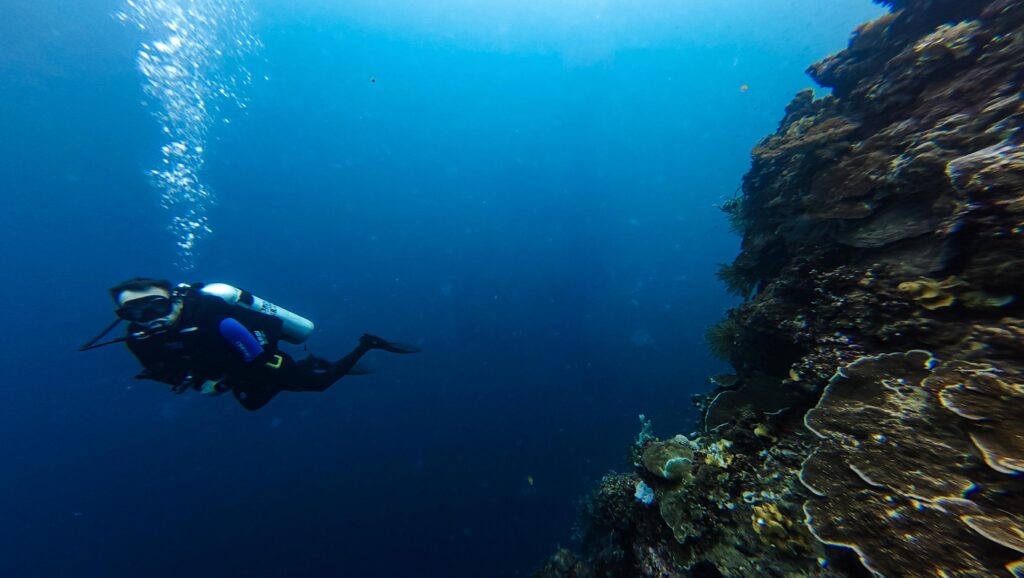
Its sheer scale creates a strong sense of space, making dives here feel truly expansive and immersive.
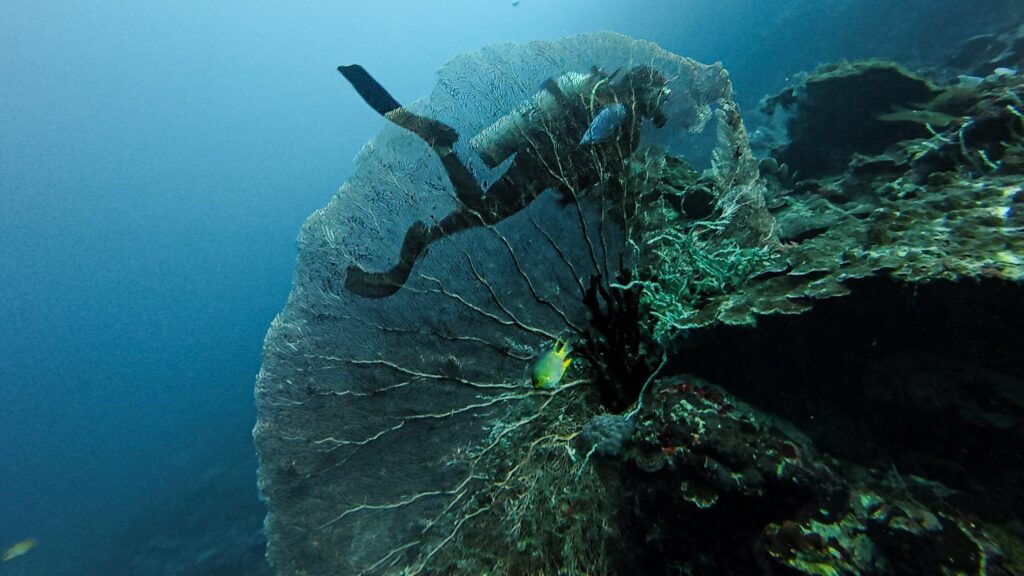
The wall supports some of the healthiest reef systems in Panglao, with excellent hard and soft coral coverage and huge sea fans in superb condition.
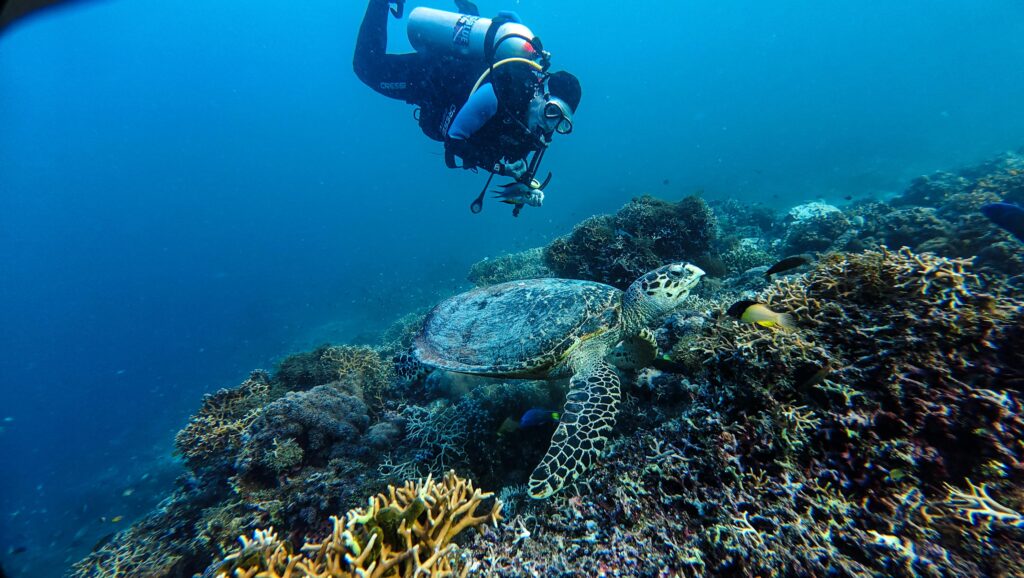
Hawksbill turtles are regularly seen cruising along the wall using their sharp beaks to chomp up soft bodied reef life such as sponges and anemones.
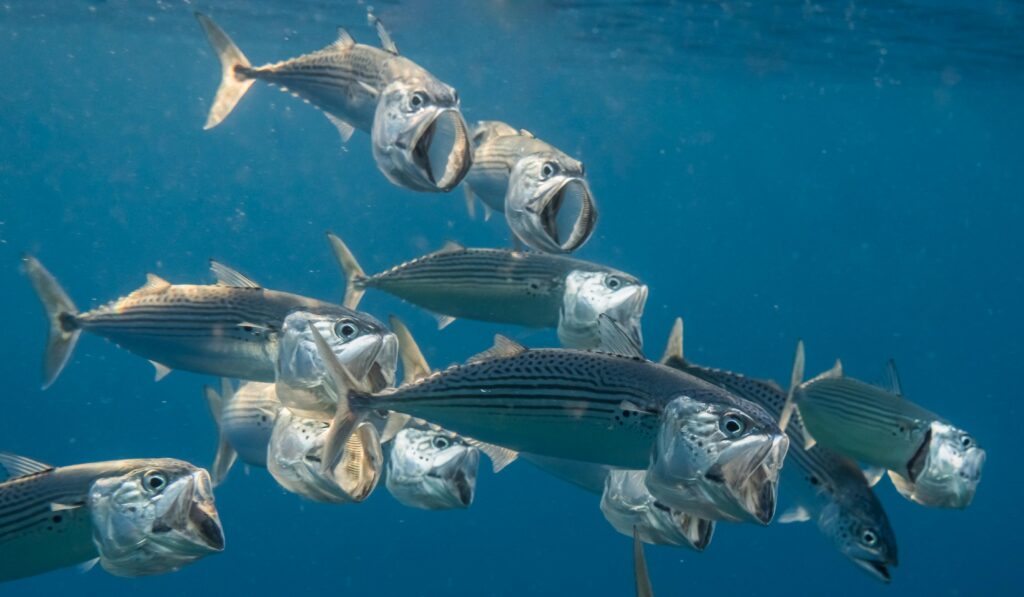
Out in the blue, schools of bigmouth mackerel occasionally pass by, ripples of motion passing through the group as they uniformly open their mouths to filter-feed.
In the shallows, the reef transitions into seagrass beds rich in small life, including pipefish, nudibranchs, and other critters.
Activity here increases after dark, when octopus and other nocturnal species emerge, making Dolijo a rewarding site for night dives.
For me, Dolijo offers one of Panglao’s most peaceful and well-balanced dives, with dramatic wall scenery and calm conditions that make it ideal for Open Water training and enjoyable for experienced divers alike.
Napaling Reef
Napaling boasts an epic wall of healthy coral reef that’s home to turtles, sea snakes, colourful reef fish and countless critters!

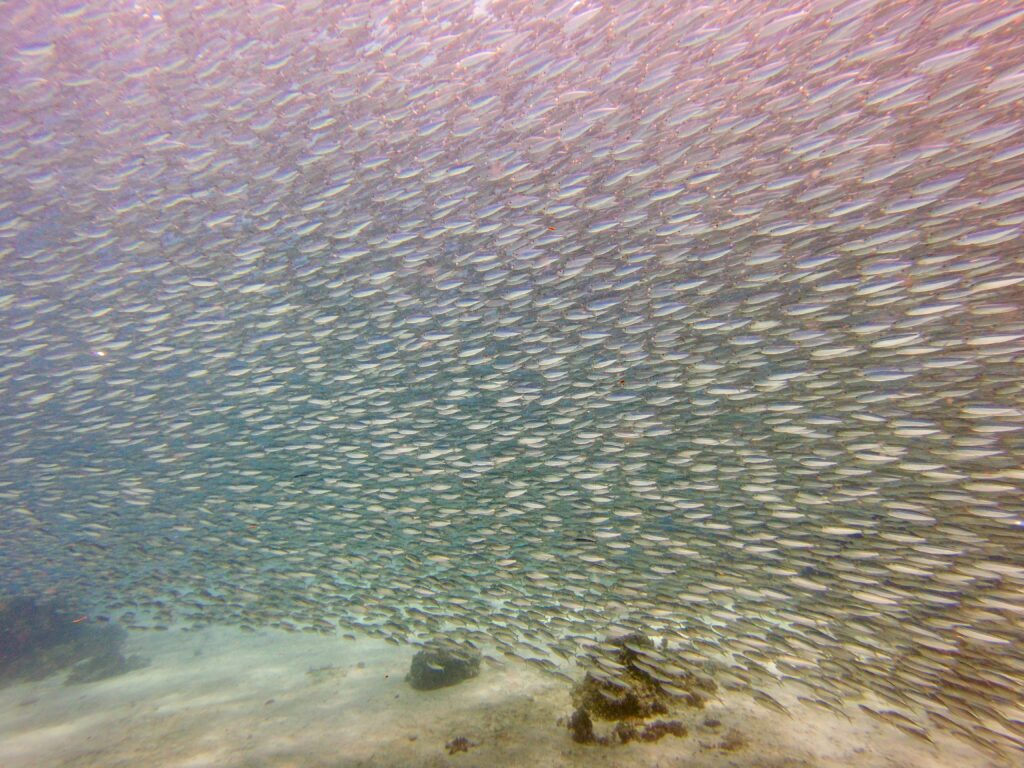
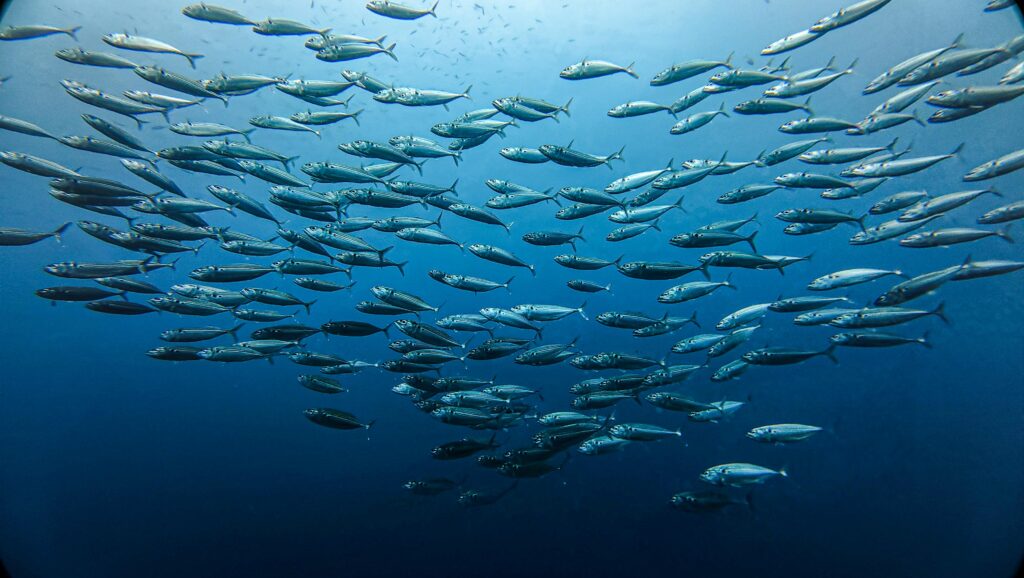
One of Napaling’s most famous attractions is the sardine ball, which on most days can be found hovering in the shallows at around 5 metres / 16 ft, right on the edge of the wall.
Watching thousands of small silvery fish move in perfect synchrony — like a single living organism — is a truly mesmerising sight.
A little deeper, at around 18 metres / 59 ft and beyond, Napaling is well known for impressive tornadoes of trevally (jacks). In these formations, the fish circle lazily in tight spirals — a highly efficient way of conserving energy while staying grouped.
When hunting, the trevally break away from the tornado into looser, faster-moving formations, moving with power and precision as they patrol the reef and blue-water edge.
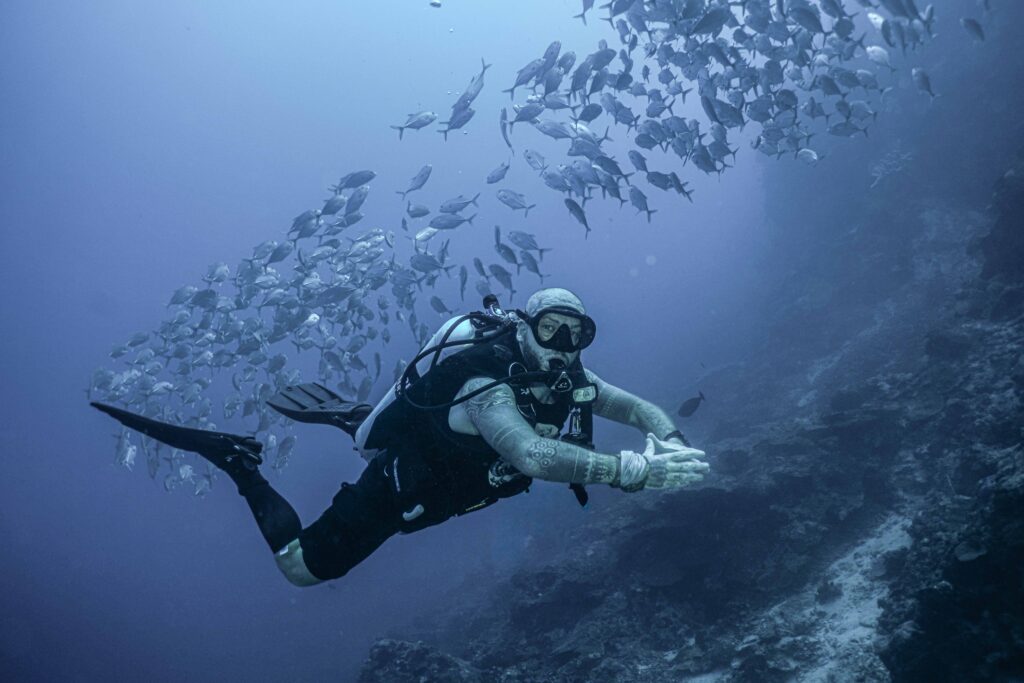
On good days, these jacks may rise into the shallows to cooperatively target the sardine ball, creating one of the most dynamic predator-prey encounters you can witness on a Panglao dive.
With minimal current, excellent visibility, and easy shore access, Napaling is suitable for a wide range of experience levels — beginner-friendly, yet still delivering a genuine wow factor.
Filmed on a good day at Napaling Reef, Panglao
To arrange a dive here — or anywhere else around Bohol — message me on WhatsApp:
Alona House Reef
Alona House Reef lies directly offshore from Alona Beach and town — Panglao’s main tourist hub. It is without doubt the busiest scuba diving area in Bohol, with numerous dive centres lining the beach alongside hotels, bars, and nightlife.
While the reefs here are generally less pristine than Dolijo or Napaling, coral coverage remains good in many areas.
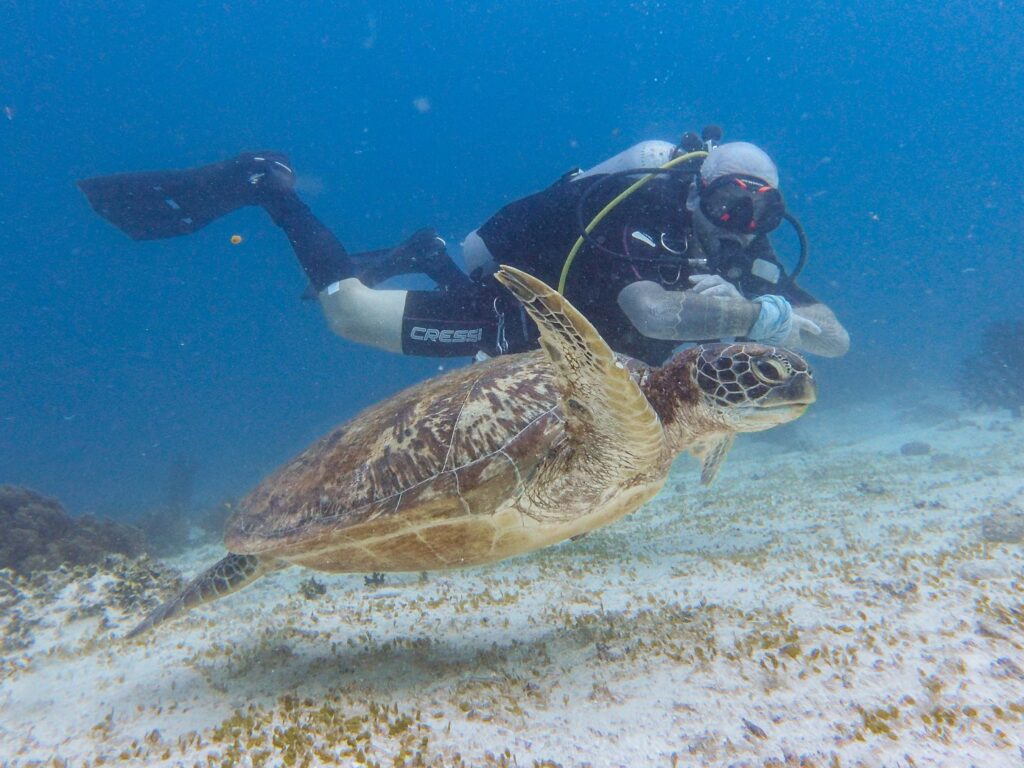
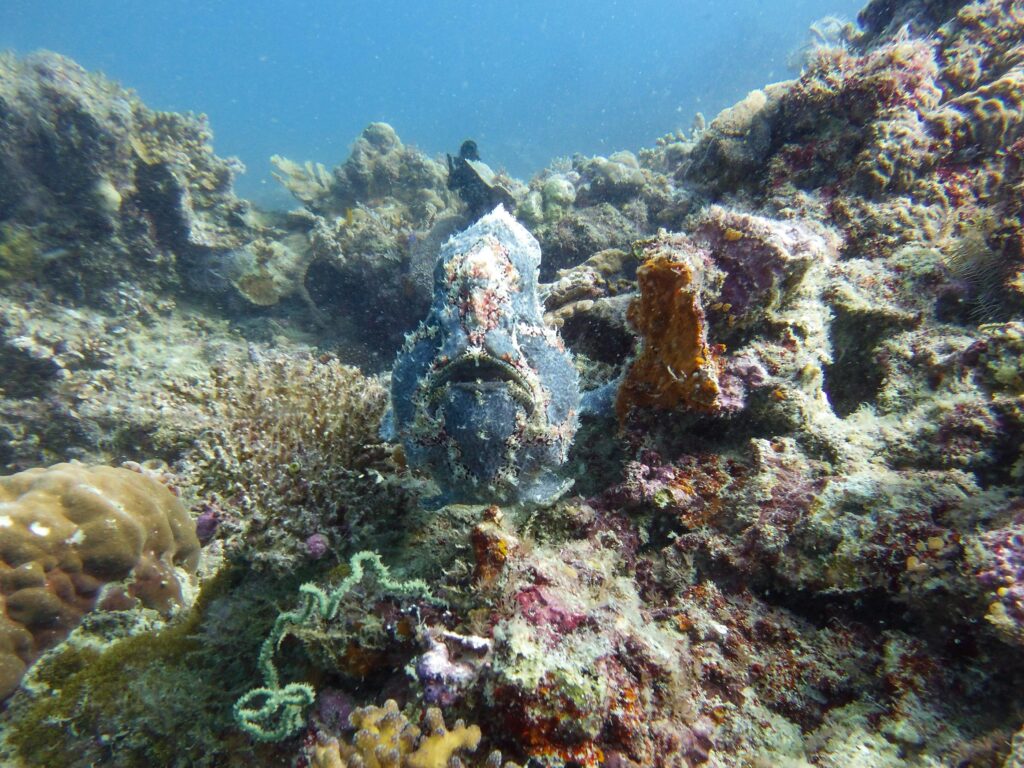
A mix of hard and soft corals supports a wide range of marine life, including turtles, sea snakes, nudibranchs, shrimp, frogfish, and plenty of reef fish.
Because of Alona’s popularity, the local dive sites can become busy, particularly during high season. That said, there are still a few standout locations that add extra interest to the area.
Kalipayan sometimes hosts large schools of sardines beneath the jetty, occasionally drawing in jacks and other predators on good days.
For certified deep divers, Habagat Wreck lies on the sandy seabed at around 35 metres and makes an excellent Nitrox dive. Its often surrounded by dense schools of fusiliers and groups of batfish, with critters such as ornate ghost pipefish and scorpionfish hiding amidst the structure.
Overall, Alona’s local dives are best seen as a convenient and varied complement to Panglao’s top sites — ideal for easy diving and returning visitors, rather than the island’s main highlights.
I generally recommend diving Napaling and Dolijo first before exploring Alona’s local sites.
Balicasag (Day Trip)
Balicasag offers some of the best scuba diving in Bohol and is the most sought-after day trip from Panglao.
A huge draw are the absolutely massive tornadoes of adult trevally and great barracuda, often encountered out in the open blue and, on good dives, passing remarkably close to divers!
Divers can expect roughly a one-in-three chance of encountering one of these large pelagic schools on a Balicasag trip.
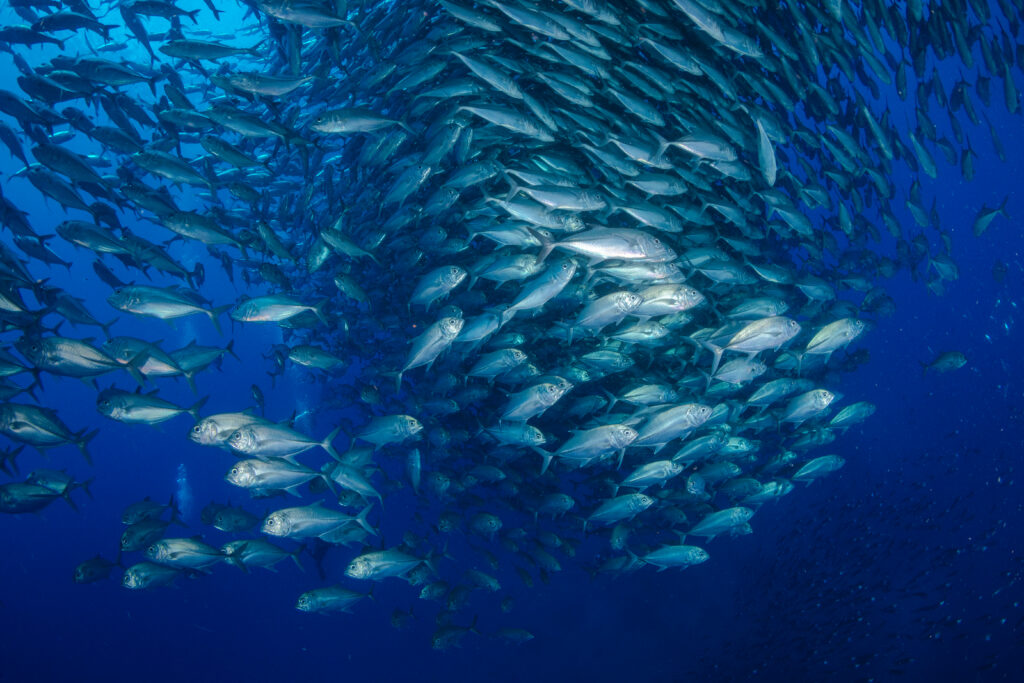
Balicasag is a small island lying about 6 km offshore from Panglao, reached by boat in around 30–45 minutes.
Upon entering the water, one of the first things you’ll notice is the exceptional visibility, which on good days can exceed 30 metres, creating a truly immersive and open-water feel to the dive.
The reef system here is extensive and exceptionally healthy, with wide coral slopes that quickly give way to steep, sharply dropping walls plunging well beyond recreational depths.

These dramatic reef walls encircle the island and support a rich, thriving marine ecosystem. The two most popular dive sites here are Black Forest and Diver’s Heaven.
Alongside dense populations of reef fish, Balicasag is known for its large numbers of turtles, as well as giant puffers, trumpetfish, and groupers.
Huge schools of bigmouth mackerel are also common, and at some sites like Black Forest, juvenile whitetip reef sharks can be seen resting beneath coral tables.
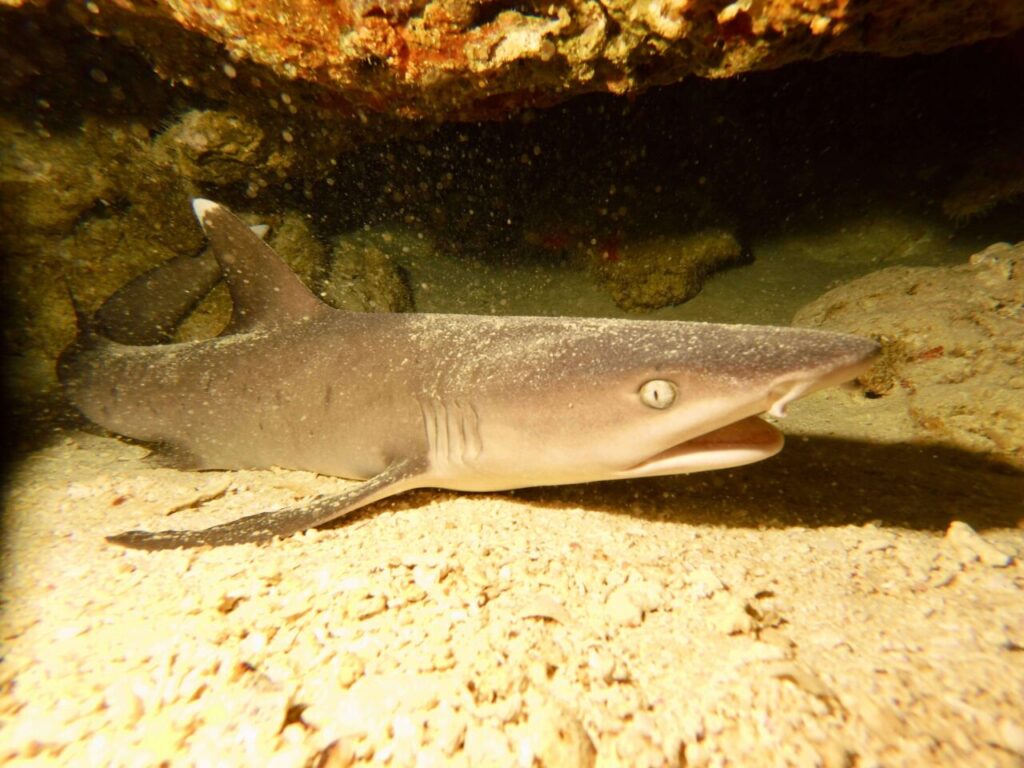
Balicasag day trips typically consist of two dives around the island, with the option to add a third, local dive on the return journey.
As Balicasag is a protected marine sanctuary, diver numbers are strictly limited to 150 divers per day. As a result, spaces often fill up quickly so booking in advance is advised!
For good reason, Balicasag remains the most iconic and in-demand dive destination in Bohol, consistently delivering some of the region’s most epic underwater encounters.
Pamilacan (Day Trip)
Pamilacan is the second most popular day trip from Panglao, offering excellent diving in a quieter, more off-the-beaten-track setting.
The island lies around 13 km southeast of Panglao and is reached by boat in roughly 45 minutes.
The journey itself is often scenic, with views of the Bohol mainland and, on occasion, dolphins spotted leaping from the water near Pamilacan.
Underwater, Pamilacan feels very different from Balicasag. Vast soft coral gardens stretch across gently sloping plateaus before the reef suddenly falls away, opening out into deep blue water beyond the edge.
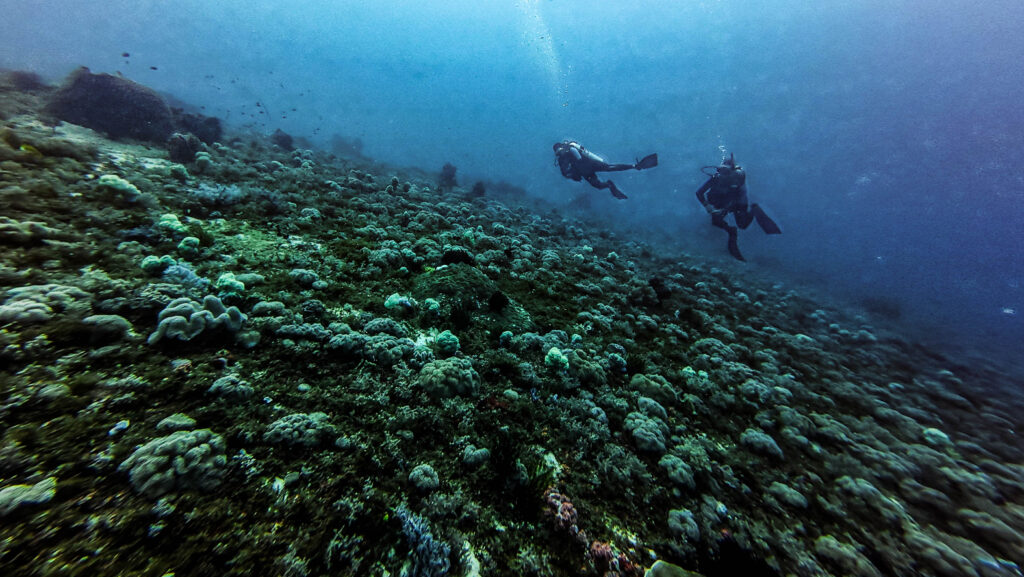
Out in the blue, there is a solid chance of encountering schooling jacks or great barracuda, similar to Balicasag, though typically not in the same numbers. I’ve also seen massive schools of batfish pass through on a few occasions!
Very rarely, larger pelagics such as manta rays — and even whale sharks — may be encountered, though these sightings are infrequent and unpredictable.
Life around Pamilacan’s soft coral gardens is rich and varied, with dense schools of reef fish and a good mix of macro life such as frogfish, octopus, and giant sea cucumbers.
The island is especially known for its turtles, and divers here often encounter large, mature individuals — including the rarer, heavyweight Green Sea Turtles that seem particularly at home around Pamilacan’s reefs.
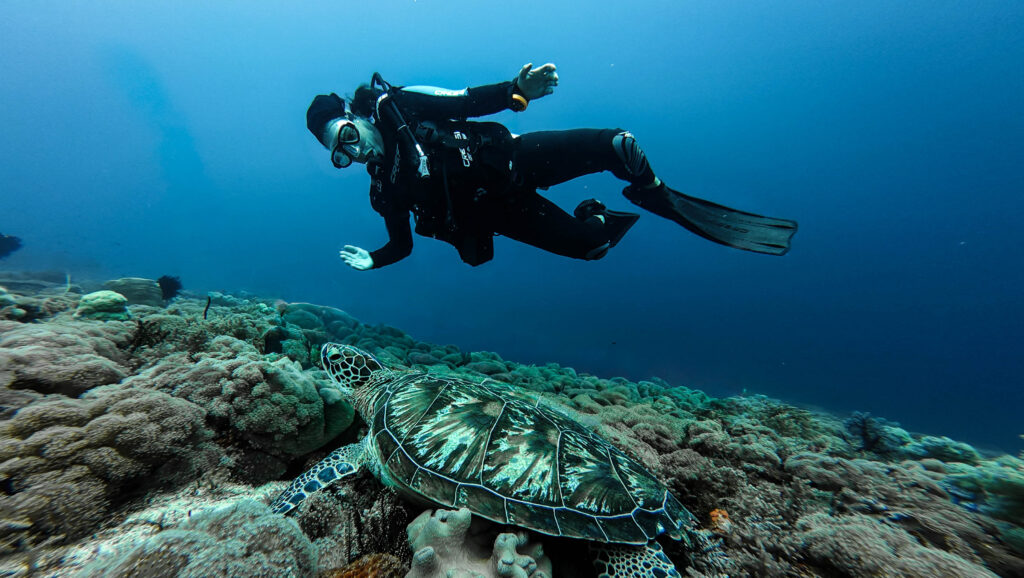
The standout dive sites around Pamilacan include Dakit-Dakit and Sanctuary, both known for their expansive soft coral plateaus and open, gently sloping terrain.
For shallower diving, Spanish Tower is a nice alternative dive and a good place to slow things down and search for macro critters.
Day trips to Pamilacan typically consist of two dives around the island, often followed by a dive at Arco Point, a Panglao local dive where divers can swim through a narrow coral chimney on the return journey.

Pamilacan can experience moderate currents, making it better suited to Advanced Open Water divers or those with some experience.
One of its biggest appeals is that it sees far fewer divers than Balicasag, giving the dives a calmer, more exploratory feel.
Where Balicasag impresses with awesome spectacle, Pamilacan rewards divers with space, calm exploration, and a quieter connection to the reef.
To arrange diving at any of these places; shoot me a message on Whatsapp!
Hi, I’m Alex. I’m a PADI Scuba Diving Instructor based in Panglao, Bohol, where I guide dives and teach courses around the island. If you’re planning to dive in Bohol and would like help choosing dive sites, learning to scuba dive, or putting together a more personalised dive experience, feel free to message me on WhatsApp.
Alternative: Anda Diving
For those seeking bohemian vibes and off-the-beaten-track diving in Bohol, Anda is an appealing alternative. Located on the far southeastern side of the island, around 120 km from Panglao, it takes roughly 2–3 hours to reach and feels a world away from Panglao’s livelier dive scene.
Anda is known for its quiet dive sites, minimal diver traffic, and relaxed, low-key atmosphere. Underwater, the reefs are colourful and healthy, with a wide range of marine life, and dives here tend to feel calm and unhurried, especially outside of peak season.
On land, Anda offers some nice, low-key exploration and natural scenery, adding to its slow, off-the-grid appeal.
If Anda sounds appealing, I’ve written a dedicated guide to diving in Anda that goes into much more detail. For most visitors, however, Panglao remains the best place to start, offering easier logistics and a broader variety of dive sites.
For more detail, see my full guide to diving Anda
Choosing a Dive Centre in Panglao, Bohol
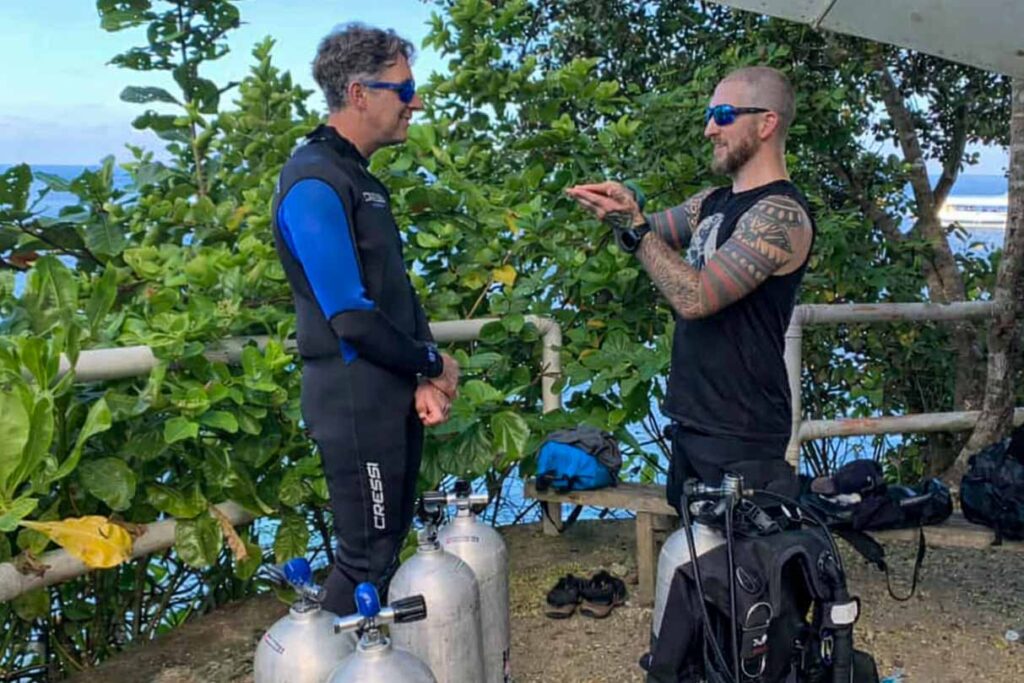
Panglao is a fantastic place to dive, and one of the nice things is that there are plenty of great dive centres to choose from. Most are well run, friendly, and deliver excellent diving experiences around the island.
Rather than searching for a single “best” dive centre, it’s more useful to think about how you’d like your diving to feel.
Some dive centres focus on set schedules and regular group trips, often visiting popular sites such as Alona or Balicasag as part of larger groups.
Others run the same well-known sites in smaller groups, with more flexibility and the ability to shape dives around experience level and the dive areas you’d like to prioritise.
When choosing a dive centre in Panglao, it can help to consider:
- Group size and how relaxed you want the dives to be
- Pacing underwater, especially if you enjoy slower dives or underwater photography
- Which dive areas are offered, and how often
- Flexibility if conditions change or you’d like to try something different
- Experience matching, so dives feel comfortable rather than rushed
I work with divers who prefer a calmer, more personalised approach — with the flexibility to choose dive areas, including quieter or more off-the-beaten-track sites, and to dive at a pace that suits their style and interests.
If you’d like help choosing a dive centre or planning dives that suit the way you want to dive in Panglao, feel free to message me on WhatsApp — I’m always happy to help you plan your diving adventure in Bohol.
🎒 Bohol Liveaboard Packing List
Having the right equipment can make your Bohol liveaboard far more comfortable, both in and out of the water.
While most boats provide tanks and weights, you’ll still need to think about your personal dive gear, clothing, electronics and a few useful accessories.
If you don’t own scuba equipment, it’s usually available to rent onboard for an additional fee, but many divers prefer bringing their own gear for the best fit, comfort and familiarity.
If you’re wondering what to bring, these are the four pieces of gear I’d recommend most for a Bohol liveaboard. ⭐
- 😎 Atomic Venom Mask – The most comfortable dive mask I’ve ever used, with exceptional visibility and a superb fit.
- ⌚ Shearwater Teric – My personal dive computer and one of the best dive computers available for recreational and technical diving.
- 🎥 DJI Osmo Action 6 – My favourite action camera for wide-angle dive videos, with excellent image stabilisation and underwater colour correction.
- 📷 Olympus TG-7 – The best compact underwater camera for capturing solid underwater photography – especially macro!
Don’t Forget:
- 🎫 Certification card (or digital certification)
- 🌞 Reef-safe sunscreen
- 🚩 Surface marker buoy (SMB)
- 🔦 Dive torch (especially for night dives)
- 💊 Seasickness medication
- 🎒 Dry bag
- 🔋 Power bank
- 🔌 Travel adapter
- 👕 Lightweight hoodie or windproof jacket for cooler evenings
🛡️ Dive Insurance
Many of the Bohol’s best dive sites are remote offshore reefs, so specialist dive insurance is highly recommended. I personally recommend DiveAssure, which offers dedicated scuba diving and liveaboard insurance, including cover for dive accidents and emergency medical evacuation.
Dive Season in Bohol

The awesome news is that diving in Bohol is possible all year round!
The best overall conditions are typically during the dry season, from January to April, when rainfall is lower and underwater visibility is often at its clearest. These months are popular and tend to offer consistently calm conditions.
May and December are transition months between the dry and wetter seasons, so conditions can vary from year to year. Some seasons feel very similar to the dry months, while others may see more rain or changing conditions.
From June to November, Bohol experiences its wet season. Diving is still very much possible during this period, though visibility can occasionally be reduced and currents may be stronger at certain dive areas.
Importantly, all of Bohol’s main dive areas — including Doljo, Napaling, Alona, Balicasag, and Pamilacan — can be dived year round. Conditions change, but there are almost always suitable options available somewhere around the island.
Overall, if you’re already planning a trip to Bohol, diving is a safe and worthwhile option at any time of year!
Where to Stay in Panglao, Bohol
While Panglao is a relatively small island, it still takes around 25 minutes to drive from north to south, so location does make a difference!
Alona Beach (south Panglao) is the busiest area, with the highest concentration of dive centres, restaurants, bars, nightlife, and budget accommodation.
It suits travellers who enjoy being close to the action. A genuinely affordable yet comfortable and chill option here is Domos Native Guesthouse, which sits on the quieter end of Alona while remaining within walking distance of the beach.
Doljo (north Panglao) is much quieter and better suited to divers looking for a more relaxed base, with fewer crowds and more space. A popular luxury option here is Bellevue Resort, set on a peaceful beachfront and feels truly luxurious without being as expensive as one might think.
For a more detailed breakdown of accommodation across Panglao, see my separate guide:
12 Best Places to Stay in Panglao for Divers.
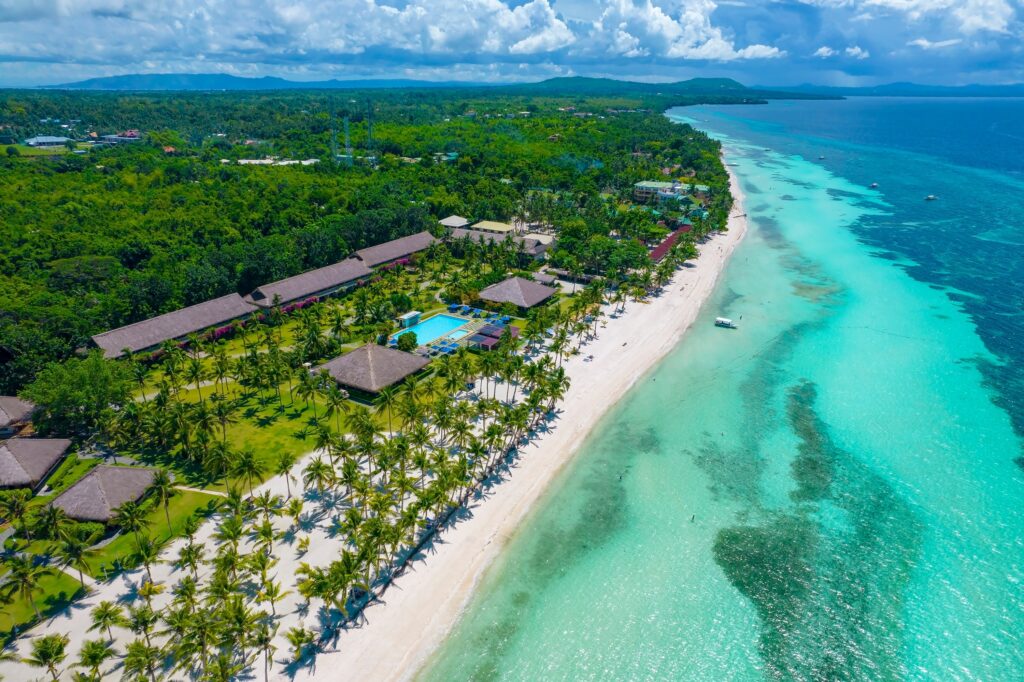
How to Get to Bohol & Panglao
There are two main ways to reach Bohol, depending on whether you’re flying or arriving by sea.
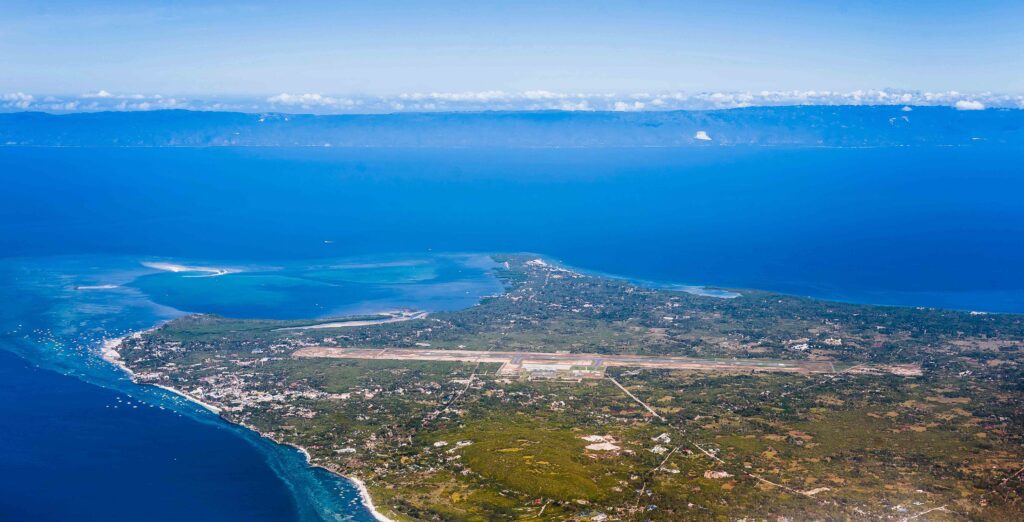
Bohol–Panglao International Airport
If you’re flying in, you’ll land at Panglao’s international airport. Check out flights on Skyscanner!
This airport is confusingly referred to by several names — including Bohol International Airport, Tagbilaran Airport, and Panglao Airport — but they all refer to the same airport, which is located on Panglao Island.
From the airport:
- Around 10 minutes by tricycle or taxi to Alona
- Around 25 minutes to Tagbilaran City
When you exit the terminal, you’ll usually find taxis and vans waiting outside, which can be relatively expensive for short trips. If you’d prefer a tricycle or want help arranging a transfer, feel free to message me on WhatsApp and I can point you in the right direction.
Tagbilaran City Port
If you’re arriving by ferry from nearby islands such as Cebu, Siquijor, or Dumaguete, you’ll arrive at Tagbilaran City Port.
From here, it’s around 40 minutes by tricycle or taxi to Alona Beach on Panglao.
You can check ferry schedules to Bohol here.
Other Things to Do in Bohol
1) Chocolate Hills
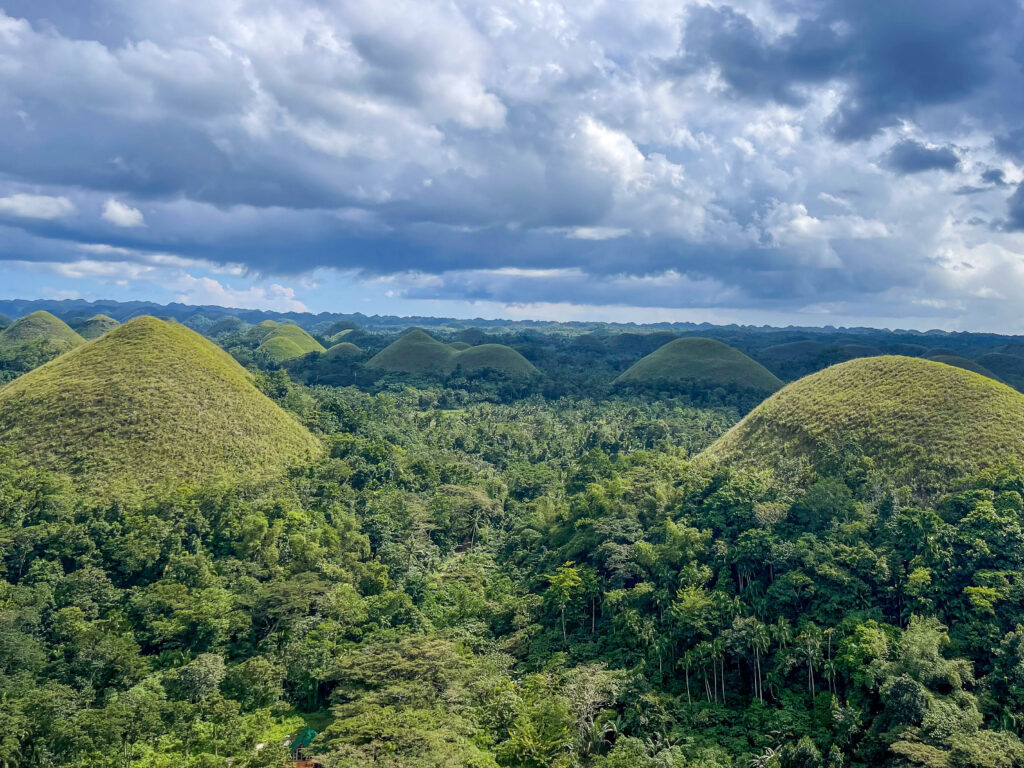
Bohol’s most iconic landmark, the Chocolate Hills are best reached as part of an inland day trip.
It’s possible to ride there independently by scooter (around 2.5–3 hours each way), often combining stops like tarsier sanctuaries or Raja Sikatuna along the route, or you can visit as part of an organised tour.
2) Tarsier Reserve
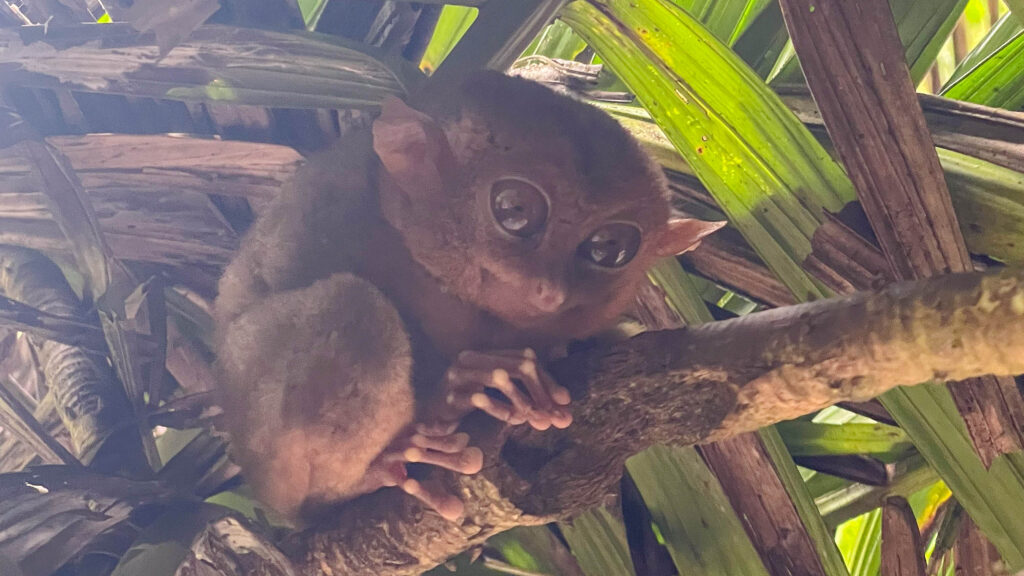
The Philippine tarsier — known locally as “mawumag” — is a tiny, nocturnal primate endemic to the Philippines, instantly recognisable by its huge eyes and delicate, elongated fingers. Seeing one in person is a memorable highlight of an inland trip in Bohol.
In Bohol, the only place I recommend visiting is the Tarsier Conservation Sanctuary. This is a conservation-focused site with quiet, controlled viewing designed to minimise stress to the animals.
3) Raja Sikatuna Protected Landscape
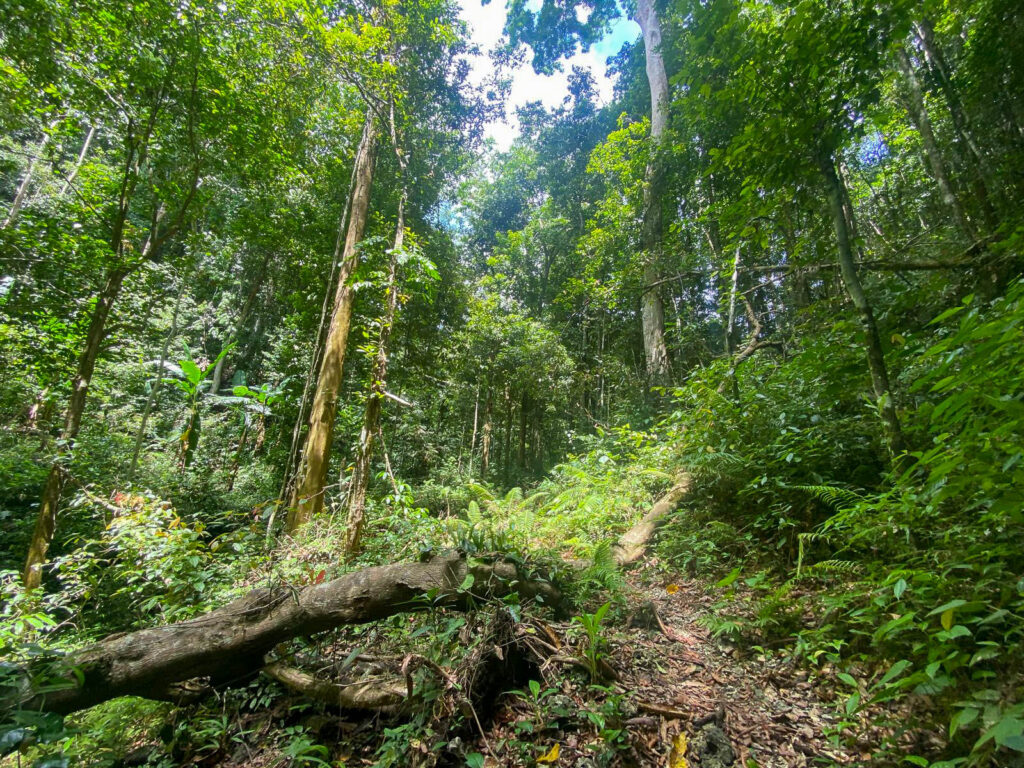
The Raja Sikatuna Protected Landscape is the largest remaining forest reserve in Bohol and one of the island’s most overlooked natural areas.
It feels far more off the beaten track than many inland attractions and is still rarely visited by most travellers.
Here you can feed wild Philippine long-tailed macaques, take a 1–2 hour jungle trek, and spot a variety of birds and other wildlife.
Guided night walks are also possible, where you may see flying lemurs gliding through the trees and bioluminescent fungi glowing along the forest floor.
4) Waterfalls
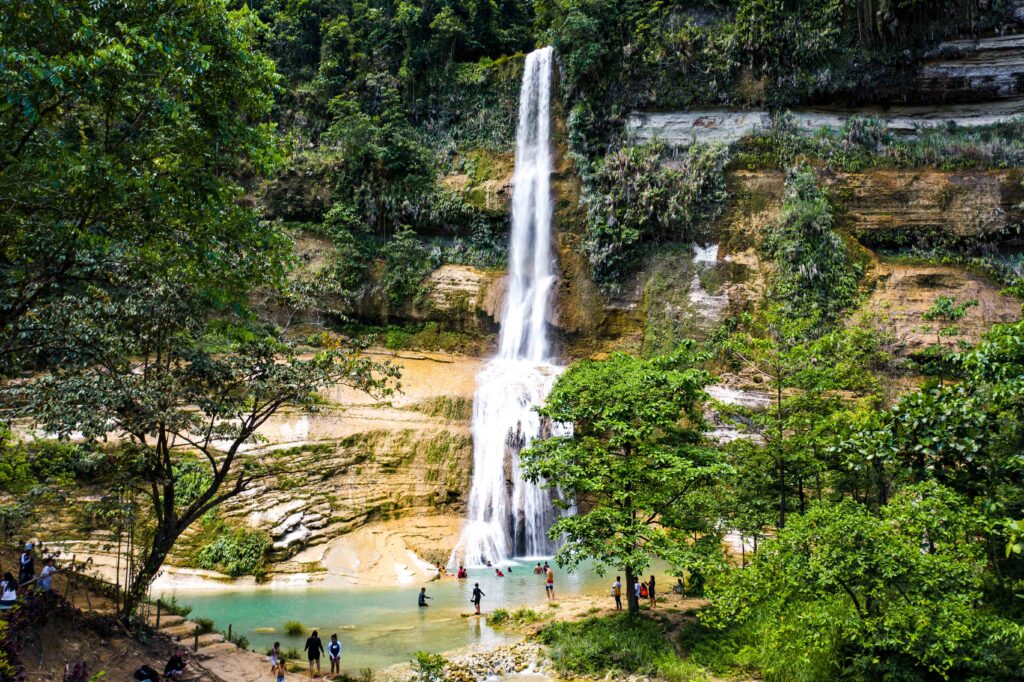
Bohol has several waterfalls scattered across its interior, often visited as part of an inland day trip.
Mag-Aso Falls is the most popular and easiest to reach, but it’s also the busiest. For something more dramatic, Can-umantad Falls is the tallest waterfall in Bohol and arguably the most spectacular, though it requires a longer journey east.
More off the beaten track, Ingkumhan Falls and Pahangog Falls are often paired together and suit travellers who enjoy quieter locations and a bit more effort to reach them.
5) Danao Adventure Park
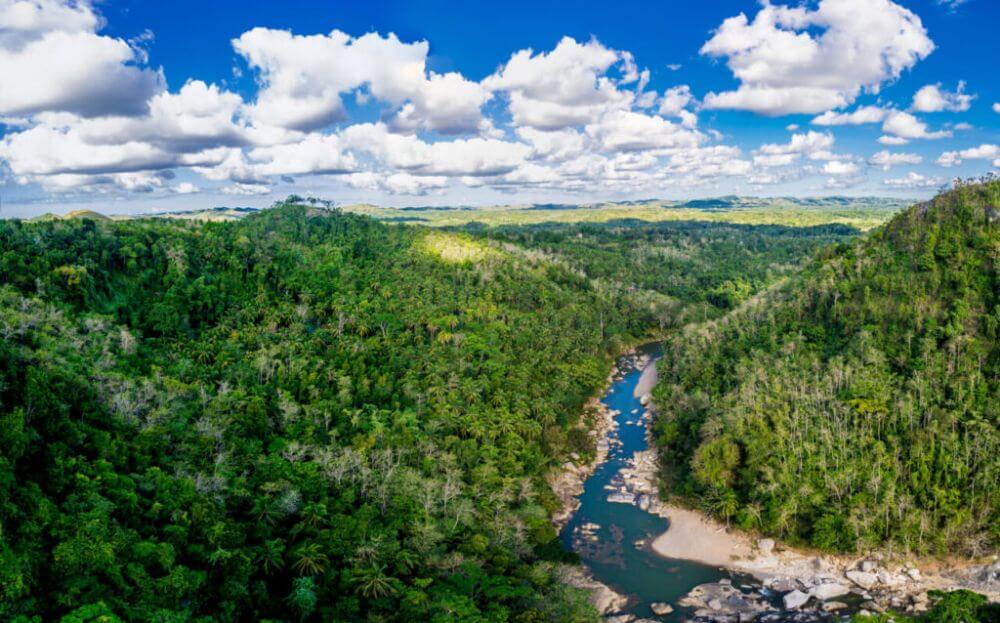
Located around two hours’ drive from Panglao, Danao Adventure Park is Bohol’s go-to spot for adrenaline. The park offers several zip-lines — including solo and tandem options — but its signature attraction is The Plunge.
The Plunge is a controlled canyon swing that sends you dropping roughly 75 feet into a jungle gorge before swinging back and forth above the valley below. It’s intense, well run, and a fun contrast to Bohol’s otherwise relaxed pace.
6) Alicia Panoramic Park

Alicia Panoramic Park offers some of the most expansive views in Bohol, reached via a scenic hike of around 5 km with roughly 400 metres of elevation gain.
The park sits on the far eastern side of the island, a long way from Panglao, and rewards the effort with wide, panoramic views across rolling hills and valleys. The hike is most enjoyable early in the morning or near sunset to avoid the midday heat.
7) Hinagdanan Cave

After exploring inland Bohol, it’s time to pivot back to Panglao.
Hinagdanan Cave is one of the island’s easiest and most accessible attractions, located just a short drive from Alona. This naturally formed limestone cave features a freshwater pool, illuminated by sunlight filtering through openings in the rock above.
It’s open daily from around 8am to 4pm and can get quite busy, especially late morning and early afternoon — but it’s still immensely refreshing to swim in.
8) Le Panoramic View Restaurant

Le Panoramic View Restaurant sits at one of the highest points on Panglao and offers genuinely kick-ass, wide-open views across the island.
From here you can look inland toward the rolling interior of Bohol, while on clear days the view stretches out across the sea toward Cebu as well.
The views are stunning, especially in the late afternoon and around sunset, making this an easy, laid-back stop for a drink or meal after a dive day or inland exploring.
9) Sea Star Abandoned Mansion
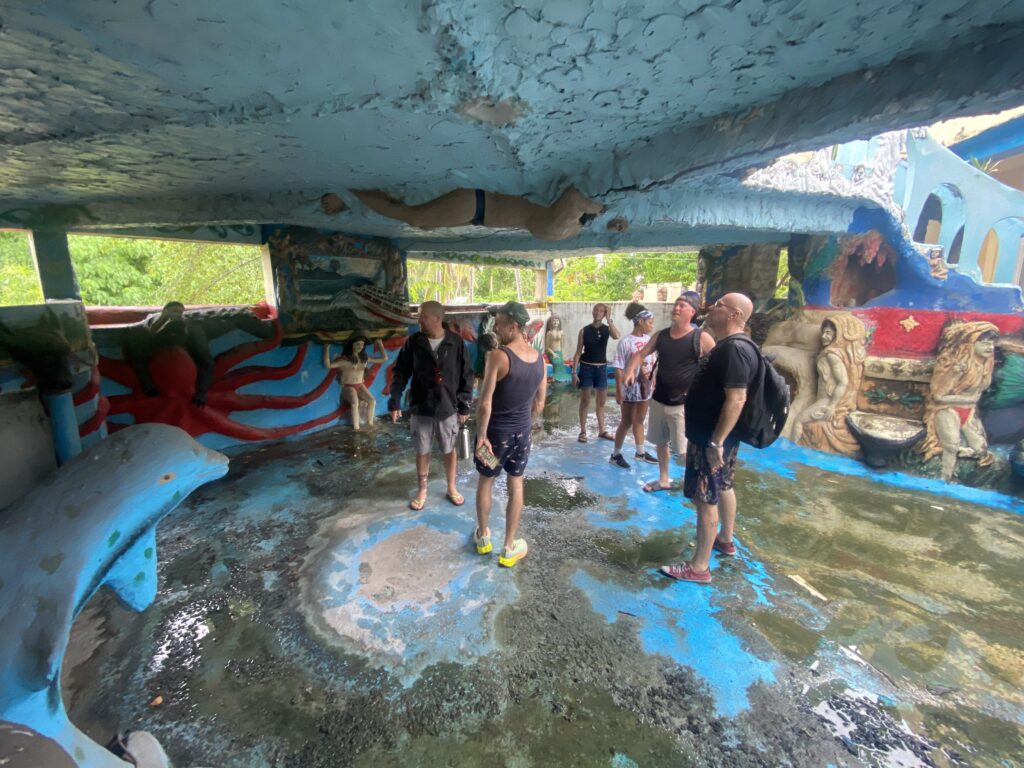
Located in Panglao, around a 15-minute scooter ride from Alona, Sea Star Mansion is one of the island’s most unusual and unexpected sights. The vast, three-storey complex feels part abandoned home, part surreal maze.
Built gradually over nearly two decades, the mansion is filled with corridors, empty pools, staircases and oversized rooms, all decorated with hundreds of statues inspired by a strange mix of biblical and Atlantean themes.
Visits can be arranged informally, and tours are usually guided to help navigate the scale and story of the place. Hit me up on Whatsapp to arrange a tour.
10) Island Strong
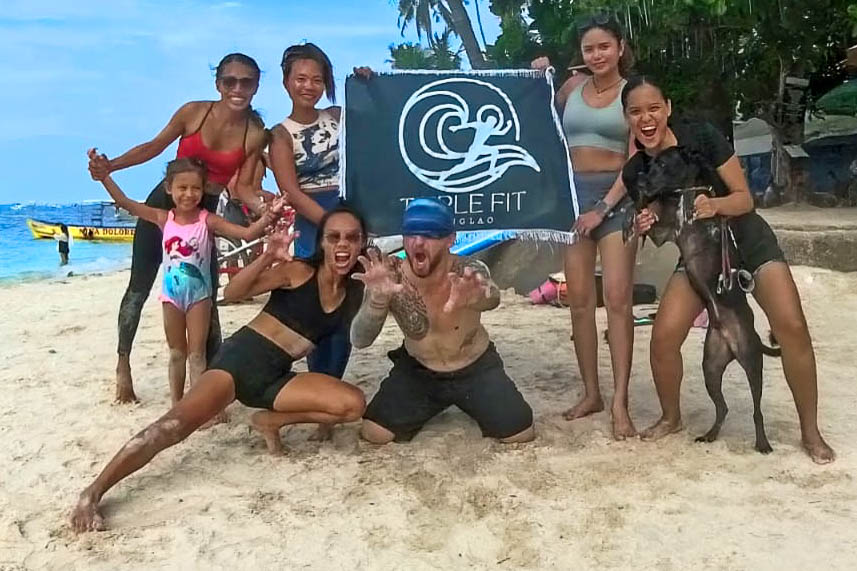
Island Strong is a community-driven beach fitness and yoga group that meets regularly on Panglao, bringing together locals, expats, and travellers for relaxed outdoor sessions by the sea. The focus is on movement, wellbeing, and showing up — not on performance or competition.
It’s an easy way to meet people, stay active between dives, and tap into the island’s social rhythm if you’re spending a bit more time in Bohol. Check out their Whatsapp Group here!
Bohol Diving FAQ
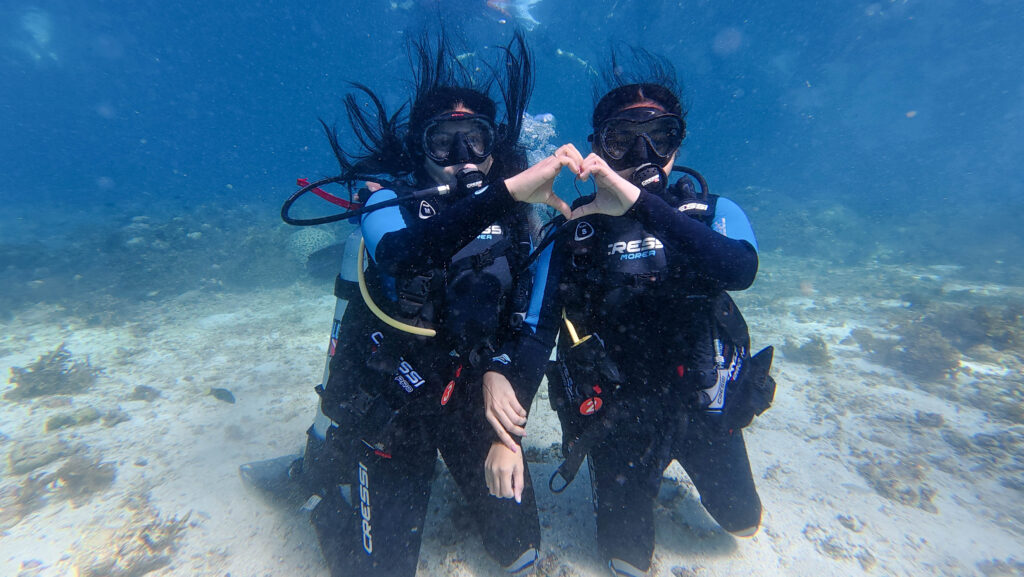
Is Bohol suitable for beginner divers?
Yes. Many local dive sites around Panglao are calm, making them ideal for beginners and those getting certified, while still offering plenty of excitement for more experienced divers.
Do I need to stay in Alona to dive Bohol?
No. Alona is lively and home to many dive centres, but Panglao is small and areas like Alona, Doljo, and Napaling are all a short drive from one another. This means wherever you’re staying on Panglao; you can still easily reach all of its dive sites.
Can I avoid large group dives in Bohol?
Yes. While some dive centres run fixed schedules and larger group trips, it’s also possible to dive in smaller or private groups with more flexibility around dive sites and pace.
Can I combine diving with inland exploring?
Totally! Many divers split their time between underwater diving and inland highlights such as waterfalls, caves, and hill treks — especially when staying in Bohol for more than a few days.
Is diving in Bohol expensive?
Nope — compared to many popular dive destinations in Southeast Asia, diving in Bohol is generally very good value. Short boat rides, accessible shore dives, and a wide range of dive centres keep costs reasonable, especially for divers planning multiple days in the water.
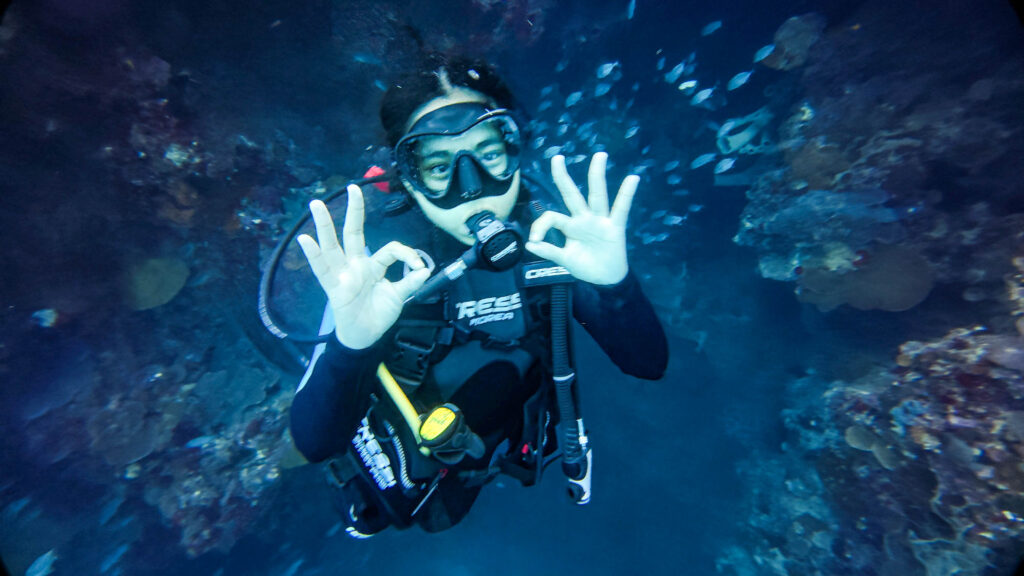
Bohol is an outstanding and affordable dive destination with a huge amount of variety.
From colourful coral reefs packed with reef fish to turtles, sea snakes, nudibranchs, and frogfish, the diving here is consistently rewarding — and when schools of trevally, sardines or barracuda roll through, it becomes truly cinematic.
With dive areas like Napaling, Doljo, Alona, Balicasag, and Pamilacan all close together, each with multiple dive sites within them; you could easily spend a full week diving in Bohol and still enjoy something different on every dive.
It’s a place that works just as well for experienced divers chasing adventure and stunning reefs as it does for beginners building confidence on calm, rewarding local sites.
If you’d like help planning dives in Bohol — whether that’s choosing the right dive areas, learning to scuba dive, or diving at a pace that suits you — feel free to message me on WhatsApp.