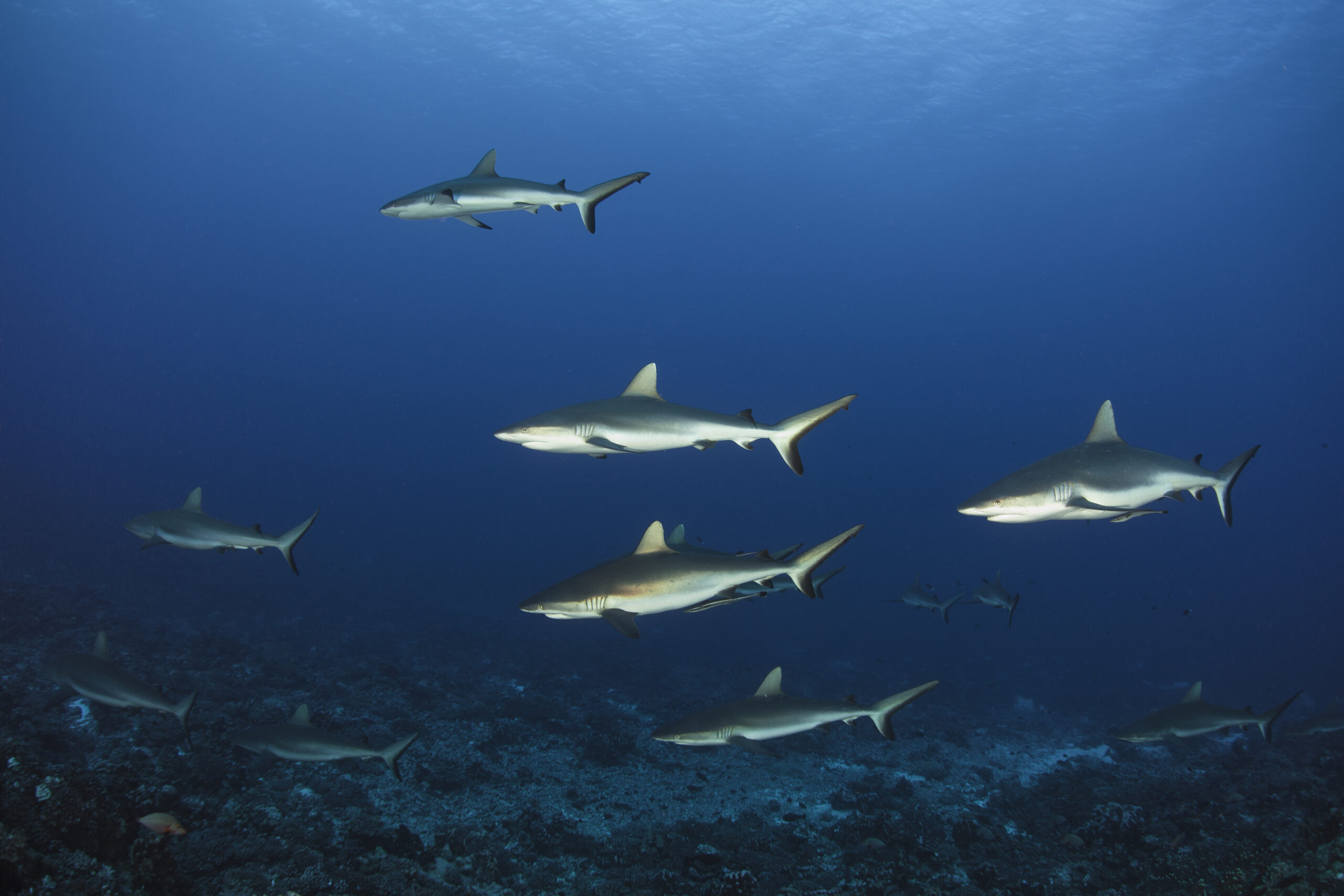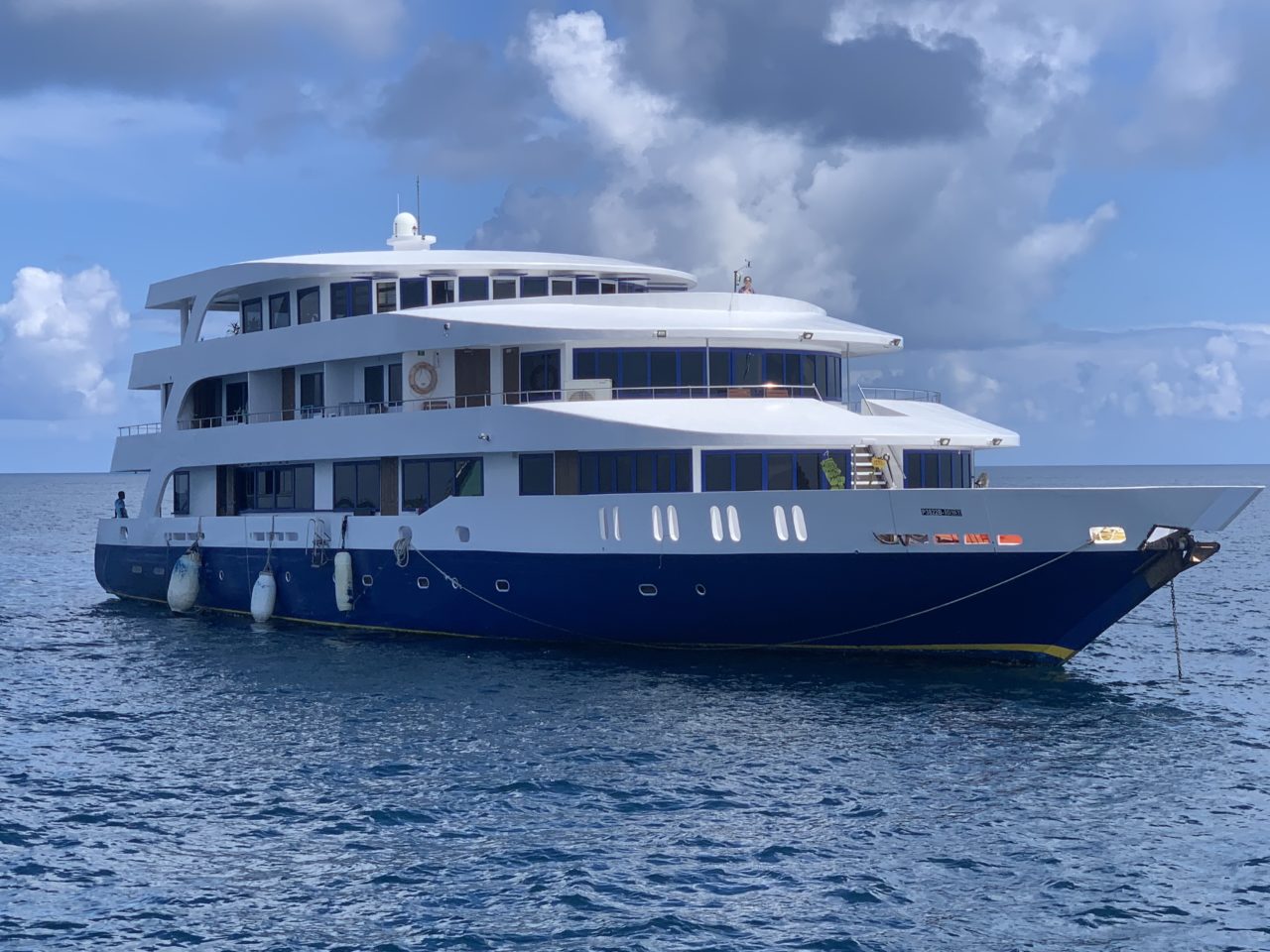
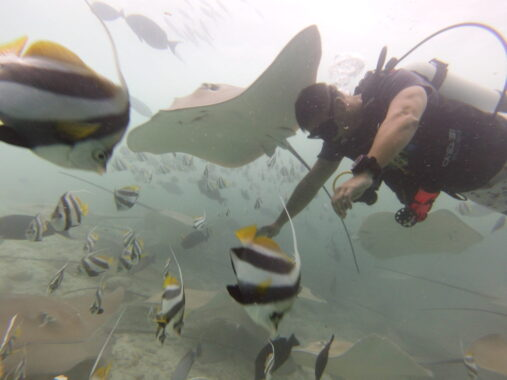
The Maldives is one of the world’s best destinations for big marine life encounters. Manta rays gather in groups at cleaning stations, Grey Reef Sharks congregate in their hundreds, whilst night dives can see hundreds of Nurse Sharks gathering together – with Whale Sharks and many other sharks, rays and pelagic species also encountered.
But with 26 coral atolls, there’s far too much to explore in one trip! That’s why liveaboards in the Maldives typically focus on the Central, Northern or Southern Atolls – and where you go can completely change the diving. Prices and diver experience requirements also vary considerably between boats.
I’m a scuba diving instructor and travel blogger who’s spent years travelling and diving around the world, including exploring the Maldives by liveaboard myself. This guide combines my first-hand experience with extensive research to help you choose the right trip for your budget, experience level and diving goals.
Check out my Maldives Liveaboard Quick Picks below, or keep scrolling for my Detailed Reviews!
Find Your Perfect Maldives Liveaboard 🛥️💨✨ ⭐
- 1) Top Pick 🚤🏆🦈👑 — Spirit of Maldives ($$)
- 2) Best Maldives Liveaboard for Beginners 🤿 😃 ⭐ ✅ — Maldives Aggressor II ($$)
- 3) Best Luxury Maldives Liveaboard 👑 ✨ 💎 🥂 — Scubaspa Yang ($$$)
- 4) Cheapest Maldives Liveaboard 💰 🤑 🏷️ ✅ — Princess Sara ($)
- 5) Best Budget Value 💵 ⭐ 🏅 🤿 — Princess Dhonkamana ($)
- 6) Luxury for Experienced Divers 💎 🦈 👑 🤿 — White Pearl ($$$)
- 7) Best Budget Long Trips 💰 🗓️ 🌴 🤿 — Amba ($)
- 8) Best for Advanced Divers 🦈 💪 🤿 🌊 — Maldives Blue Force 3 ($$)
- 9) Diving Squad Tested 🤿 🌊 👀 🇲🇻 — Soleil 2 ($$)
- 10) Best All-Rounder ⭐ 🤿 🌴 🙌 — Emperor Serenity ($$)
1) Top Pick 🚤🏆🦈👑 — Spirit of Maldives ($$)

One of Spirit of Maldives’ biggest strengths is its unusually varied itineraries. Trips range from 7 to 14 nights, with separate routes exploring the Central Atolls, remote Northern Atolls and Deep South Atolls – for more off-the-beaten-track diving and some serious shark action.
Many trips require Advanced Open Water certification and at least 50 logged dives, making it especially well suited to experienced divers.
The dive operation is another major strength. Experienced guides plan dives around local conditions and currents, while a dedicated diving dhoni transports divers and keeps dive gear separate from the main boat. Free Nitrox is also included.
Launched in 2024, Spirit of Maldives is a modern 40-metre liveaboard with spacious, stylish cabins, including impressive ocean-view suites. There’s also a jacuzzi and large outdoor areas.
For me, the combination of long, far-reaching itineraries, a strong dive operation and a seriously nice modern boat makes Spirit of Maldives my Top Pick overall.
- 💰 Price: $$
- 🗺️ Routes: Central, North, Far North & Deep South itineraries
- 📅 Trip Lengths: 7 – 14 nights
- 🤿 Experience: AOW + 50 logged dives required for many trips
- 🧭 Standout: Long trips & unusually varied routes. Free Nitrox.
- 🛏️ Spacious modern cabins & ocean-view suites. Jaccuzi
2) Best Maldives Liveaboard for Beginners 🤿 😃 ⭐ ✅ — Maldives Aggressor II ($$)

Maldives Aggressor II is the best liveaboard in the Maldives for beginner divers. With Maldives Aggressor II, guests only require their Open Water certification with no minimum logged dives – unusual in the Maldives, where most liveaboards require Advanced Open Water and considerably more experience.
It’s also a great place to progress your diving. Advanced Open Water and Nitrox courses can be completed onboard, whilst Nitrox is available for certified divers.
The dive operation is well established, with experienced guides planning around local conditions and currents. Itineraries focus on the Central and Northern Atolls, with beginner-friendly dive sites rather than the more demanding Deep South routes.
The comfortable main boat accommodates just 22 guests across 11 ensuite cabins, with a jacuzzi, bar and large sundeck.
If you’re new to diving and ready for your first Maldives liveaboard adventure, Maldives Aggressor II is my Top Pick for you – accessible, well-run and with plenty of opportunity to build your skills along the way.
- 💰 Price: $$$
- 🤿 Beginner Friendly: Open Water certification; no minimum logged dives
- 🎓 Dive Courses: Advanced Open Water & Nitrox courses available onboard
- 🗺️ Routes: Central & North Itineraries suitable for beginners
- 🛏️ Onboard: 11 ensuite cabins, jacuzzi, bar & large sundeck
3) Best Luxury Maldives Liveaboard 👑 ✨ 💎 🥂 — Scubaspa Yang ($$$)

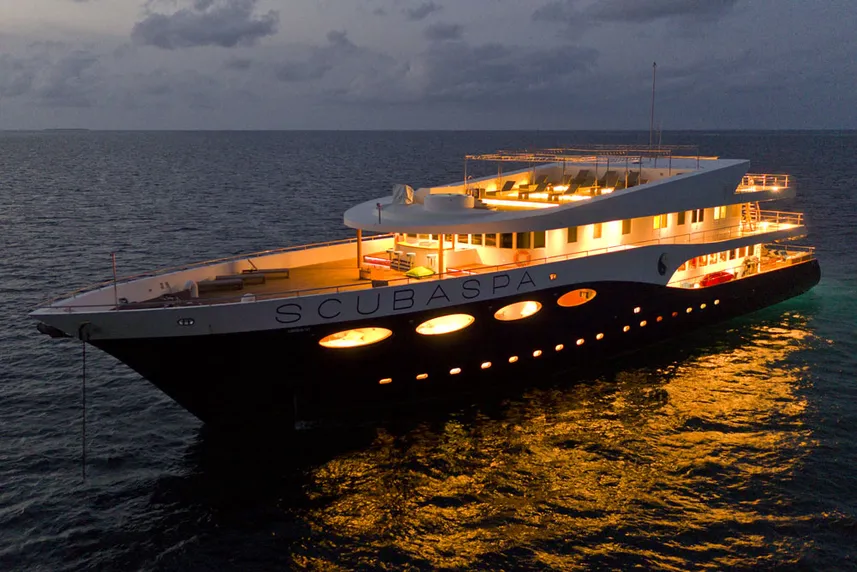
Scubaspa Yang takes Maldives liveaboard luxury to another level! This award-winning 50-metre yacht features beautiful cabins and suites, panoramic sea-view options, superb dining and a nearly 1:1 crew-to-guest ratio. It’s won multiple awards, including “Best Boat Design” and “Maldives Boating Brand of the Year.”
The facilities are truly exceptional: a huge 300m² spa spread across two decks, jacuzzi, gym, yoga and even an open-air cinema. There’s also kayaking, paddleboarding, snorkelling and alfresco dining – making Yang particularly good for couples and groups where not everyone wants to spend the whole trip diving.
Most trips explore the famous Central Atolls – the classic heart of Maldives liveaboard diving. Scubaspa Yang is a PADI 5 Star Dive Resort with experienced multilingual instructors and a fully equipped 20-metre diving dhoni, with Nitrox also available.
It’s also one of the few Maldives liveaboards genuinely suited to beginners. Guests only require their Open Water certification with no logged dives – or complete their Open Water course onboard instead. Advanced Open Water and other PADI courses are also available.
For an all-out luxury Maldives experience with excellent diving to match, Scubaspa Yang is my absaloute Top Pick.
- 💰 Price: $$$
- 🏆 Award-Winning Luxury: Best Boat Design & Maldives Boating Brand of the Year
- 🧖 Wellness: 300m² spa, jacuzzi, gym & yoga
- 🎬 Unique Extras: Open-air cinema, kayaking & paddleboarding
- 🤿 PADI 5 Star Dive Resort: Beginner-friendly, courses + Nitrox available
- 🛏️ Premium Experience: Panoramic suites, superb dining & nearly 1:1 crew-to-guest ratio
4) Cheapest Maldives Liveaboard 💰 🤑 🏷️ ✅ — Princess Sara ($)

Princess Sara is the cheapest Maldives liveaboard featured on this page – and currently the cheapest Maldives liveaboard available through LiveAboard.com. If keeping your total trip cost as low as possible is the priority, this is the place to start.
The diving is still high quality, with several different 7-night itineraries. Classic Central Atolls trips explore many of the Maldives’ most famous dive areas, while Special Central itineraries venture further into the Northern Atolls. There are also trips to the more off-the-beaten-track Southern Atolls for some serious shark action.
Princess Sara is an older and slightly less polished vessel than some of the more expensive liveaboards on this page, but you still get a lot for your money. The 40-metre boat has spacious ensuite cabins, multiple outdoor lounges, a large sundeck, bar and even a jacuzzi.
Most trips only require Open Water certification, with minimum experience ranging from around 5–30 logged dives depending on the itinerary. Nitrox and further dive courses are also available.
There are some nice free extras too, including stand-up paddleboarding and a beach BBQ – impressive considering the already low price.
For the cheapest way to experience high-quality Maldives liveaboard diving without settling for a bare-bones boat, Princess Sara is myy top recommendation by far.
- 💰 Cheapest: Lowest-priced Maldives liveaboard on our list
- 🗺️ Itineraries: Mostly Central Routes, occassionally North & South Atolls
- 🤿 Requirements: Mostly OW + 5–30 logged dives depending on trip
- 🛁 Onboard: Spacious cabins, jacuzzi, bar & large sundeck
- 🫧 Nitrox & dive courses available
5) Best Budget Value 💵 ⭐ 🏅 🤿 — Princess Dhonkamana ($)

If you’re travelling on a budget but can stretch a little beyond the absolute cheapest option, I think Princess Dhonkamana is well worth the extra. It’s still one of the cheaper Maldives liveaboards, but feels a noticeable step up in overall quality – and currently scores an excellent 9.5/10 from verified guests.
Most trips explore the Central Maldives, including the Male and Ari Atolls – the classic heart of Maldives liveaboard diving and famous for manta rays, Whale Sharks, reef sharks, huge schools of fish and some of the country’s best-known dive sites. Dhonkamana also occasionally ventures further north and south, with itineraries adjusted according to season and diving conditions.
The boat itself is smaller and more intimate than many Maldives liveaboards, carrying around 18 guests. The cabins are surprisingly large for this price bracket, with ensuite bathrooms, air-conditioning and distinctive canopy-style beds, while several also have sea views.
There’s a separate diving dhoni, Nitrox is available, and the boat has three sundecks, outdoor dining and plenty of comfortable communal space.
For me, Dhonkamana hits a real sweet spot: it keeps the price firmly towards the budget end without feeling like you’ve simply chosen the cheapest boat available.
- 💰 Budget Value: Low price with an impressive overall package
- ⭐ Excellent Reviews: 9.5/10 from verified guests
- 🦈 Classic Maldives Diving: Mainly Male & Ari Atolls
🛥️ Small & Intimate: Around 18 guests + separate diving dhoni
- 🛏️ Large Cabins: Ensuite, A/C + canopy-style beds
- 🤿 Experience Required: Open Water + 30 logged dives
6) Luxury for Experienced Divers 💎 🦈 👑 🤿 — White Pearl ($$$)
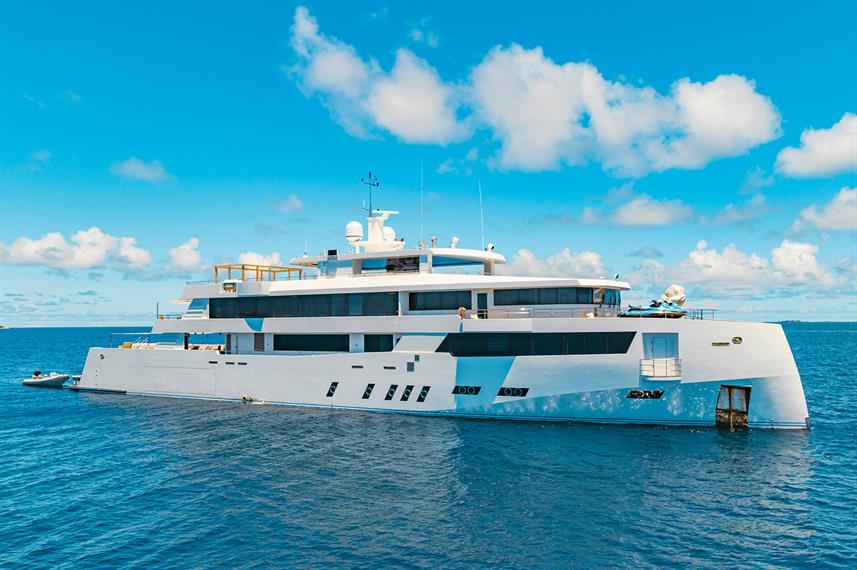
White Pearl is the luxury choice for experienced divers who want to go big both above and below the surface. This enormous 56.4-metre superyacht was built in 2020 and carries just 26 guests, with huge ensuite cabins and suites – some featuring private balconies, separate lounges and even bathtubs.
White Pearl has some seriously impressive facilities. The centrepiece is a huge 7-metre swimming pool with an attached jacuzzi, while the onboard spa gives you somewhere to properly unwind after diving. There’s also an entertainment salon with TVs and gaming consoles, a separate gym area for fitness fanatics, business centre and several spacious outdoor lounges.
The food gets exceptional feedback too, currently scoring 9.6/10 from verified guests on LiveAboard.com, while free extras include paddleboarding, kayaking and beach BBQs.
Most trips explore the famous Central Atolls, while seasonal itineraries also venture to Hanifaru Bay and the Deep South. Most departures require Advanced Open Water plus at least 50 logged dives, making White Pearl particularly well suited to experienced divers.
Diving takes place from a large dedicated dhoni with experienced guides, a proper camera station and Free Nitrox included for certified divers. Advanced Open Water, Nitrox, Deep and other speciality courses can also be completed onboard.
If you’re an experienced diver who wants incredible Maldives diving with full-on superyacht luxury, White Pearl is very hard to beat.
- 💎 Luxury Superyacht: 56.4m, built in 2020
- 🏊 Facilities: 7m pool/jacuzzi, spa, gym, entertainment lounge with TV & games consoles and two bars
- 🛏️ Huge Cabins: Premium suites with lounges & private balconies
- 🦈 Diving: Central Atolls + seasonal Hanifaru & Deep South trips
- 🤿 Experience: Most trips require AOW + 50 logged dives
- 🫧 Free Nitrox + dedicated diving dhoni
7) Best Budget Long Trips 💰 🗓️ 🌴 🤿 — Amba ($)

Amba is an awesome choice if you want a longer Maldives liveaboard without the huge price tag. Much of its schedule is made up of 11-night trips, with some expeditions stretching to 13 or 14 nights – considerably longer than the standard week-long Maldives liveaboard.
Those longer trips let Amba cover some serious ground. Routes explore the Central and Northern Maldives, Hanifaru Bay and the Deep South, with everything from manta rays and Whale Sharks to channel diving and some serious shark action.
Despite these much longer itineraries, Amba has the cheapest daily rate of any liveaboard on this page. The total trip price can still be higher than some shorter budget options, but for 11–14 nights exploring so much of the Maldives, it offers awesome value for money.
The diving is geared towards more experienced divers, with Advanced Open Water and at least 30 logged dives required. You’ll usually make 3 dives a day, with Free Nitrox included for certified divers.
Amba itself is comfortable rather than luxurious, carrying just 20 guests across 10 ensuite cabins. It’s also undergone a major refurbishment, with renovated social areas and upgraded upper-deck cabins – some featuring their own private terraces.
If you’ve got the time for a longer Maldives adventure and want to squeeze as many days of diving as possible from your budget, Amba is hard to beat.
- 🗓️ Long Trips: Mostly 11 nights; some up to 14
- 💰 Cheapest Daily Rate: Awesome value for longer trips
- 🗺️ Routes: Central, North, Hanifaru & Deep South
- 🤿 Experience: AOW + 30 logged dives
- 🫧 Free Nitrox: Included for certified divers
8) Best for Advanced Divers 🦈 💪 🤿 🌊 — Maldives Blue Force 3 ($)
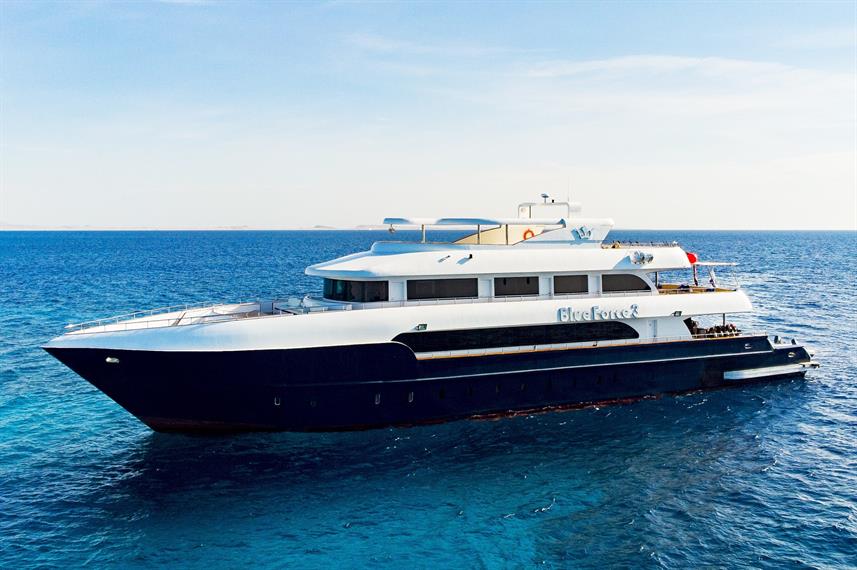
Maldives Blue Force 3 is one of the best options for experienced divers who want to push beyond the standard Maldives liveaboard experience. It offers an unusually varied selection of itineraries, from the famous Central Atolls to the far north and Deep South, plus special longer expeditions covering huge stretches of the country.
Its more advanced itineraries are where Blue Force 3 really stands out. Some require Advanced Open Water and at least 100 logged dives, taking experienced divers into stronger currents and more challenging sites for some seriously exciting shark and pelagic action.
There are classic Central Atolls trips too, exploring areas such as Male, Ari and Vaavu, while seasonal northern routes head towards Hanifaru Bay for huge manta encounters. Longer 10–11 night expeditions allow experienced divers to explore several regions within a single trip.
Blue Force 3 itself is a modern 42-metre liveaboard carrying up to 26 guests across 12 ensuite cabins. Diving takes place from a separate dhoni, while the main boat has spacious outdoor areas, three sundecks and comfortable indoor lounges. It’s also the fourth-cheapest liveaboard on our list, making it seriously good value considering the quality and variety of diving on offer.
If you’ve already got plenty of dives under your belt and want an itinerary that can really make use of that experience, Maldives Blue Force 3 is an awesome choice.
- 🦈 Advanced Diving: Challenging itineraries + serious shark action
- 🤿 Experience: Up to AOW + 100 logged dives
- 🗺️ Huge Route Choice: Central, Far North & Deep South
- 🗓️ Long Expeditions: Special 10–11 night itineraries
- 💰 Great Value: Third-cheapest liveaboard on our list
- 🫧 Nitrox Available: For certified divers
9) Diving Squad Tested 🤿 🌊 👀 🇲🇻 — Soleil 2 ($$)
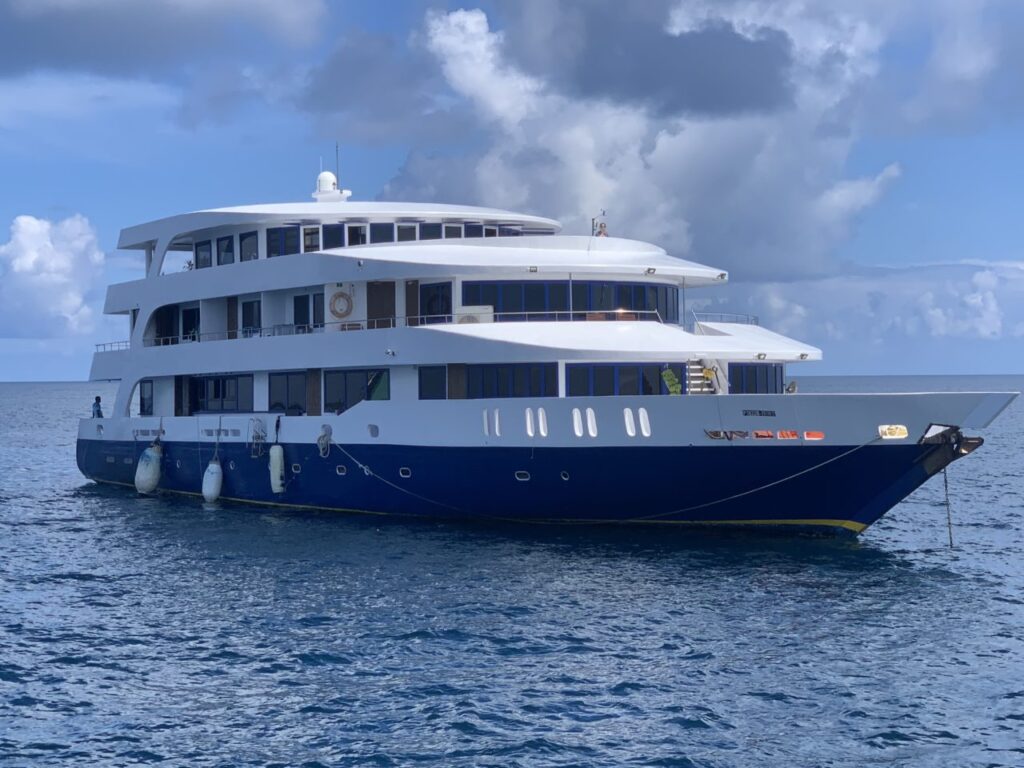
I spent a week aboard Soleil 2 after being invited onboard to create several diving videos, giving me the chance to experience both the boat and its dive operation first-hand.
We spent 7 nights exploring the Central Atolls and the diving was absolutely phenomenal. I saw groups of manta rays, schools of hundreds of Grey Reef Sharks, countless Nurse Sharks on night dives, plus stingrays, turtles, huge schools of fish and loads of smaller reef life. Soleil 2 also runs occasional trips further south for more off-the-beaten-track diving and even more shark action.
The boat itself has huge ensuite cabins, including some with private balconies, plus a large indoor saloon and a laid-back outdoor lounge and sundeck with hammocks, beanbags and a hot tub. It’s not as polished as the luxury liveaboards higher up this list, but it has a relaxed, homely feel.
What I remember most was the atmosphere onboard. The Maldivian owner is a keen diver and the crew felt like one big family – friendly, welcoming and good fun, while still running the diving professionally.
There were some memorable extras too, including a beach BBQ with traditional Maldivian music and night-time dolphin snorkelling straight from the boat. Overall, I had an awesome week aboard Soleil 2 – incredible diving, a fun atmosphere and a genuinely memorable Maldives adventure.
- 👀 Diving Squad Tested: I spent 7 nights onboard and loved it!
- 🦈 My Trip: Mantas, hundreds of Grey Reef Sharks + Nurse Shark night dives
- 🗺️ Routes: Central Atolls + occasional Southern itineraries
- 🛏️ Huge Cabins: Private-balcony options available
- 🛁 Relaxed Onboard Vibe: Hot tub, hammocks & outdoor lounge. Friendly and passionate staff
10) Best All-Rounder ⭐ 🤿 🌴 🙌 — Emperor Serenity ($$)

Emperor Serenity is a great choice if you simply want a really solid Maldives liveaboard that does everything well. It has superb guest reviews, a well-established dive operation and a huge selection of departures throughout the year.
Most trips spend 7 nights exploring the Central Atolls, including Male, Ari, Vaavu and Rasdhoo – the classic heart of Maldives diving for manta rays, Whale Sharks, reef sharks, Nurse Sharks, huge schools of fish and colourful reefs. A small number of special departures venture further north or south, while occasional extended itineraries run for up to 14 nights.
It’s also one of the relatively few Maldives liveaboards genuinely accessible to newer divers. Most trips only require an Open Water certification with no minimum number of logged dives, making Emperor Serenity another excellent option if you don’t yet have the experience required by many other Maldives liveaboards.
The 40-metre Emperor Serenity carries 26 guests across 13 spacious ensuite cabins, with several upper and main-deck options offering huge ocean views. There’s a large indoor saloon, outdoor terrace and spacious sundeck, while diving takes place from a separate fully equipped dhoni with an experienced team of guides.
There are some excellent inclusions too. Free Nitrox is provided for certified divers, while government taxes, park fees, airport transfers and a beach BBQ are included in the trip price. You even get a complimentary glass of wine with dinner.
With classic Maldives diving, unusually accessible experience requirements, a comfortable boat, longer trip options and loads included in the price, Emperor Serenity is a seriously strong all-rounder to finish our list.
- ⭐ Great All-Rounder: Excellent diving, boat & inclusions
- 🗺️ Routes: Mostly Central Atolls + occasional North & South trips
- 🤿 Beginner Friendly: Most trips require OW + no minimum logged dives
- 📅 Trip Lengths: Mostly 7 nights + occasional extended trips up to 14
- 🫧 Free Nitrox: Included for certified divers
What to Expect on a Maldives Liveaboard Trip
(Click here to Ascend back up to Maldives Liveaboard Reviews).
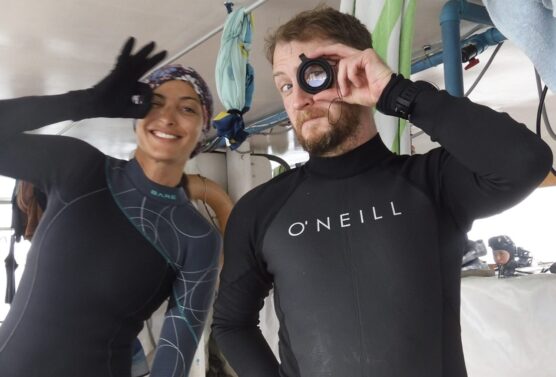
In this section I’ll tell you everything that occurs when you go on the incredible experience of a Maldives liveaboard:
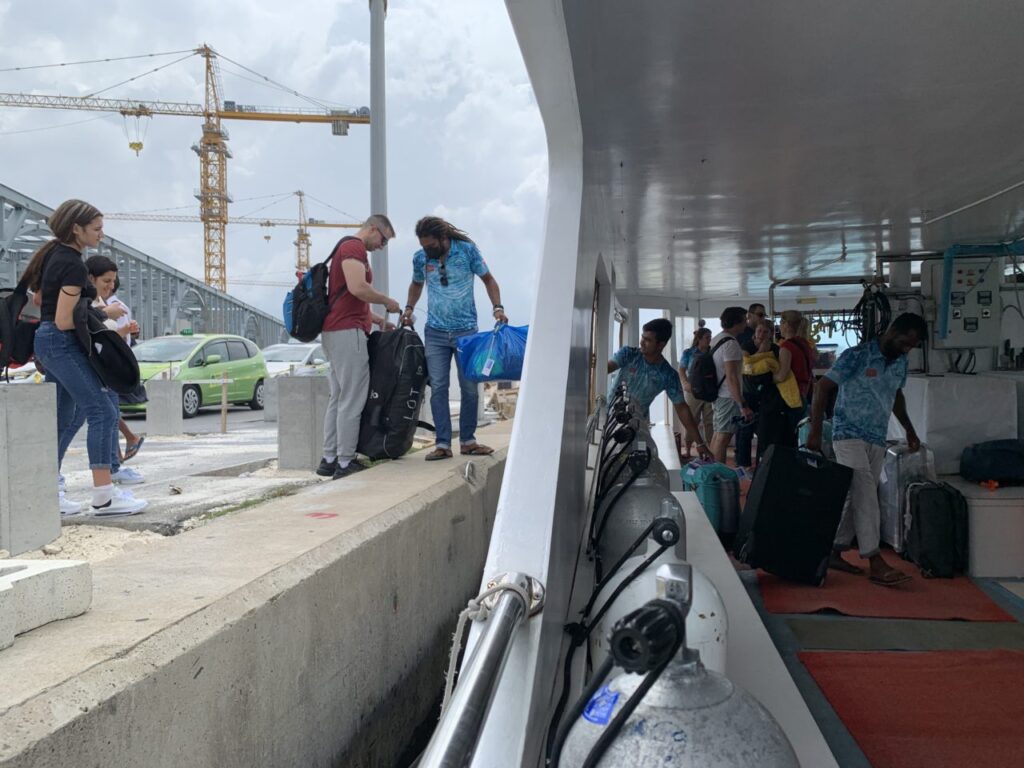
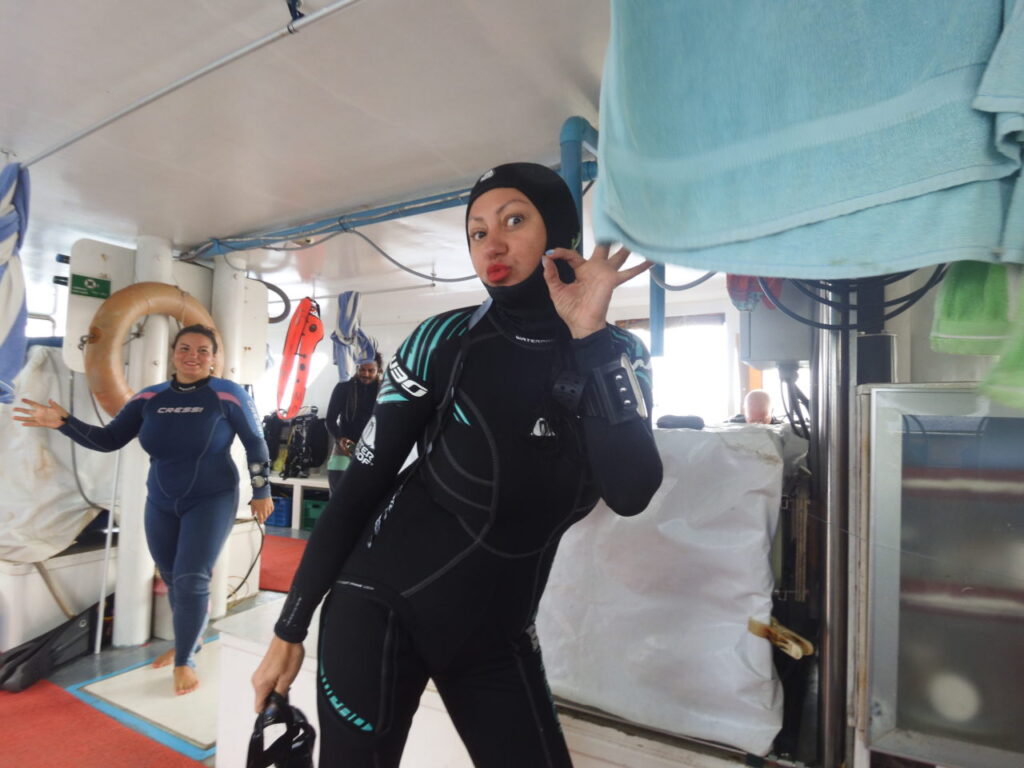
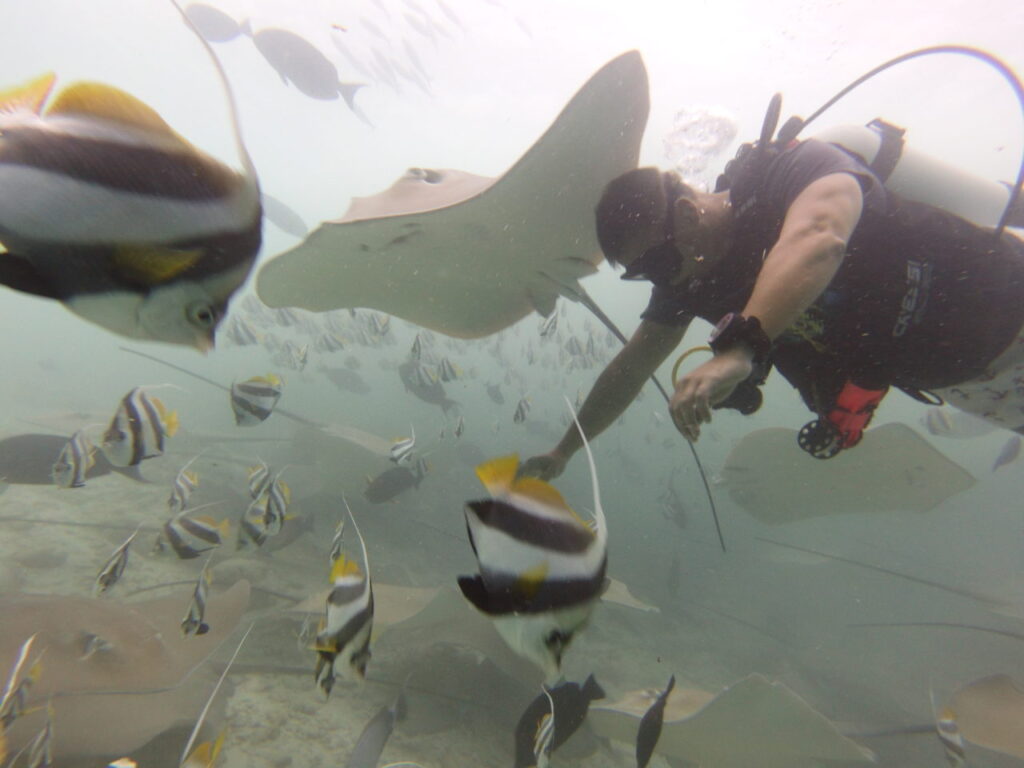
BOOKING a Maldives Liveaboard
There’s something I want to tell you. You saw those big old orange buttons under each of the liveaboard reviews further up this page? The one’s that say “Check on LiveAboard”. I’m talking about these little dudes:
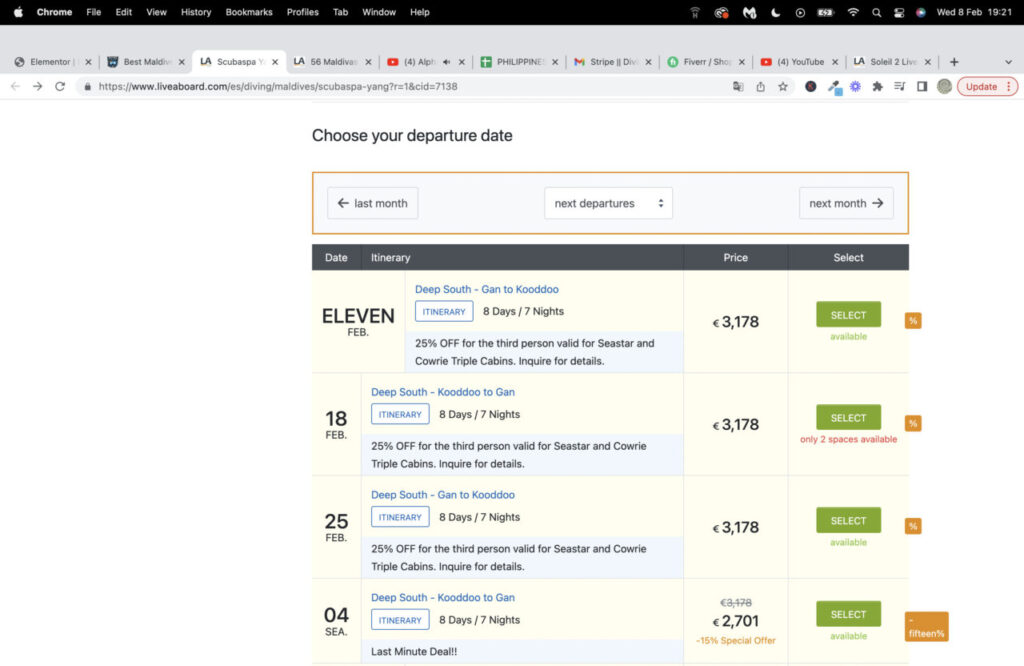
When you click one of these it takes you to the schedule and booking page for that individual liveaboard on liveaboard.com.
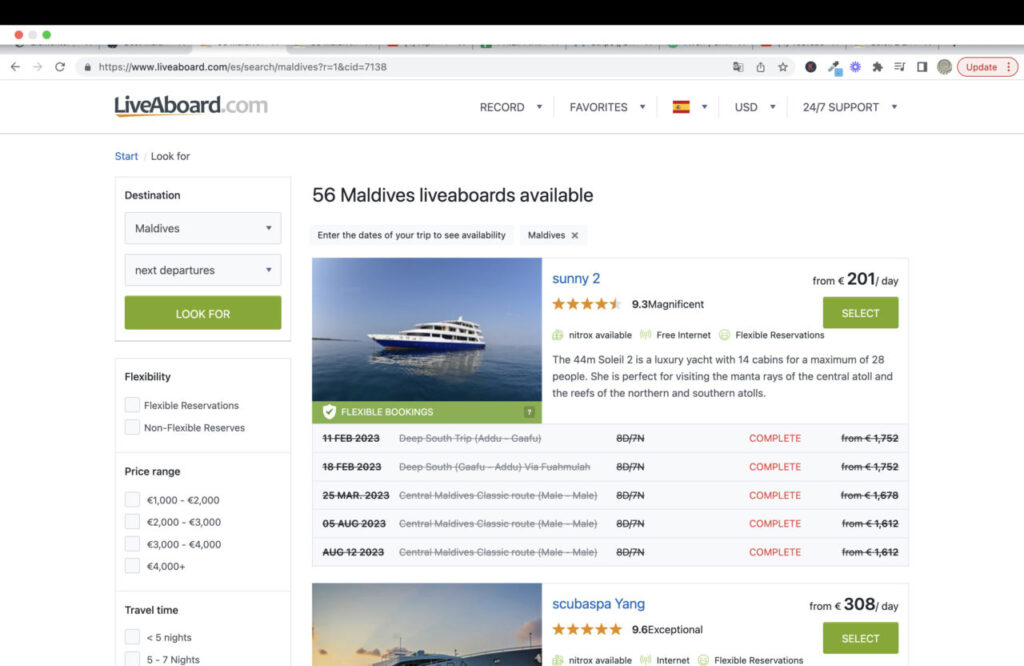
Liveaboard.com is a huge collection of liveaboards in countries all over the world, including the Maldives. You can use it to check the availability of and reserve spaces on hundreds of different liveaboards.
Hovering over the green “RESERVE NOW” button in the right hand corner – or imply scrolling down, shows guest spaces for all upcoming trips for that liveaboard.
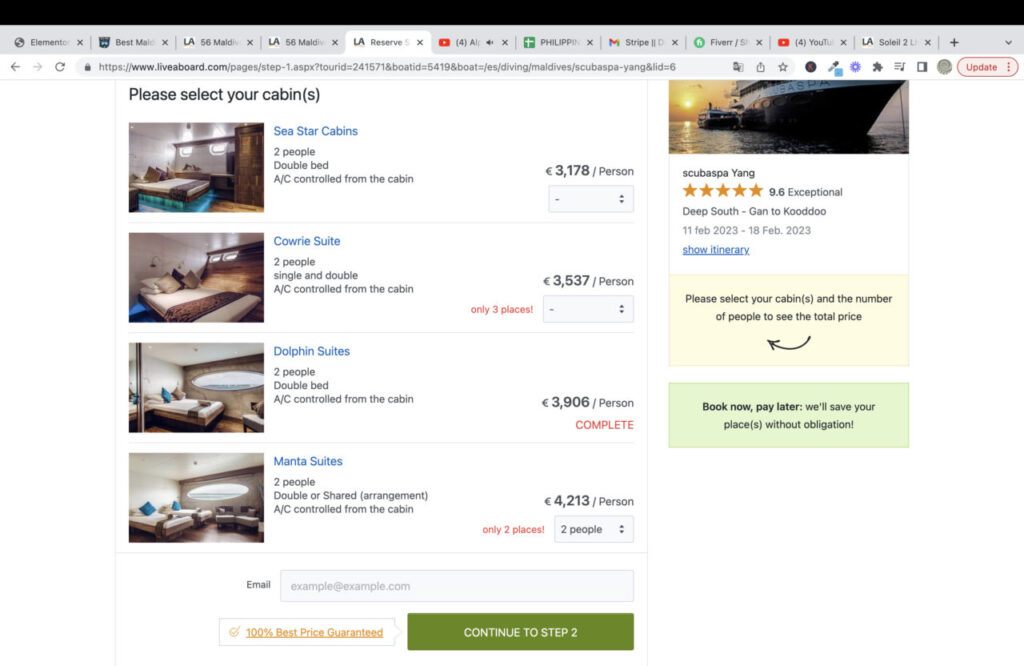
When you find the perfect date and trip for you, clicking the green button “SELECT” shows you different cabin options – for a small extra cost you can choose an extra fancy cabin. Some of the more expensive cabins have really cool features like private balconies.
There’s a short description for each cabin type under the cabin selection page.Finally select the green button “CONTINUE TO STEP 2” and fill out your personal details to reserve that liveaboard. Now, when you do all this after clicking through one of those green links on Diving Squad, we get a small affiliate commission at no extra cost to yourself. Thankyou!!
This doesn’t change your experience of booking a liveaboard at all; you’re almost guaranteed to book any liveaboard on liveaboard.com as it’s the world’s most popular online liveaboard booking service with tons of variety and awesome deals. And it doesn’t cost a cent extra.
But it helps us a butt-ton by providing tasty funds which we can throw at keeping this site fresh and sexy whilst continuing to delve out into the world to gather new Diving Squad content. Gracias!!
Head’s up: it’s not uncommon for liveaboard trips to fill out months in advance!! So plan ahead. That said, there are over 50 different liveaboards in the Maldives so you can usually find an option even at the last minute. However, having the freedom to choose among a wide selection requires booking in advance.
How to Get To the Maldives
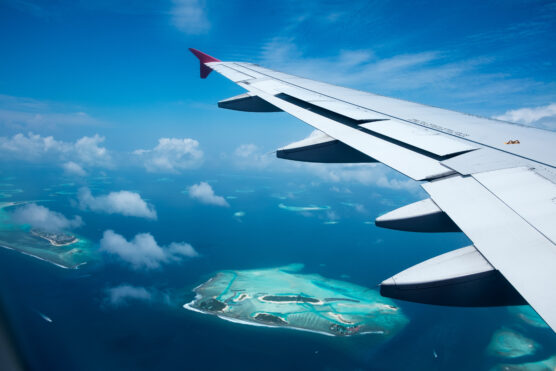
The main international airport of the Maldives is Velana, which is located on Male in the central region. Normally Velana is where you will fly into. Staff from your Maldives liveaboard will greet you at the airport to escort you to your ferry.
If you’re going on a liveaboard that explores the far north or deep south regions of the Maldives, you may catch a short domestic flight from Velana to one of the northern or southern region airports – this doesn’t happen often but if it does for your trip, your liveaboard will explain everything.
The Maldives requires that international visitors have a passport that is valid for six months from their expected departure date as well as proof of sufficient funds and an outward travel plan.
Border staff can be a little picky at Velana; it’s the only airport my passport was ever scrutinised for having a minor tear (fortunately they didn’t see the paper-cut induced blood stains that were on several of other pages!). You will automatically be granted a 30 day visa on arrival which can be extended to 90 days if requested.
What’s it like going on a Maldives Liveaboard?
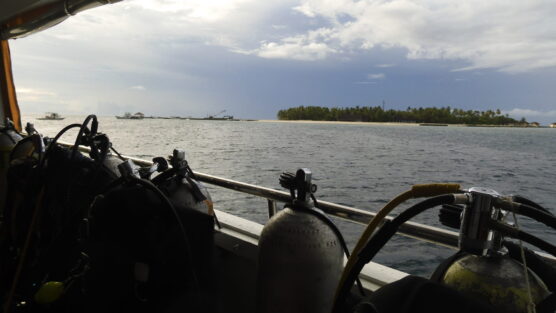
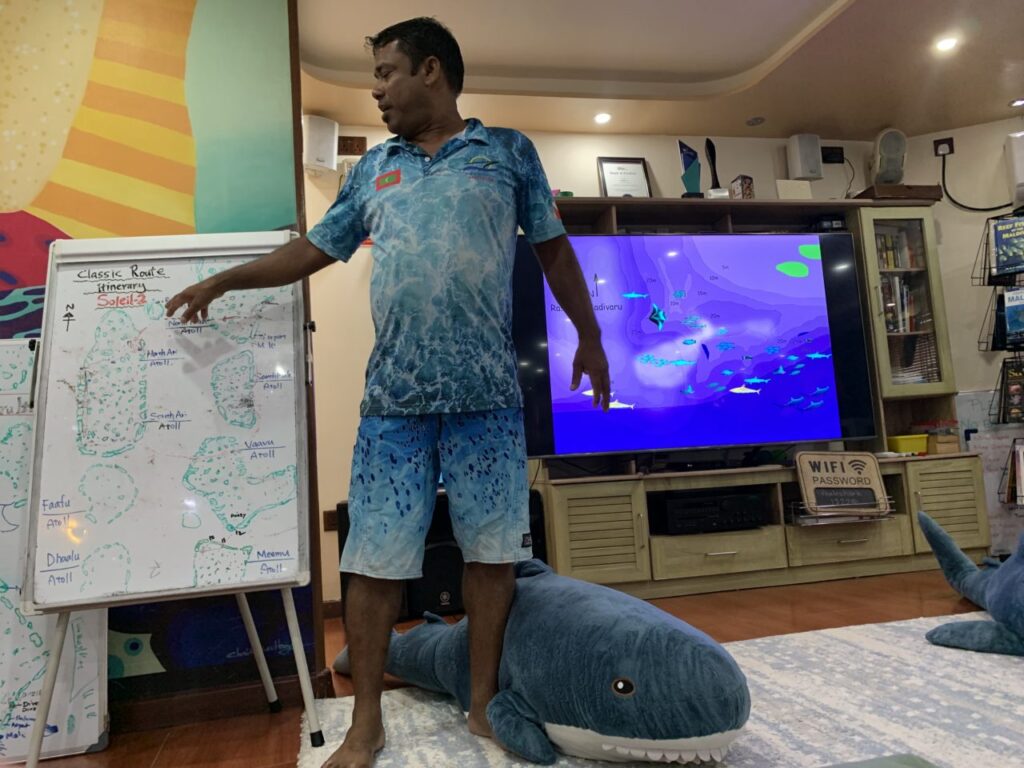
After you’ve boarded your liveaboard, organised your dive gear and been shown to your cabin to unpack the rest of your stuff, there’s an orientation briefing.
In this, everything from the liveaboard layout to health & safety is explained and diving groups are assigned (they try to group similarly experienced divers together).
The first one or two dives of the trip are always around an especially easy dive site. This is where you’ll work through any issues e.g. making sure your gear is functioning properly.After this first day, which is very much about getting orientated, your daily routine looks like this:
- Wake-up call at around 7am. About twenty minutes to grab a coffee and snack.
- First dive briefing and dive of the day. Followed by breakfast.
- About 90 minutes break. Good time to sneak in a nap!
- Second dive. Lunch.
- About one and a half to two hours break.
- Third dive. Dinner.
- Extra activity – can be night dive, beach bbq, fishing etc.
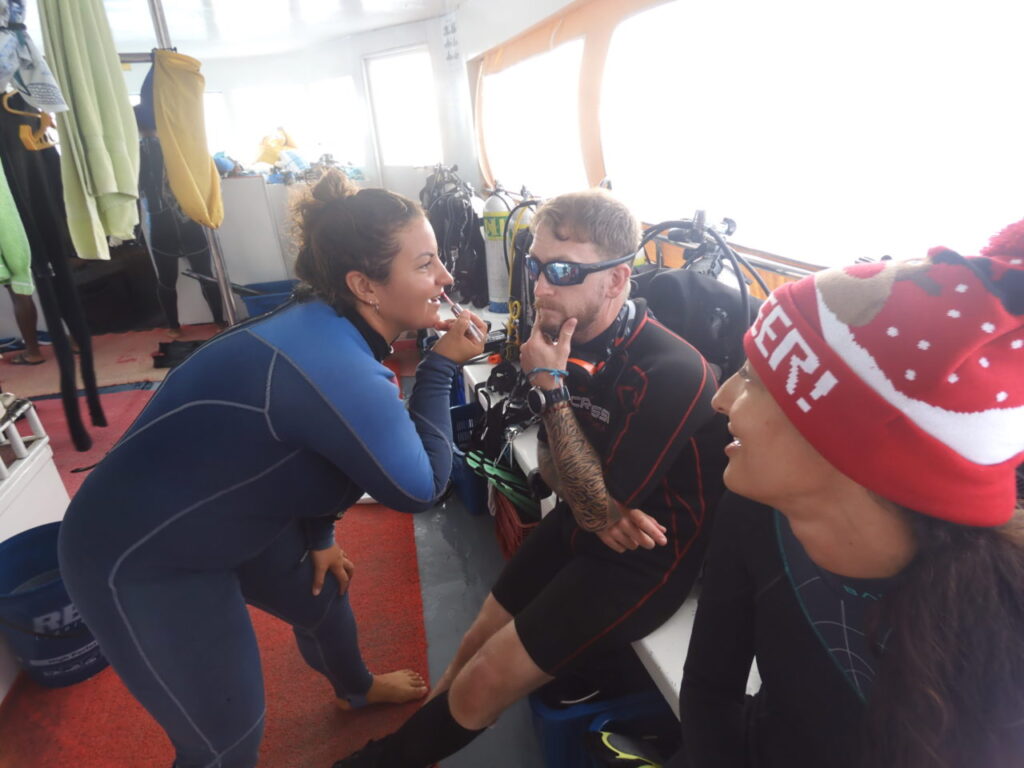
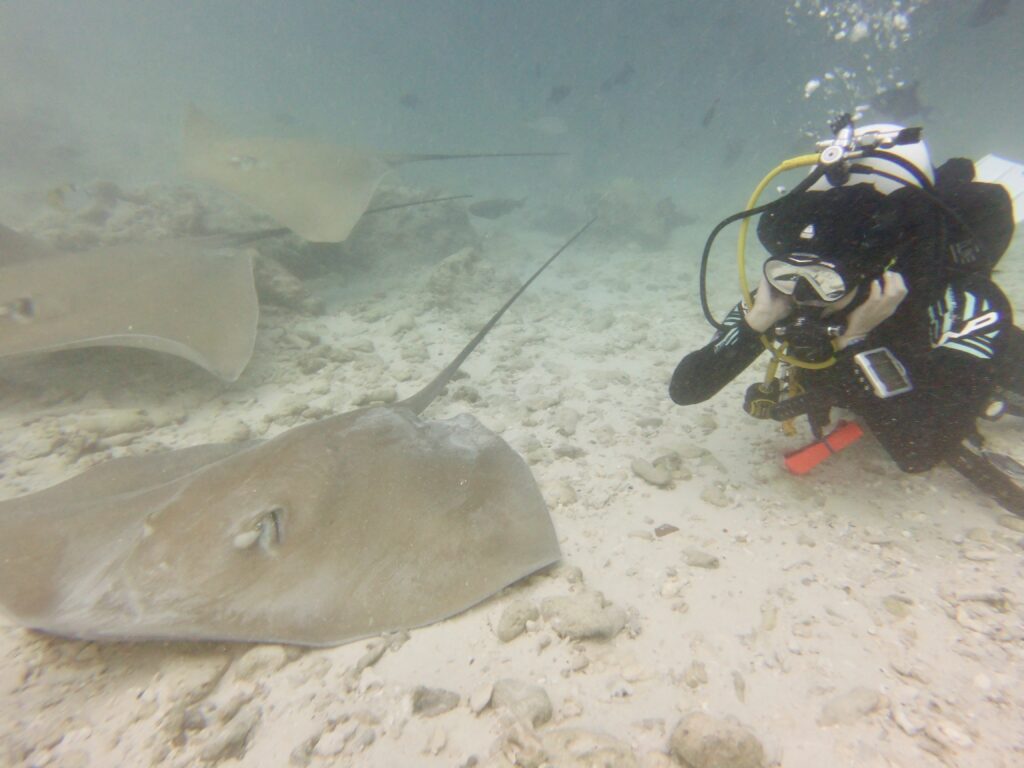
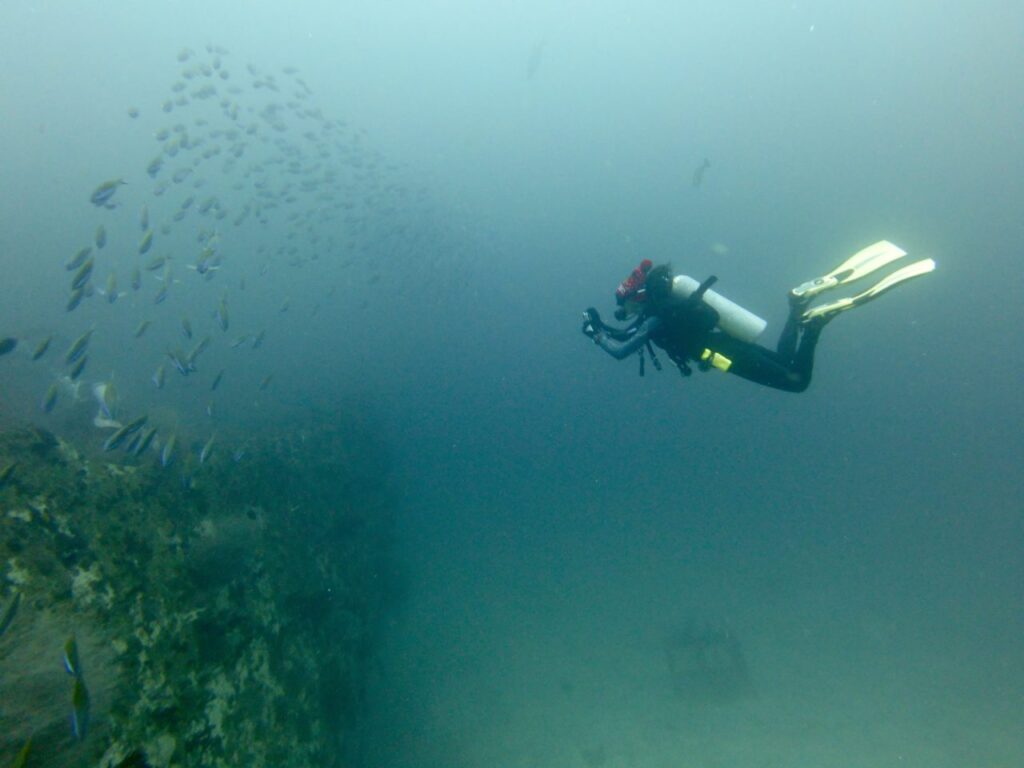
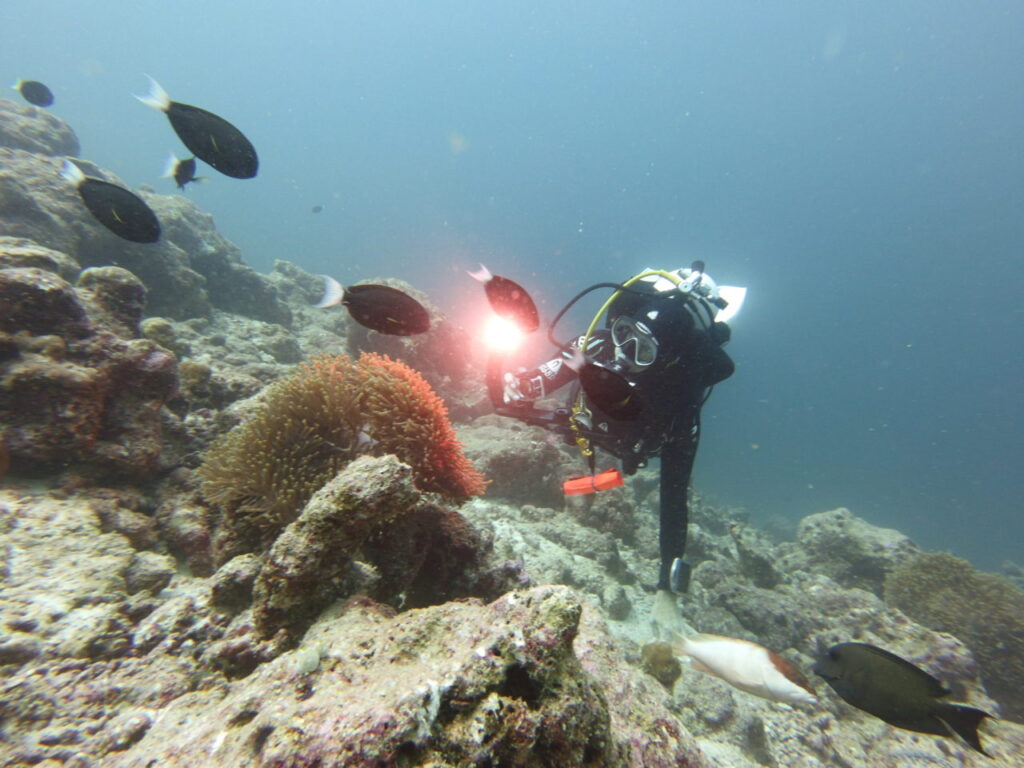
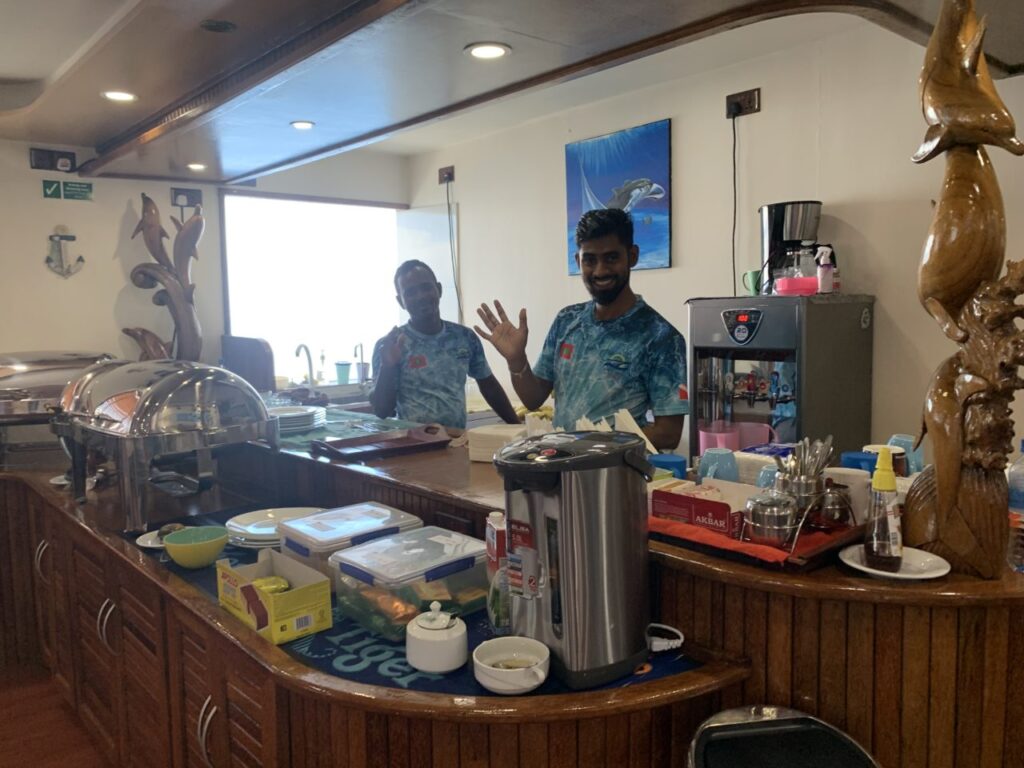
Although some of the largest Maldives liveaboards have a dive deck on the main boat, most are accompanied by a dhoni. The dhoni is a smaller boat – kinda like a skiff. Your dive gear is kept here in an allocated box next to the rest of your groups.
It’s usually a ten to fifteen minute ride to a dive site in the dhoni and during this time you’ll pass many of the tiny Maldivian islets and islands. There’s plenty of time to prepare for the dive.
Some of these species – such as manta rays, grey reef sharks, nurse sharks, turtles and stingrays; you’re almost guaranteed to see throughout the trip, often on multiple occasions.
Others – like whale sharks, tiger sharks, hammerheads and dolphins, you have a good chance of seeing at least some of, but they’re not so common.
Manta rays are one of the stars of the Maldives and it’s hard to do justice to just how mesmerising these incredible animals are to witness in real life.You’re practically guaranteed to see mantas at some point during your liveaboard trip in the Maldives.Typically they’re highest in number between May to November, but you can definitely spot them all year round!
During my Maldives liveaboard trip in December, I saw lone manta rays on four separate dives, two together on a night dive and best of all, the four playful individuals in the video above when we visited a manta cleaning station.
These highly social and intelligent beings are as gentle as they are graceful; lacking a sting they’re no threat to divers and love to perform acrobatic movements in front of people; seemingly as if deliberately putting on a show.
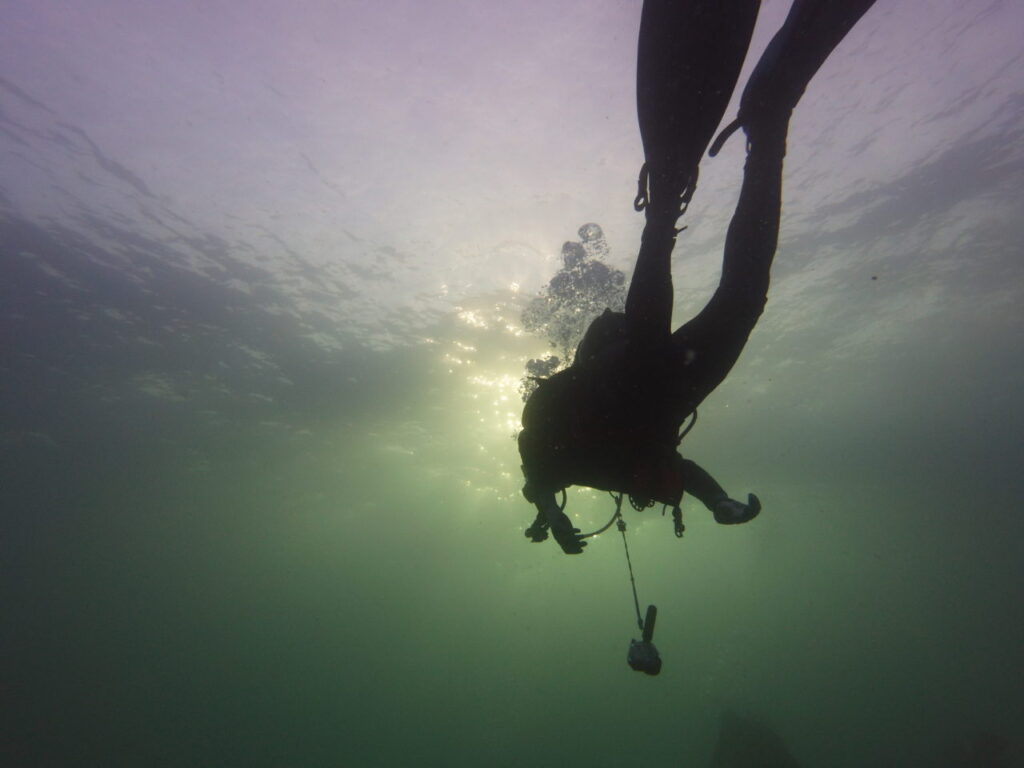
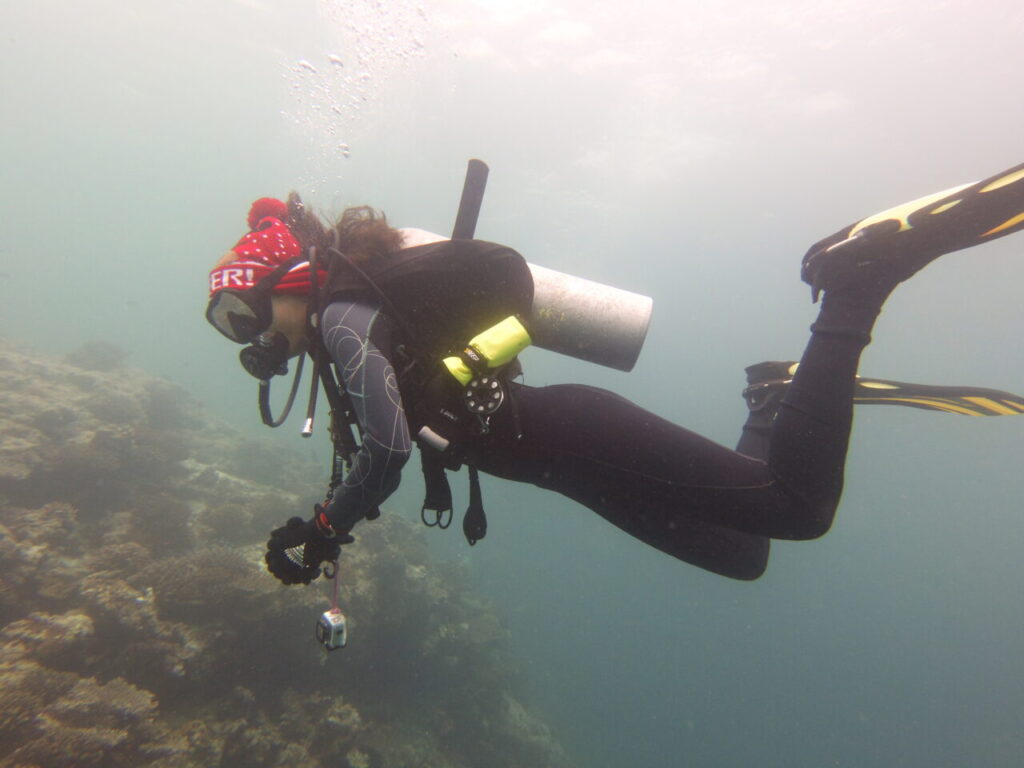
Regardless of what type of dive your’e going on, all dives usually last around fifty minutes or until someone in the group is low on air.
You usually all ascend to the surface together but it’s a good idea to have a surface marker buoy and know how to use it in case you have to surface alone.
It’s rarely a long wait before the dhoni comes to pick you up. Once everyone has been collected, it’s time to head back to the liveaboard where a meal awaits. Before you go to eat, I strongly recommend you use the showers at the back of the dhoni or your cabin to rinse out your ears to avoid aches and pains as the week progresses.
After that, go eat! Breakfast is eggs, pancakes, toast, spam and fruit. Lunch and dinner are Maldivian and Indian inspired so expect plenty of fish, chicken, rice, steamed vegetables and curry-like-dishes.
If you have any special dietary requirements, you’ll have already communicated these with your liveaboard before the start of the trip so they can accommodate you.
After each meal, you usually have one and a half to two hours before the next dive briefing. This is a great time to charge camera equipment, rest and soak in the views.
There’s plenty of spaces you can chill around the liveaboard -most liveaboards feature a sundeck as well as a partially shaded lounge with hammocks, beanbags and sundecks. There will also be an indoor saloon where you can relax inside and of course you’re free to head back to your cabin where a freshly made bed awaits after the first dive.
Exact duration time between dives varies depending on where the next dive site is. Sometimes there’s a long enough wait for extra activities. On cheaper liveaboards this can mean snorkeling or kayaking. This can be done for free.
On more expensive liveaboards you may be able to participate in watersports like flyboarding or jet skiing – or get a massage if there’s an onboard spa! This costs extra.
Now let’s talk about another star of the Maldives – grey reef sharks: and lots of htem!Measuring six to eight foot long, this requiem shark species is often encountered in small groups on many dives; I saw them in twos and threes on countless occasions.
However, on a couple of dives I witnessed something I’d never seen before – literally hundreds of grey reef sharks schooling together. It was a truly epic sight to behold.:
On some days, after three dives before breakfast, lunch and dinner, there are also night dives. You’ll probably be pretty beat by this point but I highly recommend making it out to these. Night dives are only carried out when staff are sure you have a good chance of seeing something good.
On our first night dive we saw feeding manta rays; which drifted through the dark water’s like cruising ghosts, often coming within less than a foot of divers.
For the second night dive, we saw countless dozens of nurse sharks; which swarmed around us much like the stingrays had during the feeding frenzy. This was as other-worldly as it was magical and it was an incredible experience unlike any other I’ve had before on a dive.
Like manta rays, nurse sharks are harmless to divers with tiny mouths and incredibly laid back attitudes. Check out the movie below to see video from the two night dives combined:
On evenings where there’s no night diving, you can kick back with a drink around the sundeck and partially shaded lounge where there’s board games and speakers.
There is a beach bbq one night, usually half way into the week. You’ll catch a ride to a nearby island where you can wander around whilst the sun sets and staff prepare food.
Then comes the bbq itself followed by traditional drumming and dancing from the staff which you’re invited to join (they make it look easy, but it’s a pretty decent cardio workout!).
Evening activities vary between liveaboards but can also include fishing, movie and games nights.
One of my favourite things to do in the evening, was sit at the back of the liveaboard and watch dolphins hunting fish – which were in turn hunting plankton that had been attracted by the boat’s lights. I even went snorkelling with them!
There’s no official bedtime – you can stay up as late as you want but you should be quiet after 10pm and bear in mind you’ll have an early start with lots of diving the next day.
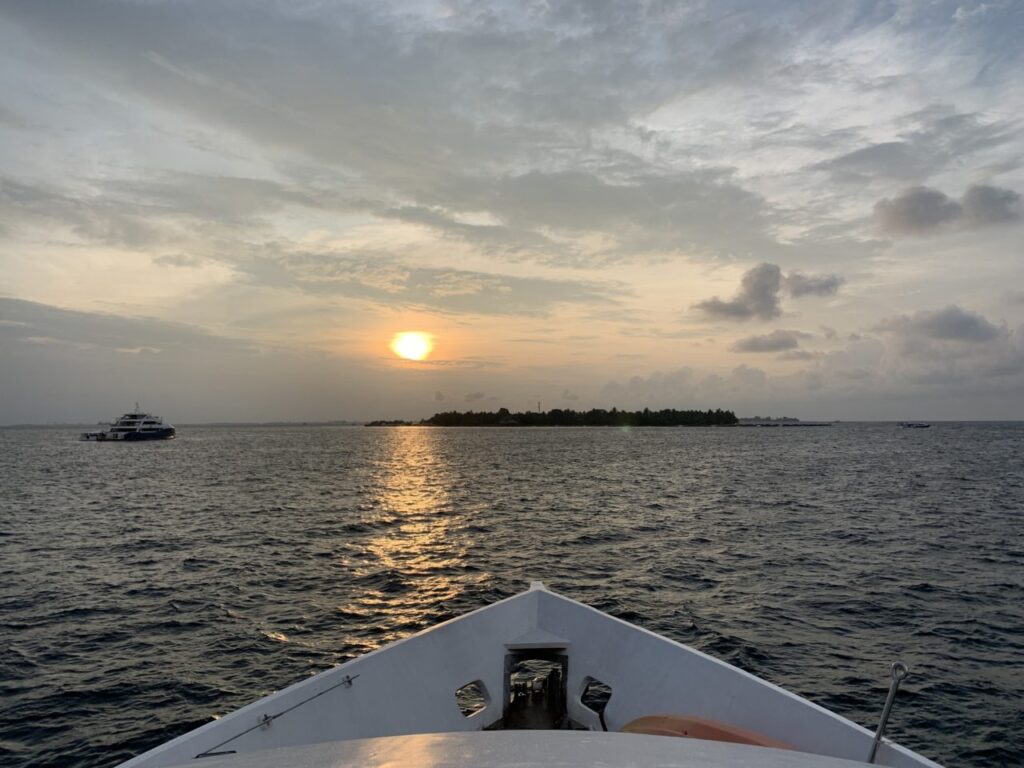
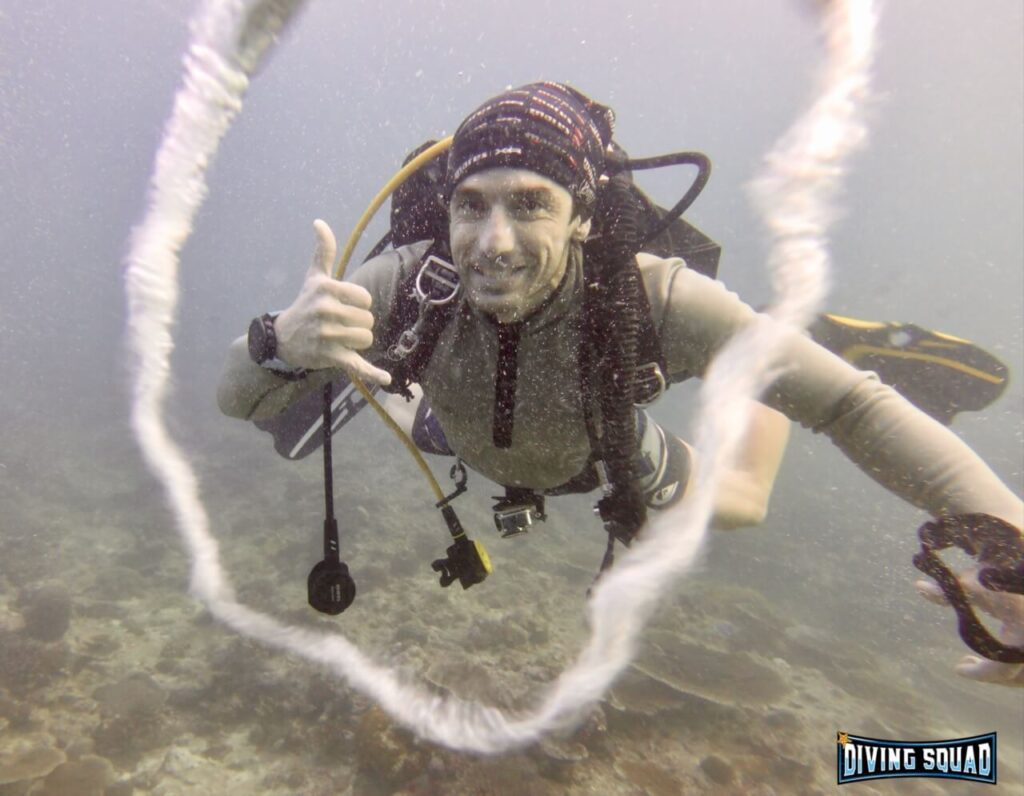
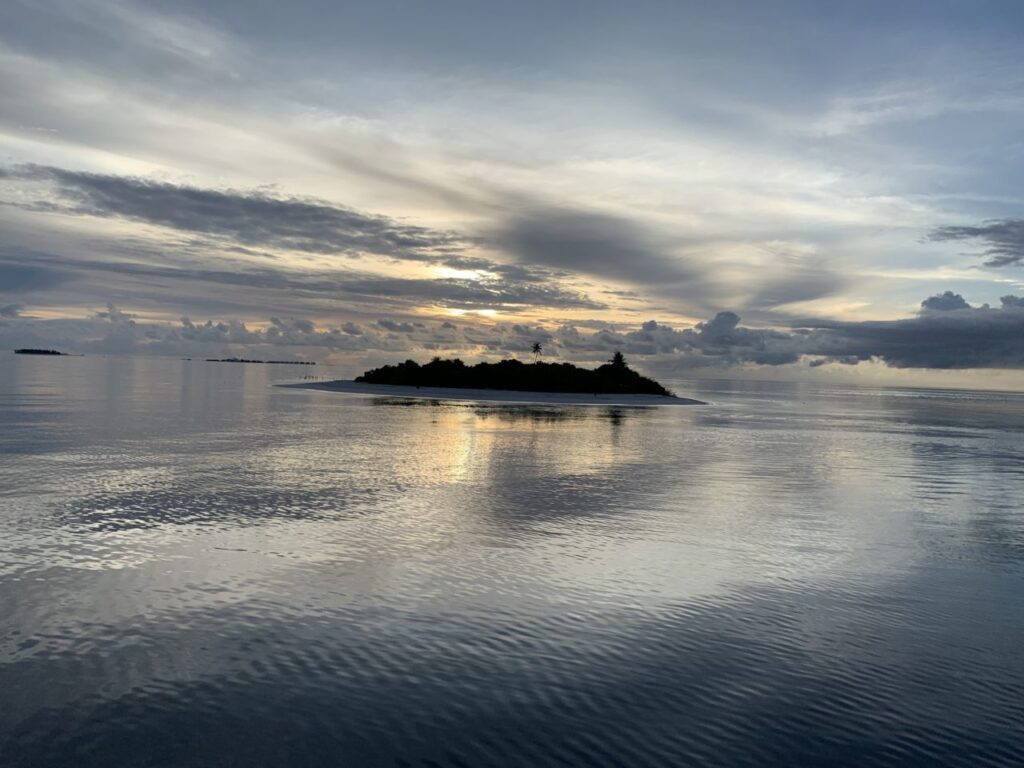
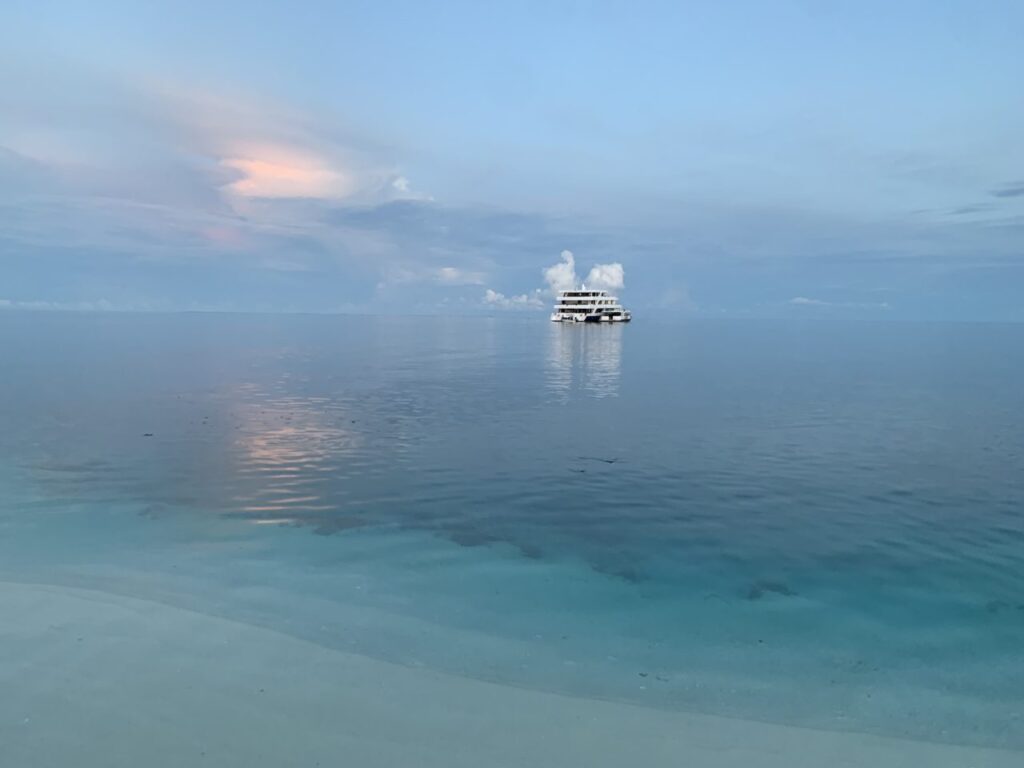
The structure and schedule I’ve described comes from my own experience exploring the central Maldives region with Soleil 2
However, in terms of daily routine, you can expect something very similar to this on any Maldivian liveaboard.
Some liveaboards vary in terms of the length of trips they run – the standard length is 7 nights but some go on for a little longer or shorter.
Depending on what region of the Maldives your liveaboard is exploring, types and frequencies of experiences may vary – for example there may be more manta cleaning station dives.
But generally speaking, you can broadly apply the routine, schedule and experiences I’ve described above to any Maldives liveaboard.
Handy Tips for your First Maldives Liveaboard
- Thoroughly rinse out your ears in between every dive to avoid aches and pains as the week progresses.
- Bring some ear drops to! You’ll be diving a lot. Divers who’ve never had painful ears may do on a liveaboard trip. I usually use these ear-drops.
- Factor in to your budget a decent tip to give the boat/kitchen-staff at the end. These guys work their arses off and can go weeks without a day off. Many are from poorer parts of the world such as Bangladesh and may go years without seeing their family who they send their money back to. There’s usually around 15 staff on the boat so $150 means they each get $10 – this should be a minimal amount.
- Ideally, take a surface marker buoy and be familiar with how to use it. Chances are you won’t have to as you ascend with your group… but you’ll want to know how just in case!
- Remember that the more off-the beaten track Maldives regions such as the deep south and far north, are better suited to more experienced divers. If you want to avoid loads of challenging dives, it’s best to go on a trip that tours the central region; which is the most famous part of the Maldives.
- It’s handy a to have a dry bag to keep your camera, phone, sun-cream, sunglasses etc in when taking them onto the dhoni.
- Get your scuba-ass scuba-insured!!This is so important. In my opinion, the best dive insurance company to go with are diveassure because they offer the highest-payouts and cover hyperbaric chamber treatment. However, you can read about all of the best dive insurance companies here.
- Get Nitrox certified. It takes one day. Every liveaboard I’ve been on, everyone and lets you stay deeper for longer. If need be, you can get your Nitrox course during the liveaboard trip.
- Bring a reef hook – this is extremely handy for drift dives in strong currents.
- Be present. If you take a camera, don’t forget to observe your surroundings with your own eyes every once in a while and not always through a lens.
Maldives Diving Regions / Itineraries
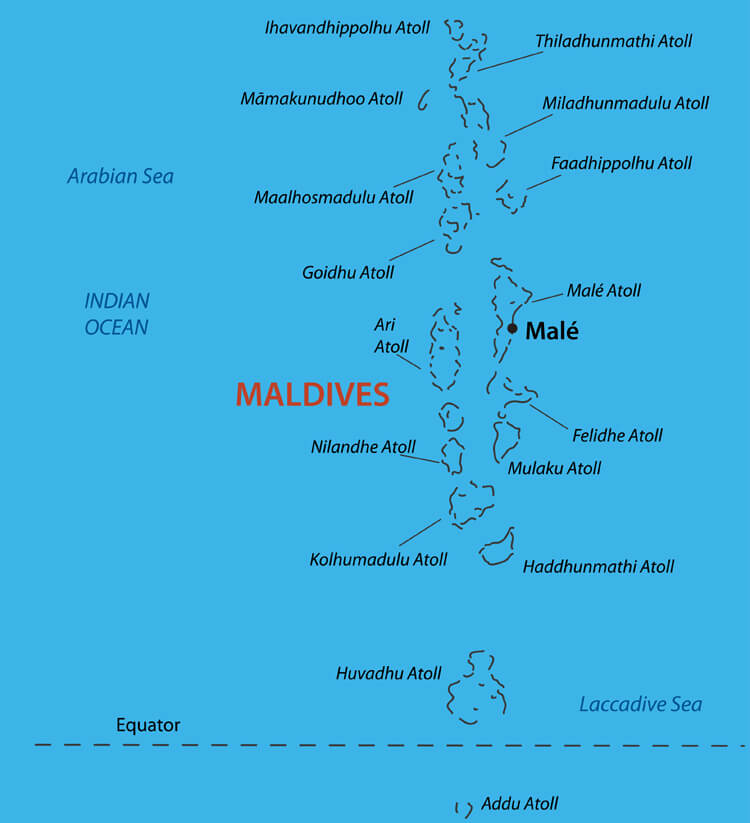
In general, the Maldives can be divided into five regions: Central the most famous, easy-to-dive and frequently explored region, North and South; which are a little more off-the-beaten track and Far North and Deep South; the hardest to reach regions.
Many Maldives liveaboards operate different itineraries / routes at different times of the year. These differing routes explore one or two of the five Maldivian regions. Virtually all Maldives liveaboards offer routes around the central region but less explore the north and south region and only a few journey to the deep south and far north.
We’ve briefly summarised the 5 diving regions of the Maldives below – but you can also get a much more detailed description of each, by checking out our main article: Scuba Diving in the Maldives
1) Central Atolls:
The most frequently visited part of the Maldives; the central region consists of the atolls of Male, Ari, Rasdhoo and Vaavu. The Maldives’ capital city and main international airport (Velana) are both situated on Male atoll, so it’s the easiest part of the island nation to reach.
There are more known scuba diving sites around Male and Ari atolls than anywhere else in the Maldives- they were the first places to be properly explored by scuba divers.
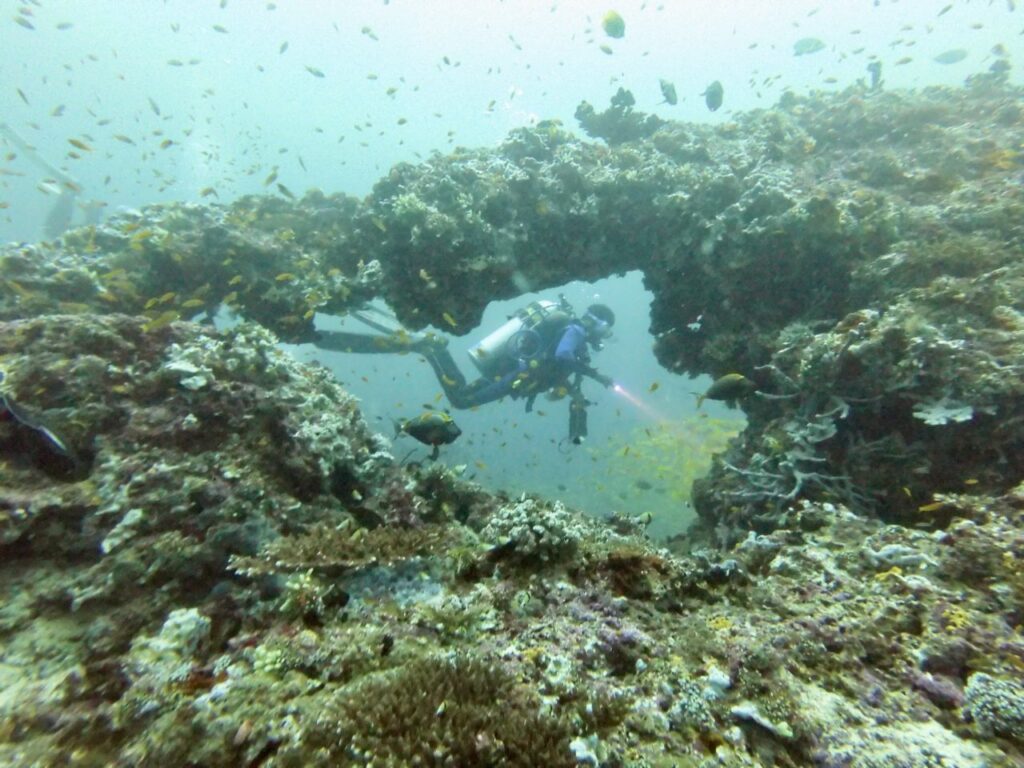
Higher levels of tourism does mean more dive boats. However, whilst you’ll see these other dive boats on the water’s surface, you’re not too likely to swim into other groups whilst actually diving. During my trip in the Central Maldives I only saw another groups of divers on two out of twenty dives.
The central region of the Maldives is the easiest to dive – currents are pretty weak meaning there are less drift dives here compared to other regions. I only experienced two drift dives out of twenty during my liveaboard trip Soleil 2
Around the central region, divers can see all of the iconic species for which the Maldives are known: whale sharks, manta rays, other sharks (including grey reef, whitetip reef, nurse, hammerhead and tiger sharks), stingrays, dolphins, turtles and scores of fish and macro critters as well as some decent coral reef.
2) South Atolls:
The first and perhaps most popular point of call for those seeking a more off the beaten track experience in the Maldives, is the southern atolls. Comprised of the atolls of Laamu, Thaa and Meemu, this area is also well known for drift dives and a varied, exciting underwater landscape.
There is a lot of big pelagic hunting action around the south Maldives with the likes of grey reef sharks, dogtooth tuna and eagle rays seen regularly hunting enormous schools of fish.
There’s also various manta ray cleaning stations and whale shark sightings as well as several sheltered lagoons where divers can see beautiful coral, turtles and colourful reef creatures such as napoleon wrasse.
Although large marine animals can be seen throughout all of the Maldives, the deep south region is the best place in the country for sheer diversity of big marine life. For example, in addition to the silver tip, white tip and grey reef sharks found in other Maldivian regions, within the deep south, scuba divers can also easily encounter many tiger sharks and thresher sharks as well as sometimes see hammerhead sharks, mola mola and black oceanic manta rays.
Comprised of Addu atoll, Fuvahmulah atoll and Huvadhu atoll, the Maldives deep south region is located very close to the equator. This means that diving conditions here remain excellent throughout the year, with great underwater visibility, calm seas and clear skies overhead.
Also, within the deep south lies the Maldives’ biggest shipwreck: the 134 meter long British loyalty which is covered in a lot of intricate hard and soft corals and home to species like batfish, frogfish and lobsters.
3) North Atolls:
Consisting of the Baa, Raa and Lhaviyani atolls, the north Maldives is less frequented by liveaboards than the southern region, so it’s the ideal place to go if you want to see as few other humans as possible!
Baa atoll is famous for Hanifaru Bay where according to some, between May and October, more manta rays and whale sharks gather than anywhere else in the Maldives – however you can only snorkel Hanifaru Bay as scuba diving there is now prohibited.
Throughout the north Maldives, there are exciting sites that you can scuba dive, including various manta cleaning stations and exciting drift dives with silver tip sharks, black tip sharks and grey sharks as well as scores of eagle rays and hawksbill turtles across dramatic underwater landscapes of canyons, walls and thilas.
The most far flung and rarely visited region of the entire Maldives, the far north atolls are Haa Alifu, Haa Dhaalu and Shaviyani. This is the final frontier of scuba discovery within the country, with new dive sites still being discovered there.
At the most far northern point lies Haa Alifu – this atoll is 300km north of Male and has some spectacular drift dives as well as being a great place to spot leopard sharks. Found here also are several manta cleaning stations and the eighty meter long Madoo shipwreck.
Haa Dhaalu has a spectacular underwater landscape with many rocky pinnacles and mighty underwater walls and cliffs covered in colourful corals. Around this atolls various dive sites, one can spot white tip reef sharks, nurse sharks and marble rays as well as lots of big pelagic fish.
Shaviyani is the most rarely visited atoll, with new dive sites still being discovered on a frequent basis. It’s a good area for seeing guitar sharks and rays!
🎒 Maldives Liveaboard Packing List
Having the right equipment can make your Maldives liveaboard far more comfortable, both in and out of the water.
While most boats provide tanks and weights, you’ll still need to think about your personal dive gear, clothing, electronics and a few useful accessories.
If you don’t own scuba equipment, it’s usually available to rent onboard for an additional fee, but many divers prefer bringing their own gear for the best fit, comfort and familiarity.
If you’re wondering what to bring, these are the four pieces of gear I’d recommend most for a Maldives liveaboard. ⭐
- 😎 Atomic Venom Mask – The most comfortable dive mask I’ve ever used, with exceptional visibility and a superb fit.
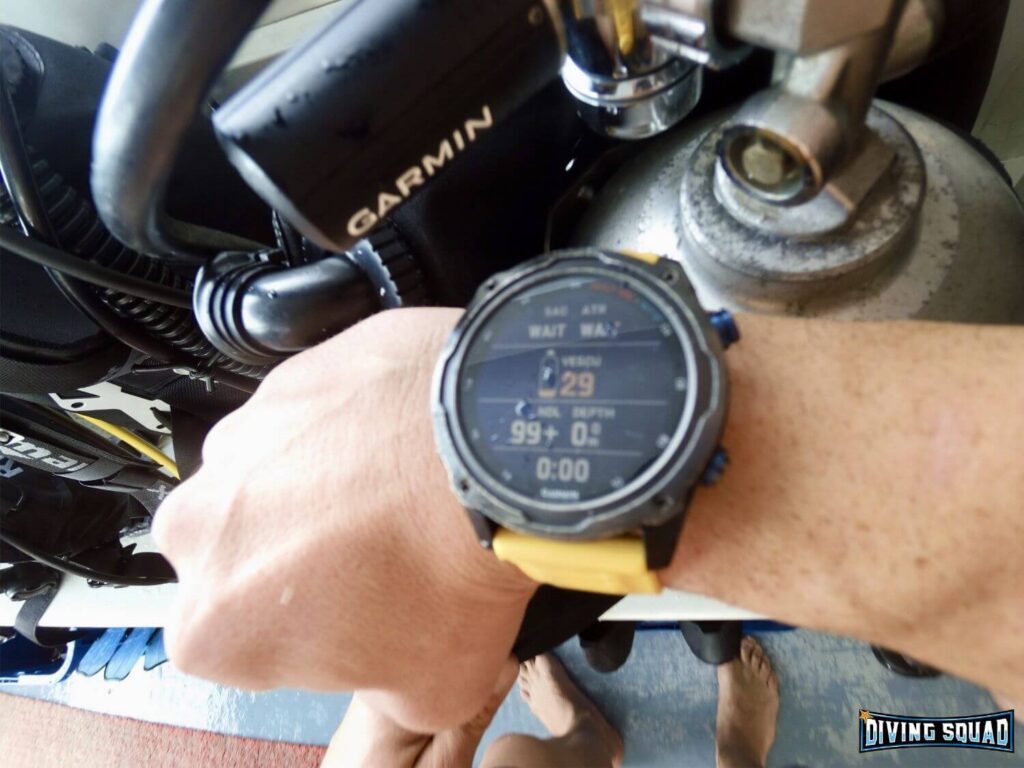
- ⌚ Shearwater Teric – My personal dive computer and one of the best dive computers available for recreational and technical diving.
- 🎥 DJI Osmo Action 6 – My favourite action camera for wide-angle dive videos, with excellent image stabilisation and underwater colour correction.
- 📷 Olympus TG-7 – The best compact underwater camera for capturing solid underwater photography – especially macro!
Don’t Forget:
- 🎫 Certification card (or digital certification)
- 🌞 Reef-safe sunscreen
- 🚩 Surface marker buoy (SMB)
- 🔦 Dive torch (especially for night dives)
- 💊 Seasickness medication
- 🎒 Dry bag
- 🔋 Power bank
- 🔌 Travel adapter
- 👕 Lightweight hoodie or windproof jacket for cooler evenings
🛡️ Dive Insurance
Many of the Maldives’ best dive sites are remote offshore reefs, so specialist dive insurance is highly recommended. I personally recommend DiveAssure, which offers dedicated scuba diving and liveaboard insurance, including cover for dive accidents and emergency medical evacuation.
Maldives Diving Season / When to Go
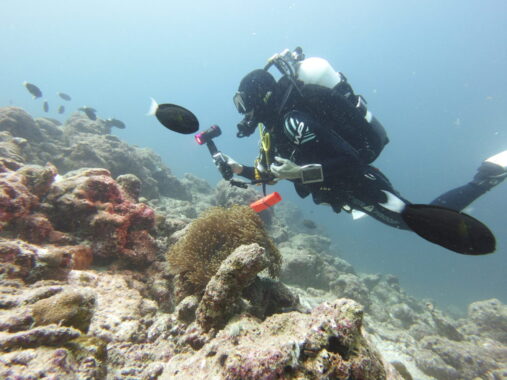
Liveaboard diving in the Maldives is possible all year! Manta rays, sharks and other large pelagic animals can be encountered at any given time. The likelihood that they will be seen is more determined by day to day factors such as high/low tide and sunrise-sunset.
That said, most parts of the Maldives (central, north, far north and south) do experience seasonal fluctuations that affect weather conditions and to some extent affect numbers of pelagic filter feeders (manta rays and whale sharks).These seasonal fluctuations also have some affect on the weather and dive conditions such as visibility and strength of currents.
January to April = DRY SEASON:
This is generally regarded as the best time to dive the Maldives. Subsequently it is high season for tourists.
A general lack of wind during this time results in clear skies, plenty of sun and calm seas. Water visibility is truly phenomenal: especially on the eastern side of the atolls, where divers can enjoy up to 35 meter visibility!
Although seas are calm on the surface, the current is strongest over this period; which results in a lot of fast paced drift diving.here are usually more manta rays and whale sharks around the western fringes of atolls during this period.
May to November = WET SEASON
Wet season is tourist low season so you may find cheaper prices and deals on liveaboards and resorts.
You can still dive during these months – in fact whilst visibility is not so good due to a higher build up of plankton, this actually you might see more manta rays and whale sharks, especially around the eastern edges of atolls.
Overhead the sky tends to be cloudier and there are often short and heavy bursts of rainfall, followed by sun. Currents are usually (but not always) a little weaker during these months.
December
This is a transitional month between the dry and wet season and subsequently can be hard to predict. It can be either more like the dry or wet season and vary by the year. It’s usually best to err on the side of caution and assume it will be more similar to a wet season month – minus the plankton build up.
Best Maldives Liveaboards – Diving Squad Debriefing
Diving Squad – at ease! We’ve finished reviewing the best Maldives liveaboards as well as going through everything else you need to know including how to book one, what to expect when you’re there and also different regions, seasons and more.
The information you’ve read today comes from first hand experiences of going on a Maldives liveaboard from various members of Diving Squad (such as Alex on Soleil 2 and Laura on Iruvai with original videos and photos by us (you can check out our youtube channel for a full list of our movies!).
We’re constantly updating our content, so you can rest assured that what you’ve read today reflects the very latest information regarding Maldives liveaboards in 2026!
Diving the Maldives is an awesome experience and there is no better way to do it than through a liveaboard. Good luck and have an amazing trip!
Support the Squad!
Some of the links in our content are affiliate links. This means that if you buy a product, book a liveaboard, book accommodation or purchase insurance, we earn a small commission at no extra cost to you.
It’s what helps us keep this website fresh and ultra sexy whilst funding our trips out into far flung corners of the world to gather more new content for you. Thanks!